
How OBD GPS Trackers Reduce Fuel Costs for Fleets
-
01
Route visibility removes unnecessary miles and lowers monthly fuel spend
-
02
Speeding and aggressive driving raise fuel consumption by up to 30%
-
03
Trip history exposes unauthorized use and mileage nobody was accounting for
-
04
Update speed matters more than deep engine polling for most fleets
-
05
Real-time location data turns fuel spend into measurable cost control
As an Amazon Associate, Konnect GPS earns from qualifying purchases.
How OBD GPS Trackers Reduce Fuel Costs for Fleets (With Real Numbers)
Looking for how OBD GPS trackers reduce fuel costs for fleets? You're in the right place.
Across delivery fleets, service vehicles and field teams, one pattern shows up every time in the data: fuel loss rarely comes from one big issue. Fuel waste builds from small, repeated problems like excess idling, inefficient routes, and inconsistent driving habits.
An OBD GPS tracker plugs directly into your vehicle and exposes those problems with real numbers. Once you see where fuel gets wasted, fixing it becomes straightforward.
In this guide you'll see exactly how fleets cut fuel costs using OBD tracking, including dollar breakdowns rather than vague estimates. Expect clear examples, actual usage patterns, and practical steps you can apply immediately.
Quick Answer: How Do OBD GPS Trackers Reduce Fuel Costs?
OBD GPS trackers reduce fuel costs by showing where fuel waste happens during daily vehicle use. Once plugged into the OBD2 port, the tracker monitors real-time location, trip activity, speeding events, route history and engine run time, so businesses can identify unnecessary fuel consumption and improve driving efficiency.

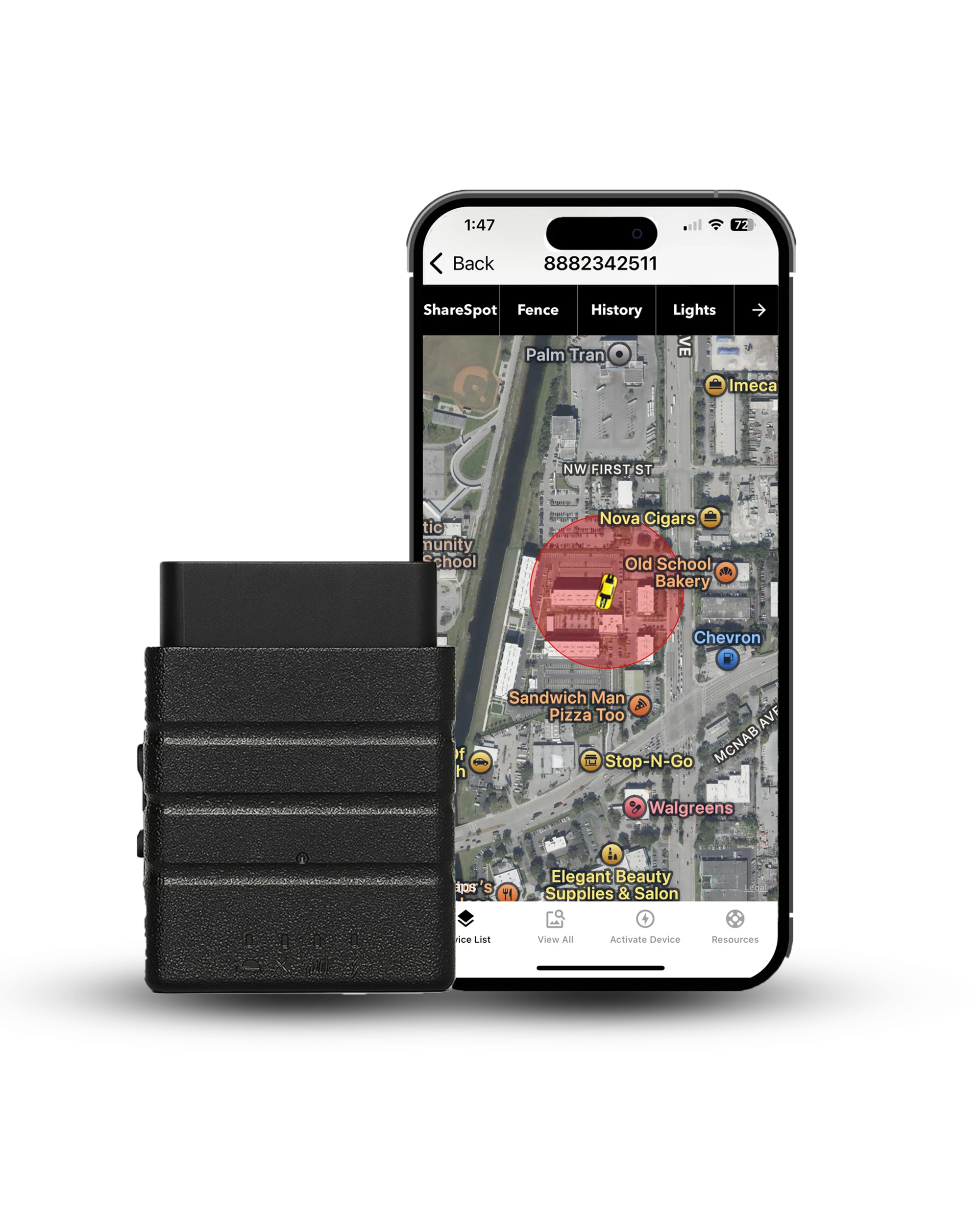
Konnect Truck GPS Tracker
A pure real-time GPS tracker for fleets. Konnect answers the question most operators actually need answered: where is the vehicle now, and where has it been. No wiring, no installer, no ECU polling.
Konnect does not report idle time, fuel level, harsh braking or engine fault codes. The engine-run-time and idle figures in this guide describe trackers built around engine polling.
- Super-fast live updates
- OBD2 plug-in, no wiring
- Geofencing
- Speed alerts
- Tamper alerts
- Full route history
- Lifetime warranty
- U.S. based support
Real Fuel Cost Breakdown (Before vs After Tracking)
OBD GPS tracking shows where fuel money leaks and how quickly those losses shrink once the data gets used daily. Here's a modeled U.S. fleet example based on a vehicle running about 1,500 miles per month.
| Fuel Cost Factor | Before Tracking | After Tracking | Monthly Savings |
|---|---|---|---|
| Idle time (90 min/day) | $120 to $150 | $40 to $60 | $80 to $100 |
| Aggressive driving | $80 to $120 | $30 to $50 | $50 to $70 |
| Route inefficiency | $50 to $90 | $20 to $40 | $30 to $50 |
| Fuel misuse or untracked loss | $60 to $150 | $10 to $30 | $50 to $120 |
Totals per vehicle:
- Before tracking$310 to $510 lost every month.
- After tracking$100 to $180 of remaining inefficiency.
- Net savings$200 to $350 per vehicle, per month.
In a 20-vehicle fleet, that adds up to $4,000 to $7,000 saved monthly once the tracking data is used consistently.
The shift happens because each problem becomes visible fast. Idle alerts reduce wasted engine time within days. Driving habits change within weeks once patterns get reviewed. Route adjustments remove unnecessary miles almost immediately.
Important: most fleets already have these problems. Tracking exposes them and gives you control over where the money goes. Worth noting which line items need which data: route inefficiency, aggressive driving and untracked usage all show up in location and trip history alone. Idle time is the one that needs a device polling the engine computer, which carries its own trade-off covered further down.
Beware of little expenses; a small leak will sink a great ship.
Benjamin FranklinPoor Richard’s Almanack, 1758Real Monthly Fuel Loss Per Vehicle (U.S. Fleet Example)

Fuel loss in fleets builds from small daily inefficiencies. Broken down by category, the numbers add up quickly. For a typical U.S. vehicle running 1,200 to 1,800 miles per month, idling, aggressive driving and poor routing together can account for hundreds of dollars in avoidable fuel costs.
According to the U.S. Department of Energy, aggressive driving alone can raise fuel consumption by up to 30%, and EPA figures put heavy-duty truck idling at roughly 0.8 to 1 gallon per hour. Light-duty gasoline engines burn closer to 0.3 to 0.5.
U.S. Department of Energy and U.S. Environmental Protection AgencyIdle Time Fuel Loss
Idle time burns fuel without moving the vehicle. Heavy-duty trucks consume 0.8 to 1 gallon per hour while idling, and light-duty gasoline engines closer to 0.3 to 0.5. If a driver idles 60 to 90 minutes daily, that works out to roughly 20 to 30 gallons wasted monthly, or $100 to $150 lost per vehicle. Idle time usually comes from waiting at job sites, traffic stops, or leaving the engine running during short breaks.
Tip: cutting idle time by just 20 minutes per day per vehicle can save hundreds of dollars monthly across a fleet.
Aggressive Driving Impact
Driving style directly affects fuel consumption. Rapid acceleration, speeding and hard braking increase fuel usage by 15% to 30%. For a vehicle spending around $400 a month on fuel, that's $60 to $120 wasted. Two drivers in the same vehicle often show completely different fuel costs for exactly this reason.
Route Inefficiency Cost
Poor route planning adds unnecessary miles. Even a 10% to 15% increase in distance produces measurable waste: for a vehicle running about 1,500 miles a month, an extra $40 to $80. Route inefficiency usually comes from backtracking, traffic-heavy routes, or poorly sequenced stops. GPS tracking lets dispatchers assign more efficient routes using live traffic and road conditions, cutting excess mileage and engine hours across daily operations.
Fuel Theft and Misuse
Fuel loss doesn't always come from driving. Some of it happens before the fuel ever gets used.
In January 2025, federal prosecutors charged dozens of individuals in a reported $3.4 million diesel theft scheme operating across New Jersey, with more than 2,000 fleet victims identified between 2023 and 2024. Vehicles were fitted with large hidden tanks and cloned cards were used to buy diesel at scale.
Reported by CDLLifeFor a vehicle with a $400 monthly fuel budget, misuse and shrinkage can account for $50 to $150 a month. Without tracking fuel activity alongside vehicle location, those losses usually go unnoticed.
Important: combine idle waste, aggressive driving, route inefficiency and misuse and the pattern is clear. Fuel loss rarely comes from a single issue. Fuel waste accumulates across daily operations, vehicle by vehicle, until the total turns into a major cost.
How OBD GPS Trackers Fix Each Fuel Cost Problem
OBD GPS trackers address fuel costs by connecting engine data, vehicle tracking and driver activity into one system that turns fuel waste into clear, fixable actions.
Most fleets already collect data. The difference comes from using it daily. Once fuel usage, driving patterns and vehicle movement are visible in one place, cost reductions follow from simple operational changes. Each capability targets a specific source of loss.

What Location Data Alone Fixes
Location and trip history on their own cover route inefficiency, speeding and untracked use, which is three of the four losses in the table above. None of it requires the tracker to query the engine. Here is what each capability does.
-
Route visibility
Live location and movement let you respond to traffic, delays and poor sequencing rather than sticking to a fixed plan. Removing 10% of extra mileage can cut $40 to $60 per vehicle each month.
-
Trip history
Every stop, every mile, timestamped. Personal errands on company fuel, extra trips nobody logged and quiet route drift all surface once the history is in front of you.
-
Speed alerts
Speeding is the single driving habit with the clearest fuel penalty, and it is visible from position data alone. Flag it, coach it, and the fuel curve follows.
-
Geofencing
Know when a vehicle arrives, leaves, or turns up somewhere it has no business being, without anyone filing a report.
-
Tamper alerts
If a device gets unplugged mid-shift, that tells you something on its own, and you find out the same day rather than at month end.
What Needs Deeper Engine Integration
Idle-time alerts, harsh-braking scores and fuel-level analytics all come from continuously polling the vehicle's engine computer rather than from position data. Plenty of fleet platforms do it, and the reports are genuinely useful. It's worth understanding the trade before you assume you need them.
Tip: route and trip-history changes are usually the first savings a fleet notices, because acting on them needs no new equipment and no engine data. Just awareness and follow-through.

Why Konnect Leaves Fuel and Idle Polling Out on Purpose
This is worth being direct about, because it is a real difference between Konnect and the platforms that advertise fuel dashboards.
Konnect is a pure real-time GPS tracker for fleets. Super-fast updates, tamper alerts, speed alerts and geofencing, backed by USA based support and a lifetime warranty. Konnect does not report idle time, harsh braking or fuel level, and that is a design decision rather than a gap in the spec sheet.
The reason is electrical: Pulling idle state, fuel level and acceleration events means a device sitting on the diagnostic bus querying the engine computer continuously, all day, on every vehicle. Across a mixed fleet of different makes, model years and battery conditions, that constant polling leaves the door open to electrical issues. Konnect was engineered the other way deliberately: read position fast, stay light on the vehicle, and leave the ECU alone.
For most operators that is the trade they would make anyway. The question a fleet actually needs answered every day is where the vehicle is and where it has been.
So if driver-behavior scorecards and fuel-level analytics are central to how you run your fleet, you want a platform built around deep engine integration, and you should go in knowing what that polling asks of your vehicles. If what you need is fast, dependable location on every vehicle, with alerts when something moves that shouldn't, Konnect is built for exactly that and nothing else.
Fleet Example (With Numbers)
Here is how the math works out on a 20-vehicle delivery fleet using OBD GPS tracking to analyze fuel usage, driving patterns and route efficiency. Within the first two weeks the usual patterns surface: high idle time, inefficient routing, and inconsistent habits between drivers.
Those patterns are not unusual. Department of Energy figures put the cost of aggressive driving at up to 30% more fuel, and idling at up to a gallon an hour. Industry telematics reporting generally shows fleets cutting fuel consumption by 10% to 25% after adopting GPS tracking and driver monitoring.
Applying those insights over 30 days, the adjustments look like this:
- Idle time: Down from about 80 minutes to 35 minutes per day.
- Driver performance: Improved through weekly scorecard reviews.
- Routing: Optimized to eliminate backtracking and high-traffic delays.
| Measure | Before | After | Result |
|---|---|---|---|
| Fuel cost per vehicle | About $420/month | About $290 to $320/month | $100 to $130 saved |
| Across 20 vehicles | Not tracked | Measured monthly | $2,000 to $2,600 per month |
| Annualized | Not tracked | Measured monthly | $24,000 to $30,000 |
Key insight: two vehicles running the same route can show a $90 difference in monthly fuel usage. The gap comes from idle time and driving patterns, not vehicle condition. Correct those and the numbers converge within a few weeks.
The fleets that save money are not the ones with the fanciest dashboard. They are the ones where somebody actually opens the idle report on Monday morning and picks up the phone.
ROI: How Fast OBD GPS Trackers Pay for Themselves

OBD GPS trackers recover their cost quickly, because monthly fuel savings usually exceed the device cost inside the first month or two.
- Typical device cost$50 to $120 one time.
- Typical software cost$15 to $30 per vehicle per month.
- Typical monthly savings$200 to $350 per vehicle, from idle, driving, routing and loss prevention combined.
- Net positionRoughly $170 per vehicle per month even at the low end of savings and the high end of spend.
On a 15-vehicle fleet that works out to $3,000 to $5,000 a month, or $36,000 to $60,000 a year. No new vehicles and no major operational overhaul. The improvement comes from better visibility, accurate data, and consistent follow-up.
Important: once fuel usage becomes measurable, cost control becomes part of daily operations instead of guesswork.
Efficiency is doing things right; effectiveness is doing the right things.
Peter DruckerThe Effective ExecutiveWhy Most Fleets Still Waste Fuel (Even With Tracking)

Fleets keep wasting fuel because the data gets collected but never changes daily operations. Installing GPS fleet tracking does not reduce fuel costs on its own. The drop happens only when someone acts on what the data shows, consistently. Here is where most operations fall short:
- Data gets reviewed, nothing follows: Reports show idle time and driving patterns, but nobody adjusts routes, schedules or habits.
- Driver patterns go unchallenged: Tracking highlights speeding and harsh driving, but without feedback the behavior stays the same.
- Idle alerts get ignored: Alerts fire all day. Without follow-up, engines keep running and the cost keeps accruing.
- Too much data, no focus: Dashboards full of metrics with no priority order, so teams stop opening them.
- No routine review: Fuel management needs a weekly slot. Without one, small inefficiencies creep back and grow.
Note: fleets that cut costs treat GPS data as part of daily decision-making. Fleets that don't act on it keep spending the same on fuel, even with the right technology installed.
What to Look for in an OBD GPS Tracker

An OBD GPS tracker should deliver clear data you can act on daily, not a complex dashboard nobody opens after the first week. Most systems offer dozens of features. Only a few move fuel costs, and the longest feature list is not automatically the right answer.
-
Update speed
Location refreshing every few seconds rather than every few minutes. This is the spec that decides whether the map tells you what is happening or what happened.
-
Route and trip history
A complete record of stops and mileage you can pull up when a customer or a driver disputes something.
-
Geofencing and speed alerts
The two alerts that catch the most fuel waste without touching the engine computer.
-
Tamper alerts
So a device coming unplugged is information rather than silence.
-
OBD port installation
Plug-and-play deployment across the fleet with no downtime and no installer.
-
A light footprint on the vehicle
Ask how much the device polls from the ECU. Deep engine integration buys you reports, and it asks more of the vehicle's electrical system in return.
If you're managing company vehicles, an OBD tracker built for business use keeps tracking and accountability consistent across drivers. See how that works in practice in our guide to OBD GPS trackers for company cars.
Tip: a tracking system only works when someone checks it regularly. Keep the setup simple, focus on a few key metrics, and let the data guide daily decisions.
Take Control of Fleet Fuel Costs
Fuel loss rarely comes from one major issue. Fuel loss adds up across daily operations: idle time, driving habits, route inefficiencies and untracked usage. Once those patterns become visible, reducing costs becomes a straightforward process.
OBD GPS tracking brings that visibility into one place. You see how vehicles are used, how drivers operate, and where fuel gets consumed. From there, small adjustments start adding up fast. Real-time tracking data lets fleet managers make faster, better-informed decisions about routing, scheduling and vehicle usage.
Start with one step. Plug in a tracker, review the data daily, and act on what shows up. That's how fuel tracking turns into real cost savings.
Put Your Fuel Spend Under a Microscope
A pure real-time GPS tracker for fleets. Super-fast updates, geofencing, speed and tamper alerts, full route history, a lifetime warranty and USA based support. Plugs into the OBD2 port with no wiring and no installer.
Konnect tracks location, not the engine. No idle time, fuel level, harsh braking or fault codes.
About the Author

 Buy on Amazon