
7 Best GPS Tracker For Teenager
Key Takeaways
-
01
OBD2 trackers provide reliable monitoring without charging or complex installation
-
02
Speed alerts help reduce risk by flagging dangerous driving behavior early
-
03
Driving reports highlight patterns that support clear and fair discussions
-
04
Geofencing with curfews helps monitor high-risk nighttime driving
-
05
Some trackers help lower insurance costs through safe driving reports
As an Amazon Associate, Konnect GPS earns from qualifying purchases.
GPS Tracker For Teenager Driving Safety: 7 Products Every Parent Needs To Know
If you lie awake wondering where your teen is the moment they're five minutes late, you're not alone. Teen driving accidents remain a major concern in the U.S., especially during that first nerve-wracking year after getting a license.
A GPS tracker for teenager driving safety helps you monitor speeding, curfews, hard braking, route history, and real-time vehicle location right from your phone. Some teen driving monitors also provide driving report cards, geofence alerts, and vehicle diagnostics that help you spot risky driving behavior before a close call turns into something far worse.
A quick note before we dive in: not every device below tracks the same things. Konnect, for example, focuses on speed, geofencing, and full trip history rather than harsh braking or idling, so pay attention to what each tracker actually monitors rather than what the category can generally do.
In this guide, you'll find 7 GPS trackers for teen drivers, along with key features, real-world advantages, possible drawbacks, and tips for choosing the right tracking device for your family.

Konnect OBD2 GPS Tracker
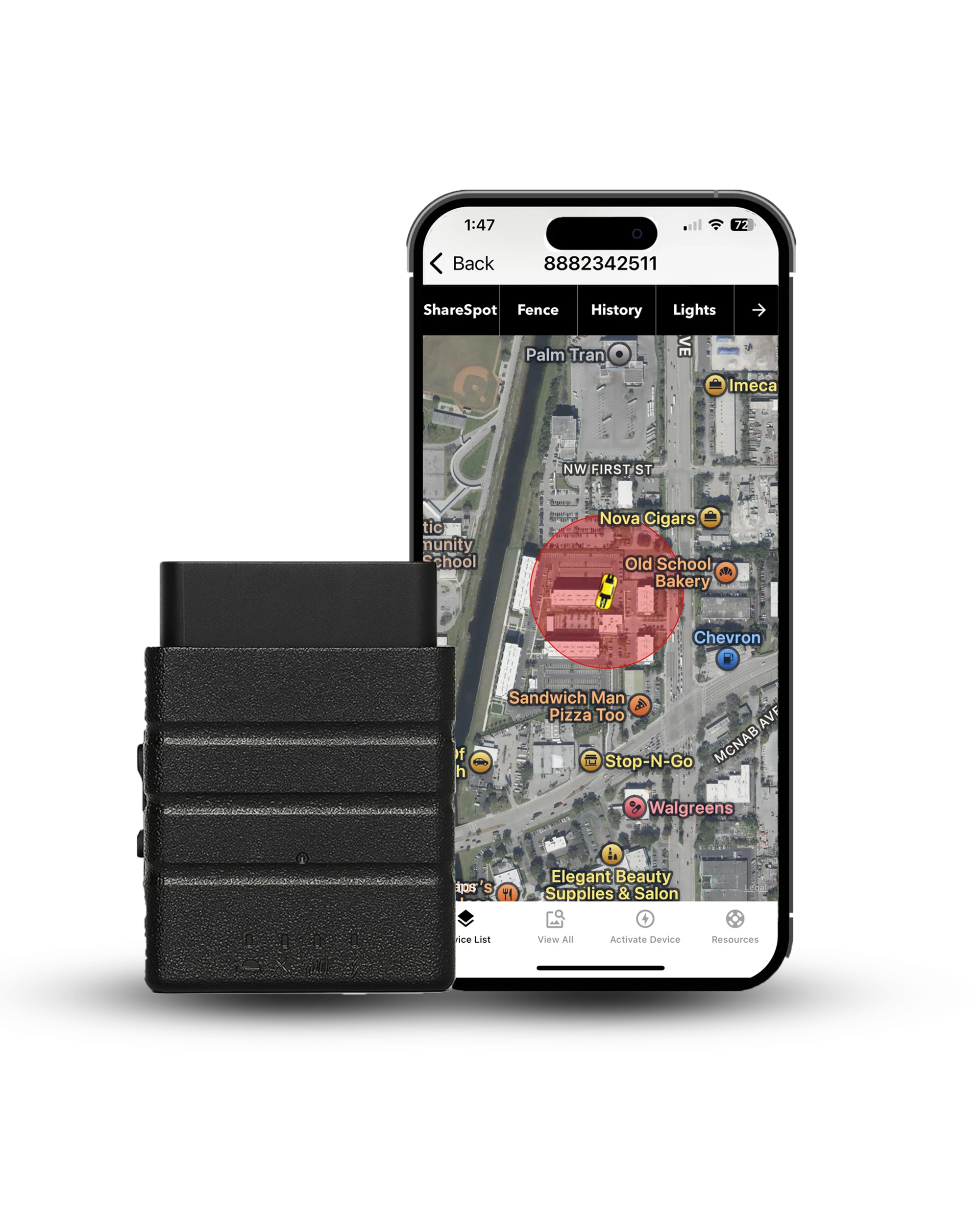
Real-time car tracking with 3-second location updates
- Updates every 3 seconds. Many teen trackers report once a minute.
- Plug and play. Straight into the OBD2 port, nothing to wire or charge.
- Worldwide tracking. 150+ countries with dependable real-time updates.
How We Tested Teen GPS Trackers
Every GPS tracker in this guide went through real-world driving tests instead of basic spec-sheet comparisons. Over a 3-week testing period, we tested OBD2 trackers, magnetic GPS devices, and battery-powered teen driving monitors across Interstate 5, State Route 73, and suburban roads throughout Irvine, Mission Viejo, and Laguna Niguel, California. School pickup testing covered nearby high school routes, while nighttime evaluations focused on freeway traffic, parking structures, and residential neighborhoods across South Orange County.

Testing focused on the features parents use most:
- Real-time tracking accuracy
- Speed alert responsiveness
- Geofence reliability
- App usability
- Installation difficulty
- Battery consistency
- Update frequency during active driving
Several trackers updated location every 3 seconds during road testing, while others showed delays of 30 to 120 seconds after turns or stops. We also checked how quickly apps reported harsh braking, rapid acceleration, unplugging attempts, and curfew violations.
To compare long-term usability, we installed trackers on multiple vehicles, including sedans, SUVs, and older OBD2-equipped cars. Battery-powered GPS trackers were tested for recharge frequency, magnetic stability, and signal consistency after overnight parking.


Quick Top Picks: Best GPS Trackers For Teenager in 2026
If you're short on time, this snapshot shows how the top GPS trackers stack up and who each one is actually built for. Each option below fits a different family's routine, which makes choosing easier once you know what matters most to you.
| Tracker | Best for | Device cost | Top features | Battery life | Where to buy |
|---|---|---|---|---|---|
 Konnect Konnect
|
Teen driving alerts and real-time monitoring | $39.95 plus $8.95 a month | 3-second updates, speeding alerts, trip history, plug-and-play install | Vehicle-powered | Amazon |
 SpaceHawk SpaceHawk
|
Discreet magnetic vehicle tracking | $29.95 | Magnetic mount, waterproof case, route history, discreet placement | 2 to 3 weeks | Amazon |
 LandAirSea 54 LandAirSea 54
|
Route history and driving playback | About $29.95 | Geofencing, motion alerts, historical playback, magnetic design | Up to 2 weeks | Amazon |
 Everlast Everlast
|
Long battery life tracking | About $49.95, plus $29.95 a month | Extended standby mode, location alerts, magnetic waterproof case | Up to 6 months standby | Amazon |
 SpyTec GL300 SpyTec GL300
|
Compact tracking for small vehicles | About $25.46 | Real-time tracking, speed notifications, compact portable design | 5 to 14 days | Sold direct and through major retailers |
#1. Konnect OBD2 GPS: Best Overall GPS Tracker For Teenage Drivers 2026

Buy direct and take an additional $10 off.
If you want the simplest option to set up tonight, Konnect ranks as the best GPS tracker for teenager driving safety because location updates refresh every 3 seconds, installation takes less than a minute, and the system gives you real-time vehicle tracking, speed alerts, geofence notifications, and route history directly through the mobile app.
Several GPS tracking devices performed well during testing, but Konnect delivered faster location updates during freeway driving, school pickup traffic, and suburban road testing across Orange County. The plug-and-play setup also worked better than battery-powered GPS trackers that required frequent charging or manual repositioning, which is one less thing for you to manage.
Worth knowing: Konnect tracks speed, geofence activity, and full trip history, but it doesn't monitor harsh braking or idling the way a couple of the other trackers on this list do. If that specific behavior is your top concern, keep it in mind as you compare options below.
Best for: Parents who want a simple GPS tracker for teenager driving safety with fast updates, driving alerts, and easy installation.
| Product | Key features | Specs | Amazon rating |
|---|---|---|---|
|
Konnect OBD2
|
|
|
- No charging needed, since power comes from the OBD-II port
- Geofence alerts for monitoring a teen's driving boundaries
- Fastest update rate on this list at 3 seconds
- Historical playback for reviewing routes after the fact
- Speed alerts help support safe driving habits
- No harsh braking or idling detection, unlike MotoSafety
- An $8.95 monthly data plan applies unless you buy the no-fee version
- Sits in the OBD port, so a determined teen can unplug it
- No on-screen navigation assistance for the driver

#2. SpaceHawk GPS Tracker: Best Mini Teen GPS Tracking Device

If your teen is the type to unplug anything that looks like a tracker, SpaceHawk might be the better fit. The device is a compact GPS tracker designed for out-of-sight vehicle monitoring, real-time location tracking, and placement underneath a car using a waterproof magnetic case.
SpaceHawk earned a spot on this list because the tracker stayed accurate during long-distance driving tests while remaining small enough to sit under a vehicle without drawing attention. The magnetic mount held secure through freeway driving, rough roads, and rainy weather testing across Southern California. Battery life also lasted longer than several compact GPS trackers tested in the same category, averaging about 2 to 3 weeks between charges.
SpaceHawk works best for parents who want a magnetic tracker, custom alerts, and precise location tracking without plugging anything into the car's diagnostic port. Real-time alerts for speeding, vehicle movement, and safe zone activity are sent directly to the mobile app on Android and iPhone.
| Product | Key features | Specs | Amazon rating |
|---|---|---|---|
|
SpaceHawk
|
|
|
- Real-time tracking with fast location updates
- Built-in magnet for secure attachment to any metal surface
- Geofence alerts for monitoring driving zones
- Goes on vehicles with no usable OBD2 port, and moves between cars
- Alerts for speed, low battery, and movement
- A monthly data plan is required
- Battery life of 2 to 3 weeks means regular recharging
- Comes off the vehicle to charge, unlike a plug-in OBD2 unit
- No engine diagnostics or driving report cards
Norma rates the unit highly for its small size and the freedom to place it almost anywhere, and found the app straightforward to understand. She recommends it without reservation.
Lindsay found the tracking badly inaccurate, sometimes off by half a mile, with wrong addresses reported at stops and routes that did not match the drive actually taken.
#3. LandAirSea 54: Top Portable GPS Tracker For Teens

LandAirSea 54 is a magnetic GPS tracking device that provides real-time location tracking, trip history, geofence alerts, and driving activity reports through a compact waterproof design.
LandAirSea earned strong testing scores because the tracker delivered consistent location updates during suburban driving, parking lot testing, and overnight vehicle monitoring. Historical route playback also worked better than several lower-cost GPS tracking devices tested for this guide, especially when reviewing repeated driving habits and curfew activity.
LandAirSea works best for parents who want detailed reports, route history, and magnetic mounting without installing anything into the car's diagnostic port. The compact case attaches underneath most vehicles and sends location updates directly to a smartphone or computer. During testing, the waterproof housing also handled rain, dirt, and freeway road debris without signal interruptions.
Read a complete breakdown of how the device was built from the engineers at Predictable Designs.
| Product | Key features | Specs | Amazon rating |
|---|---|---|---|
|
LandAirSea 54
|
|
|
- Real-time global tracking with a strong location record
- One of the highest-reviewed teen trackers on Amazon
- Geofencing alerts when a vehicle crosses a set boundary
- Motion-activated tracking for efficient battery use
- Simple enough for any parent to set up
- A monthly subscription is required for tracking service
- Can dislodge on rough terrain or major bumps
- The fastest update rate sits on the top plan tier
- Battery needs recharging and management
Eddie reports the unit pinpointed its position inside his house within seconds of setup. He notes the charging cable is an older USB style but is supplied in the box, with several hours of initial charging recommended.
Tim's complaint is the immediate subscription requirement. He expected to unbox the tracker and pair it with his phone without paying again straight away.
#4. Everlast: Portable Teen GPS With The Longest Battery Life

Everlast GPS is a portable tracking device designed for long-term vehicle monitoring, extended battery life, and real-time location tracking across the United States, Canada, and Mexico.
Everlast ranked highly during testing because the tracker lasted significantly longer between charges than most portable GPS devices tested for teen drivers. Several compact trackers required charging every few days, while Everlast continued sending location updates and speed alerts for weeks during active driving tests across suburban roads and freeway routes.
Everlast works best if you want long battery life, cross-country vehicle tracking, and fewer charging interruptions during your teen's daily driving. The tracker also performed well during overnight parking tests and multi-day route monitoring where consistent updates mattered more than second-by-second tracking speed. During testing, the waterproof magnetic case stayed attached through freeway driving, rain exposure, and rough road conditions without connection issues.
| Product | Key features | Specs | Amazon rating |
|---|---|---|---|
|
Everlast
|
|
|
- Real-time tracking across the US, Mexico, and Canada
- The longest battery life of any tracker on this list
- Customizable reports and alerts for speed, battery and location
- Geofencing alerts for designated areas
- 30-day no-hassle returns
- Monthly fee of $29.95, the highest on this list
- Device size and case may not be fully discreet
- No engine diagnostics data
- No driving report card for coaching conversations
Wendy has bought several trackers and rates this one the best of them, calling it affordable, accurate and durable. She singles out the protective case and says the device does exactly what it should.
This reviewer's unit failed after six months, and the free replacement failed at the same six-month mark. The offer that followed was a discounted used device, which he saw as reason enough to advise against buying.
#5. SpyTec GL300: Personal GPS Tracker For A Teenager's Car

SpyTec GL300 is a pocket-sized GPS tracker that provides real-time location tracking, speed alerts, geofence notifications, and historical route playback through a compact portable design.
SpyTec earned strong results during testing because the tracker remained accurate during long-distance driving and performed better than several low-cost GPS tracking devices in urban traffic and parking garage conditions. The compact size also made placement easier inside smaller vehicles where larger magnetic trackers were more visible.
SpyTec GL300 works best if you want a lightweight tracking device with worldwide coverage, customizable alerts, and flexible subscription options. The tracker connects over 4G and sends real-time location updates directly to Android and iPhone apps. The playback feature also helped review driving habits and repeated routes during testing. During testing, the magnetic case handled rain exposure, rough roads, and temperature changes without disconnecting from the vehicle.
| Product | Key features | Specs | Amazon rating |
|---|---|---|---|
|
SpyTec GL300
|
|
|
- Compact size suits smaller vehicles and tight placement
- Up to 14 days of battery life between charges
- Real-time tracking with accurate location reporting
- Lifetime warranty and 24/7 technical support
- Subscription from $22.95 a month, among the pricier plans here
- Frequent updates cut battery life and mean more charging
- After-hours support can be slower than advertised
- User limits on the monthly plan may not suit larger families
Dante bought the tracker for a replacement motorcycle after his previous bike was stolen. He rates the range of adjustable settings and the live feed highly, and calls the battery life excellent.
Jami's tracker performed well until rain got into the magnetic waterproof case, after which it began reporting erratic positions. She also objected to the monthly cost.
#6. MotoSafety GPS: Best For Driving Report Cards

MotoSafety GPS is an OBD2 tracker designed for teen drivers that provides real-time location tracking, speed alerts, driving behavior reports, and tampering notifications through a vehicle-powered system.
MotoSafety ranked highly during testing because the daily driver's report card gave more detailed insight into driving habits than several other OBD2 trackers tested for this guide. Alerts for harsh braking, rapid acceleration, speeding, and unplugging also arrived quickly during suburban and freeway testing. If harsh-braking alerts specifically are a must-have for you, this is one of the trackers on this list that actually covers it.
MotoSafety works best if you want driving reports, customizable alerts, and ongoing conversations about safe driving. The tracker plugs directly into the car's diagnostic port, so no charging or battery replacement is required. During testing, the mobile app also made reviewing trip history easier than several older monitoring platforms.
| Product | Key features | Specs | Amazon rating |
|---|---|---|---|
 MotoSafety MotoSafety
|
|
|
- Plug-and-play installation in the vehicle's OBD-II port
- Harsh braking and rapid acceleration alerts, which Konnect does not offer
- Customizable alerts and geofences for safe driving areas
- Route replay for reviewing driving habits and detours
- The device is included in the monthly price
- A $19.95 monthly subscription is required with no buy-once option
- Around 60-second updates, far slower than the 3-second tier
- Settings changes need the web portal rather than the app
- Not compatible with electric vehicles
Sean credits the tracker with helping him recover his vehicle more than once. He rates the live location view as the app's real strength, while noting that entering settings requires a computer rather than the phone.
Rodney's unit worked for a few months then stopped, and repeated resets following the instructions made no difference. A support ticket went unanswered, and he found the app difficult to use.
#7. Samsung SmartThings Tracker: Best Bluetooth Option

Samsung SmartThings Tracker is a compact tracking device that provides real-time location tracking, safe zone alerts, and emergency SOS notifications through the SmartThings mobile app.
Samsung SmartThings earned a place on this list because the tracker combined location monitoring with emergency communication features that several standard vehicle trackers lacked during testing. Geofencing alerts also worked consistently when vehicles entered or exited school zones, residential neighborhoods, and designated safe zones during suburban driving tests.
Samsung SmartThings works best if you want simple location tracking, SOS emergency features, and quick access through Samsung Galaxy devices. The tracker connects over LTE and Wi-Fi, letting you check a location from Android devices without installing hardware into the car's diagnostic port. During testing, the SOS feature sent instant alerts after a double-press while also updating the current location inside the app.
| Product | Key features | Specs | Amazon rating |
|---|---|---|---|
 Samsung SmartThings Samsung SmartThings
|
|
|
- Broad LTE-M range for wide-area location tracking
- An SOS button a teen can press without unlocking a phone
- Integrates with SmartThings for automated home safety alerts
- Very long battery life between charges
- Limited to two notification zones, restricting monitoring areas
- Notification delays of 4 to 9 minutes, the slowest here
- Built around the Samsung ecosystem rather than any phone
- A monthly fee applies once the included service period ends
Russ uses the tracker to keep tabs on a dog that strays past the yard, and can now pinpoint the animal whenever it goes out of sight. He reports the battery lasting more than a year.
Tomekia received a used unit still registered to its previous owner, which blocked her from pairing anything to it, and then found the return window had already closed.
Pros and cons information for this device was informed by a detailed review from CNET.
On a teen tracker the three specs that decide it are update rate, whether the device needs charging, and whether it reports the driving behavior you actually want to talk about.
Tell your teen the tracker is there
Everything on this page assumes the vehicle is registered to you and the driver is your own minor child. Placing a tracker on a car you do not own, or monitoring another adult without their agreement, is a crime in several states. Once a teen turns 18 and owns their own vehicle, the same rules apply to them as to any other adult.
Telling a teen the tracker exists is also what makes it work. A tracker they know about changes how they drive. A tracker they discover changes how they feel about you, and the driving reports stop being a conversation and start being evidence.
Notable Teen GPS Tracker Mentions
Several tracking devices were reviewed for this guide but did not make the final seven. Some had genuinely useful features and strong reviews. Here are the ones worth knowing about:
- Optimus 2.0 GPS Tracker
- Linxup GPS Car Tracker
- Livewire Volt Fleet Tracking
- Logistimatics Mobile-200 GPS
- Amcrest 4G LTE GPS Tracker
- BrickHouse Security Spark Nano 7 with magnetic case
- Bouncie GPS
- Apple AirTag
Key Features To Look For In A Teen GPS Tracker

Choosing a GPS tracker for teenager driving safety becomes much easier once you understand which features actually help you monitor driving habits, improve location accuracy, and reduce risky behavior behind the wheel. Some devices focus on basic location tracking, while others provide speed alerts, driver's report cards, geofencing, and detailed driving reports.
The best tracking devices for teen drivers usually combine real-time alerts, consistent updates, long battery life, and simple mobile app access. Below are the most important features to compare.
| Key feature | Why parents use it |
|---|---|
| Real-time GPS tracking | Shows a teen's exact location, route history, and current driving activity through a mobile app |
| Speed alerts | Sends instant alerts when a teen driver exceeds a preset speed limit |
| Geofencing and safe zones | Creates digital boundaries around school, home, work, or a friend's house |
| Driving history reports | Tracks harsh braking, rapid acceleration, and repeated driving patterns |
| Long battery life | Reduces charging interruptions during daily vehicle tracking |
| SOS button | Lets a teenager send emergency alerts and coordinates during an emergency |
| Waterproof design | Protects tracking devices from rain, dirt, and rough weather conditions |
| Customizable alerts | Lets parents receive alerts for speeding, unplugging, movement, or curfew activity |
| Location history | Helps parents review where the vehicle traveled during school hours or nighttime driving |
| Easy installation | Plug-and-play trackers simplify setup for parents without technical experience |
Real-time tracking remains one of the most important features in a teen driving monitor because you can quickly check a vehicle's current location during school commutes, late-night driving, or unexpected route changes. Trackers update a teen's position on a map every 3 to 60 seconds depending on the device and subscription plan.
Safe zone alerts also help you keep tabs on vehicle movement around schools, sports practice, work, or residential neighborhoods. Several monitoring systems send instant alerts whenever a vehicle enters or exits predefined digital boundaries.
Negative Influences On Teen Driving
- Speeding was a factor in 33% of teen drivers involved in fatal crashes in 2024.
- Teens tend to speed more as they gain confidence, not less.
- 22% of teen drivers in fatal crashes that year had been drinking.
- Carrying a mix of teen passengers raises crash risk several times over compared with driving alone.
- Teens drive more cautiously when no other teens are in the vehicle.
- Passenger restrictions are a standard part of graduated licensing for this reason.
- Distraction is a recognized leading risk factor for drivers aged 15 to 20.
- Texting is the most common form of distraction among young drivers.
- Distraction affects newer drivers more, since attention is already stretched.
Sources: NHTSA teen driving data (2024), CDC teen driver safety, and National Safety Council graduated licensing research.

People killed in crashes involving a teen driver aged 15 to 18 in 2024. Of those, 752 were the teen driver and 478 were their passengers.
Source: NHTSA, Teen Driving, 2024 data.
Positive Influences On Teen Driving
- Alerts flag unsafe speeds while the drive is happening, not weeks later.
- Some insurers offer discounts where safe-driving data is shared.
- Visibility often buys a teen more freedom rather than less.
- Late-night hours carry the highest crash risk for young drivers.
- Graduated licensing night restrictions have measurably cut crashes.
- A geofence plus a curfew alert enforces the rule without an argument.
- Teens use seat belts less consistently than any other age group.
- Seat belts cut the risk of death for front-seat car occupants by about 45%.
- Belt use drops further when teens ride with other teens.
Sources: NHTSA teen driving data (2024) and seat belt effectiveness estimates, plus CDC teen driver safety guidance.
Additional Resources: Expert Insights On Teen Driving Safety

Dr. Lisa Damour, Adolescent Psychologist
Dr. Lisa Damour writes on the role of emotional maturity in adolescent decision-making, which carries directly into how a new driver handles pressure behind the wheel. Her work is at DrLisaDamour.com.
Dr. Frank Farley, Psychologist Specializing in Risk-Taking Behavior
Dr. Frank Farley researches why teenagers take risks, work that was covered in the New York Times. Useful background for conversations about driving habits.
TeenDrive365
TeenDrive365 is a collaboration between Toyota and Discovery Education aimed at the first two years behind the wheel, with lesson plans, interactive tools, and practical driving tips for teens, families, and educators.
National Highway Traffic Safety Administration
The NHTSA teen driving hub publishes the current crash statistics, educational materials, and safety guidelines this guide draws on.
How GPS Trackers Improve Teen Driving Safety

A GPS tracker won't stop every bad decision, but it gives you something you didn't have before: visibility into speeding, driving habits, vehicle location, and unsafe behavior while your teen is on the road. Many tracking devices now send real-time alerts for harsh braking, rapid acceleration, curfew violations, and sudden route changes directly to a mobile app.
Real-time location tracking also tells you when your teen safely arrives at school, sports practice, work, or a friend's house, and that alone takes a lot of the guesswork out of your evening. Geofencing features create safe zones and send alerts whenever a vehicle enters or exits selected areas.
Some OBD2 trackers provide driver's report cards that show repeated patterns over time. That helps you spot risky behavior early instead of reacting after an accident or traffic violation, and it gives you something concrete to talk through together rather than a guessing game.
According to the CDC teen driver safety data, car accidents remain one of the leading causes of death for U.S. teens, which is exactly why more families now use monitoring tools during those first, most nerve-wracking years.
Final Verdict: Which Teen GPS Tracker Is Best?

The best GPS tracker for teenager driving safety comes down to how you want to monitor driving habits, vehicle activity, and real-time location. Some parents prefer OBD2 trackers for detailed reports and speed alerts, while others want portable devices with magnetic mounting and long battery life.
Konnect OBD2 GPS remains the best overall choice for most families because it combines the fastest real-time tracking here, speed alerts, geofence notifications, and plug-and-play installation with no battery to charge. SpaceHawk works better where there's no usable OBD2 port, Everlast offers the longest battery life, and MotoSafety is the pick if harsh braking and a driver's report card are what you actually want.
No tracking device replaces safe driving education, but the right teen driving monitor can help you spot risky behavior earlier, encourage safer decisions, and stay a little more at ease during those first years of independent driving.
Start with the fastest updates on this list
The Konnect OBD2 tracker plugs in under the dash in about ten seconds, refreshes position every 3 seconds, and never needs charging. $39.95 with an $8.95 unlimited plan, or $199 once with no monthly fee at all.
About the Author

 Buy on Amazon