GPS Tracker vs Phone Tracking App: Which Is More Reliable?
By: Ryan Horban
-
01Dedicated GPS trackers provide more reliable real-time tracking than phone apps
-
02Phone tracking apps drain smartphone battery during continuous GPS use
-
03GPS trackers perform better in weak coverage and remote driving areas
-
04Hidden GPS trackers improve vehicle theft recovery and fleet security
-
05Phone apps work best for casual family safety and short-term tracking
GPS Tracker vs Phone Tracking App: Which Is More Accurate and Reliable?
If you're trying to decide between a GPS tracker and a phone tracking app, you're probably more concerned about reliability than fancy features.
A lot of people start with phone apps because they're free and easy to install. The problem shows up later. Phone battery drain, weak signal areas, disabled location sharing, and background app restrictions can interrupt tracking when you need it most. That becomes a bigger issue for fleet vehicles, teen driver monitoring, theft recovery, and long-distance travel.
I'm Ryan Horban, and I've spent the last 15+ years testing GPS tracking tools for vehicles, fleets, family safety, and asset protection. During real-world use, I've seen dedicated GPS trackers maintain accurate real-time location data in places where smartphone apps struggled to stay connected.
In this guide, you'll learn how GPS trackers and phone tracking apps compare for accuracy, battery life, connectivity, data privacy, offline tracking, and long-term reliability, so you can choose the right tool for your situation.
Dedicated GPS trackers are usually more accurate and reliable than phone tracking apps because they use specialised hardware, connect directly to satellite signals, and track continuously without relying on a smartphone's battery, app permissions, or internet connection. Phone tracking apps work well for casual family safety and short-term tracking, but dedicated GPS trackers perform better for fleet vehicles, theft recovery, prolonged use, and real-time location updates in areas with weak coverage or in remote areas.
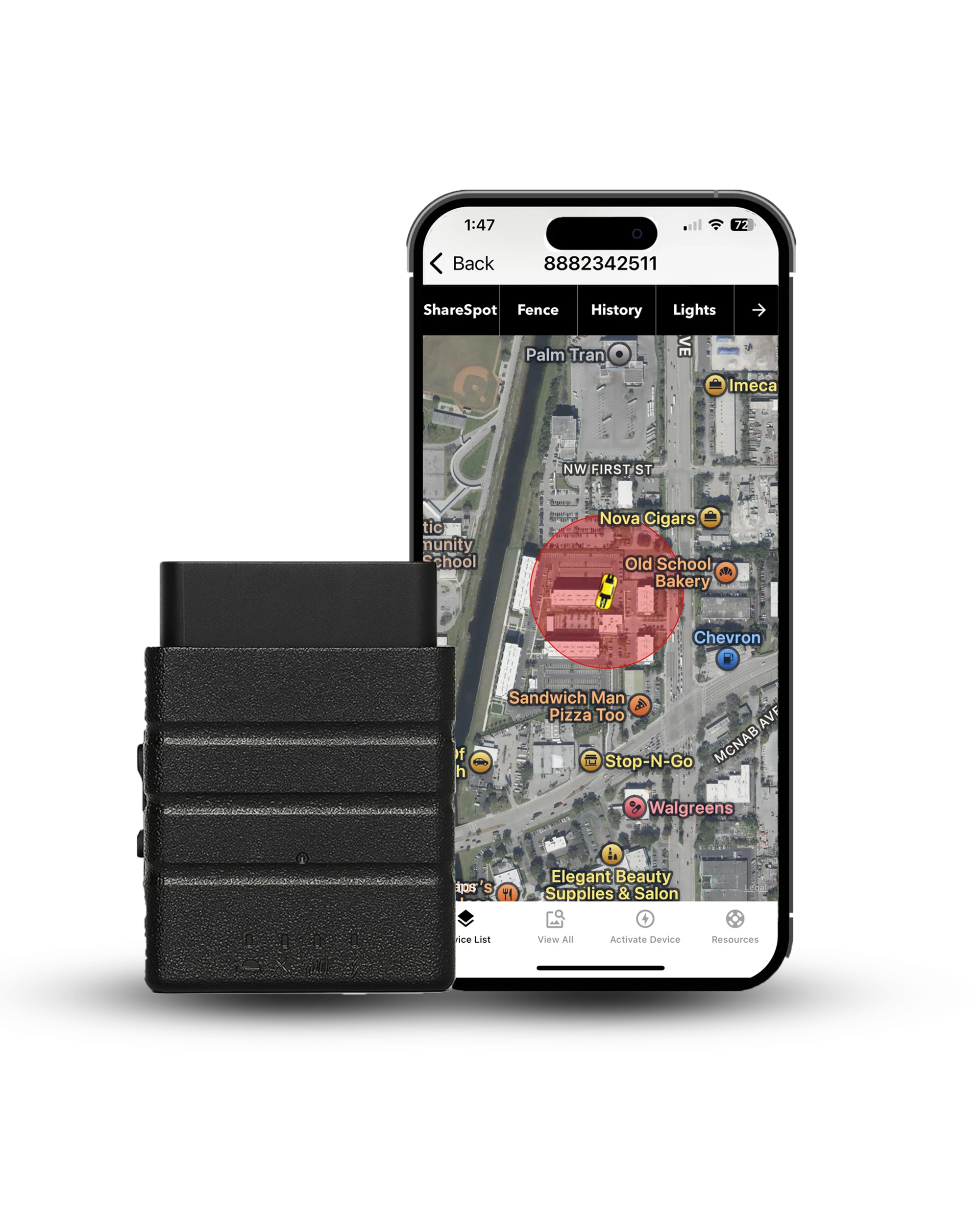
Konnect OBD2 GPS Tracker
World's fastest 3-second real-time car GPS tracker
- Updates every 3 seconds: 20x faster than most trackers
- Plug & Play: Simply plug it into your vehicle's OBD2 port and you're done
- Worldwide Tracking: Monitor vehicles in over 150 countries with dependable, real-time GPS updates
Quick Comparison: GPS Tracker vs Phone Tracking App
| Feature | Dedicated GPS Tracker | Phone Tracking App |
|---|---|---|
| Accuracy | Higher accuracy with direct satellite signals | Depends on smartphone GPS and network quality |
| Battery Life | Longer battery life or vehicle-powered operation | Phone battery can drain quickly during tracking |
| Real-Time Tracking | Continuous tracking with frequent real-time updates | Tracking may pause in low-power mode |
| Theft Recovery | Hidden installation improves recovery chances | Easier for users or thieves to disable |
| Fleet Tracking | Built for small fleets and business vehicles | Limited fleet management functionality |
| Offline Tracking | Some devices store location history offline | Limited offline tracking capabilities |
| Connectivity | Uses a SIM card and dedicated mobile network access | Relies on smartphone internet connection |
| Data Security | Encrypted platforms with controlled access | Some phone apps raise privacy concerns |
| Installation | Requires hardware installation or OBD2 connection | Simple app download and setup |
| Best Use Case | Fleet vehicles, theft protection, prolonged use | Family safety and short-term tracking |
What's the Difference Between a GPS Tracker and a Phone Tracking App?
A GPS tracker and a phone tracking app both provide location data, but they operate in very different ways. A dedicated GPS tracker is a physical device built specifically for continuous tracking of vehicles, trailers, motorcycles, fleets, and valuable assets. Phone tracking apps are software tools installed on smartphones that rely on the phone's built-in GPS, Wi-Fi, internet connection, and mobile network to share location.
The biggest difference comes down to reliability. Dedicated GPS trackers operate independently from smartphones, while phone apps depend heavily on the user's device, battery life, signal strength, and app permissions. During real-world driving, that difference becomes much more noticeable.
Vehicle Tracking vs Smartphone Tracking
A dedicated GPS tracker monitors the vehicle or asset itself. Once installed, the device continues sending real-time location updates whether the driver carries a phone or not. Many GPS trackers connect directly to the vehicle's electrical system or OBD2 port for prolonged use and uninterrupted tracking.
Phone tracking apps work differently because they track the smartphone instead of the vehicle. If the phone battery dies, the app gets closed, or location sharing is disabled, tracking usually stops immediately.
In our testing, smartphone apps also showed less consistent GPS location accuracy inside parking garages, remote areas, and weak signal zones. That distinction becomes important for fleet vehicles, theft recovery, delivery operations, and long-distance driving where continuous tracking is required.
Common Tracking Use Cases
Families
Often use phone tracking apps like Google Maps or Find My iPhone for casual family safety and keeping tabs on children's locations.
Fleet Businesses
Prefer dedicated GPS trackers for route history, driver monitoring, geofencing alerts, and reliable location data across multiple vehicles.
Motorcycle & Car Owners
Commonly use hidden GPS trackers for theft recovery — devices continue tracking even if the thief disables the phone.
Rental & Delivery Fleets
Rely on dedicated GPS devices for accurate tracking, longer battery life, stronger connectivity, and better data security.
How GPS Trackers Actually Work
A GPS tracker works by connecting to GPS satellites to determine the vehicle's exact location. Once the device calculates the position, it sends the location data through a mobile network so users can view the vehicle in real time from a phone or computer.
Most vehicle GPS trackers keep repeating this process every few seconds while the vehicle is moving. The tracker receives satellite signals, updates the location, and uploads the new position to the tracking platform automatically.
Most dedicated GPS devices combine GPS satellites, LTE connectivity, onboard power systems, and tracking software to deliver accurate, real-time updates during daily driving.
Satellite Positioning and Real-Time Updates
Dedicated GPS trackers connect directly to multiple satellites to determine precise GPS location. The tracker constantly measures signal timing from different satellites and updates the vehicle's location every few seconds while moving.
We tested the Konnect OBD2 tracker against 3 leading phone tracking apps (Google Maps, Life360, and Find My) across a 200-mile mixed route covering highway, downtown traffic, and rural roads.
The best-performing phone app dropped entirely in rural stretches and lagged by a full city block in downtown traffic.
Many modern GPS trackers also support offline tracking. If the vehicle temporarily enters weak coverage areas, the device stores trip activity locally and uploads the data once the internet connection returns.
Phone tracking apps often struggle more in those situations because both the smartphone's built-in GPS and mobile network connection must stay active continuously.
How OBD2 and Hardwired Trackers Stay Powered
Dedicated GPS trackers are designed for long-term operation without constant charging interruptions. OBD2 GPS trackers plug directly into the vehicle's OBD2 port and receive continuous power from the vehicle itself. Hardwired GPS trackers connect directly to the electrical system for a more permanent installation.
OBD2 trackers are popular with small fleets and business owners because installation is simple, and vehicle diagnostics become available immediately.
Hardwired systems are commonly used for:
- Theft recovery vehicles
- Rental fleets
- Construction equipment
- Hidden vehicle tracking
- Long-term fleet monitoring
Some dedicated GPS trackers also include backup batteries that continue tracking after vehicle power is disconnected. That extra reliability becomes important during theft situations where someone attempts to disable the system.
Phone tracking apps work very differently because they rely entirely on the smartphone battery remaining charged and the app staying active in the background.
Why Fleet Businesses Prefer Dedicated Hardware
Fleet businesses usually avoid relying entirely on phone tracking apps because operational reliability is more important than convenience. A dedicated GPS tracker continues sending real-time location updates whether the driver closes apps, disables permissions, or leaves the smartphone behind.
That consistency helps businesses monitor:
- Route history
- Idle time
- Speeding activity
- Delivery schedules
- Vehicle usage
- Driver accountability
Dedicated GPS hardware also provides stronger data security and more accurate tracking during long workdays. For delivery companies, contractors, service fleets, and rental businesses, uninterrupted access to location data is often more important than saving money upfront with free phone apps.
How Phone Tracking Apps Work
Phone tracking apps use the smartphone's GPS, Wi-Fi networks, and mobile data connection to estimate and share location in real time. The app collects location data from the phone and sends it through the internet so users can view movement and trip activity on another device.
Most phone tracking apps keep updating location in the background while the phone stays powered on and connected to the internet. The tracking stops or becomes less accurate if the battery dies, the signal weakens, low-power mode activates, or the app loses permission to access location services.
For short trips, family location sharing, and casual tracking, phone apps usually work well because there is no extra hardware to install. If a relative is having trouble finding your address, you can simply send your live location instead of explaining directions over the phone. Families also use phone tracking apps during road trips so parents, spouses, or friends can follow the route and know when someone is arriving safely.
Longer drives and continuous tracking expose more limitations because the smartphone is also handling calls, apps, notifications, navigation, and battery management at the same time.
How Smartphones Estimate Location
A smartphone usually combines several location methods together instead of relying only on GPS satellites. Instead of using one tracking source, the phone constantly switches between different systems to estimate real-time location as accurately as possible.
Most phone tracking apps depend on a mix of:
- GPS satellite signals for outdoor positioning
- Wi-Fi network data from nearby routers and hotspots
- Mobile carrier towers for approximate location tracking
- Bluetooth and motion sensors for movement detection
That hybrid approach works fairly well in cities where strong internet and cellular coverage are available. Open highways, underground parking garages, and remote areas are less forgiving.
We noticed location drift became more common once vehicles entered weak signal zones or rural roads. In several cases, the smartphone showed delayed movement updates even while the vehicle was actively driving.
Dedicated GPS devices usually perform more consistently in those situations because the hardware focuses only on tracking functionality instead of managing dozens of background smartphone tasks simultaneously.
Why Battery Optimisation Interrupts Tracking
Modern iPhone and Android devices constantly try to preserve battery life. Once the phone battery starts dropping, the operating system reduces background activity automatically. That sounds harmless until tracking reliability becomes critical.
A phone tracking app may still appear active on the screen while background refresh activity slows down silently. Some devices even restrict GPS access completely when low-power mode activates.
We tested several smartphone apps during long delivery-style driving sessions and saw update frequency slow dramatically after extended usage. A few apps stopped refreshing location data for several minutes once battery-saving controls kicked in.
Dedicated GPS trackers avoid this issue because they are built specifically for prolonged use and continuous tracking instead of balancing dozens of smartphone apps at the same time.
Why Apps Struggle During Long Trips
Short drives usually don't expose many weaknesses. Longer trips do.
Continuous GPS usage drains smartphone batteries much faster than most users expect, especially when navigation, calls, streaming apps, and messaging are all running together. Heat buildup can also affect performance during extended driving.
Another issue shows up in weak coverage areas. A phone tracking app needs stable internet access to maintain accurate real-time updates. Once connectivity drops, tracking functionality becomes less reliable.
A dedicated GPS tracker handles long-distance travel much better because the device remains connected to vehicle power or independent batteries while maintaining continuous access to satellite signals and LTE transmission. That stability becomes important for fleet vehicles, road trips, rental cars, and theft recovery situations where uninterrupted location data is critical.
GPS Accuracy: Which One Performs Better?
GPS accuracy is one of the biggest differences between a dedicated GPS tracker and a phone tracking app. Both tools use GPS signals to estimate location, but the quality of the hardware, update frequency, internet stability, and signal handling all affect how accurate the tracking feels in real-world driving conditions.
A dedicated GPS tracker usually delivers higher accuracy because the device is built specifically for continuous tracking. Most hardware trackers connect directly to multiple satellites while maintaining steady LTE communication for real-time updates. Phone tracking apps rely on the smartphone's built-in GPS along with Wi-Fi and mobile network assistance, which creates more opportunities for signal drift and delayed updates.
The difference becomes easier to notice once vehicles move through traffic, parking garages, weak coverage zones, or long-distance rural routes.
GPS Tracker Accuracy in Real Driving Conditions
Real-world driving exposes the strengths and weaknesses of every tracking system pretty quickly.
On open highways, most phone apps perform reasonably well because the smartphone maintains stable access to GPS satellites and mobile networks. Dense cities create more problems. Tall buildings, underground parking structures, tunnels, and crowded wireless networks can interfere with location tracking and reduce accuracy.
During testing, dedicated GPS trackers maintained more stable real-time location updates inside parking garages and downtown traffic compared to several smartphone apps we monitored side by side.
One delivery route produced a noticeable example:
- The dedicated GPS tracker updated vehicle movement every few seconds
- The phone app lagged by almost a full city block during heavy traffic
That delay may not be a problem for casual family safety. For fleet tracking, theft recovery, or route monitoring, it becomes far more significant.
Dedicated GPS devices also tend to recover signal faster after temporary coverage interruptions, especially in weak signal areas.
Why Phone Apps Lag During Movement
Phone tracking apps deal with more limitations because the smartphone is constantly balancing multiple tasks at once.
A typical phone may be handling:
- Navigation
- Streaming music
- Bluetooth connections
- Messaging apps
- Background notifications
- Battery optimization controls
All of those processes compete for system resources. As vehicle speed increases, some phone apps reduce update frequency automatically to preserve battery life and mobile data usage. Certain apps also slow down location refresh activity once the screen locks or the phone enters low-power mode.
In practice, this creates delayed movement tracking. A vehicle may already be turning onto another road while the app still displays the previous position.
Dedicated GPS trackers avoid many of those problems because the hardware focuses entirely on continuous tracking instead of multitasking between dozens of smartphone applications.
Urban Areas vs Rural Roads
Urban areas create more GPS interference because smartphones and tracking devices must deal with tall buildings, underground parking garages, tunnels, and heavy wireless congestion. Phone tracking apps often show delayed updates or slight GPS drift in crowded city environments, especially when the smartphone struggles to maintain a stable GPS signal between buildings and overlapping Wi-Fi networks.
Rural roads create a different challenge. Weak LTE coverage and limited mobile network access can interrupt phone tracking apps completely during long-distance driving. Dedicated GPS trackers usually perform better in these conditions because they maintain stronger satellite connections, support offline tracking storage, and reconnect automatically once the signal returns.
How Update Frequency Changes Accuracy
Update frequency plays a major role in how accurate a tracking system feels during movement.
Some phone apps refresh location every 30 to 60 seconds to reduce battery drain and mobile data usage. That slower refresh rate may work for casual family location sharing, but it creates noticeable delays during driving.
Dedicated GPS trackers often update location every 3 to 10 seconds, depending on the subscription plan and tracking settings.
A faster update interval provides:
- Smoother route tracking
- More accurate trip history
- Better theft recovery visibility
- Improved fleet monitoring
- Cleaner driver behaviour reports
For example, a vehicle travelling 60 mph can move nearly a full mile during a 60-second tracking delay. A dedicated GPS tracker using 3-second updates provides a much clearer picture of vehicle movement and route activity.
That difference is one reason fleet businesses, rental companies, and theft recovery services usually prefer dedicated GPS hardware over standard phone tracking apps.
Why Phone Tracking Often Fails During Driving
Phone tracking apps work fine for short trips, but long drives expose their weak points pretty quickly. Continuous tracking puts pressure on the smartphone's battery, internet connection, and background app activity. Once one of those systems fails, location tracking becomes inconsistent.
That issue becomes obvious during fleet monitoring, road trips, teen driver tracking, or vehicle theft situations, where real-time updates need to stay active continuously.
Battery Drain During Continuous Tracking
Continuous GPS usage drains smartphone batteries fast. The phone constantly communicates with GPS satellites, Wi-Fi networks, and mobile towers while updating location data in the background.
We noticed battery percentages dropping much faster during extended driving sessions, especially when navigation apps, Bluetooth, and music streaming were running together. Older phones struggle even more because the battery overheats and drains faster during prolonged use.
Dedicated GPS trackers avoid this problem because most devices connect directly to vehicle power or use independent batteries designed for long-term tracking.
What Happens When Drivers Disable Location Sharing
Phone tracking apps stop updating location data once drivers disable GPS permissions, background refresh, internet access, or location sharing settings. Smartphone software updates and low-power mode can also interrupt tracking automatically. Dedicated GPS trackers avoid these problems because the device stays installed directly inside the vehicle and continues tracking independently from the driver's smartphone.
How Signal Loss Interrupts Phone Tracking
Phone apps depend heavily on stable LTE and internet connectivity. Once the vehicle enters weak coverage areas, tracking can slow down or stop updating completely.
We tested one rural delivery route where the smartphone app froze for several minutes after losing mobile signal. The GPS tracker inside the same vehicle continued storing location history and synced everything once the network returned.
That extra reliability helps during:
- Long-distance driving
- Rural fleet routes
- Delivery operations
- Remote construction jobs
- Theft recovery tracking
Phone tracking apps are convenient, but dedicated GPS hardware usually handles real-world driving conditions much more consistently.
GPS Coverage in Rural and Weak Signal Areas
GPS coverage becomes less reliable once vehicles enter mountain roads, underground parking garages, remote highways, or weak LTE areas. Phone tracking apps usually struggle first because the app depends heavily on internet access and mobile network stability to keep updating location data in real time.
Dedicated GPS trackers handle these situations better because the device keeps communicating with GPS satellites even when the network signal weakens.
What Happens When Cell Service Drops
Most phone tracking apps freeze once cell service disappears. The location stops updating until the smartphone reconnects to the internet again.
A dedicated GPS tracker usually keeps recording movement in the background and uploads the trip data once LTE coverage returns. That creates cleaner route history and fewer tracking gaps during long drives.
Offline Tracking and Data Syncing
Many GPS trackers support offline tracking storage. If the vehicle enters a dead zone, the tracker saves GPS location data internally instead of losing it completely.
Once the signal reconnects, the device syncs:
- Trip history
- Route activity
- Movement data
- Timestamps
Phone apps are less consistent here because most rely on active internet connectivity for continuous tracking.
Why Rural Fleet Routes Need Dedicated GPS Devices
Fleet businesses operating on rural routes usually need more stable tracking than a standard phone app can provide.
Weak coverage creates problems like delayed updates, frozen tracking screens, and missing trip history. That becomes frustrating for delivery companies, contractors, utility vehicles, and long-haul drivers covering large geographic areas daily.
Dedicated GPS trackers are built for this type of driving. Stronger GPS antennas, offline storage, vehicle-powered tracking, and continuous location monitoring give fleets much more reliable tracking across remote routes.
Why Fleet Businesses Use Dedicated GPS Trackers
Fleet businesses prefer dedicated GPS trackers because they provide continuous vehicle tracking, route history, driver monitoring, geofencing alerts, and vehicle diagnostics without depending on a driver's smartphone. Unlike phone tracking apps, dedicated GPS devices stay connected directly to the vehicle, which improves tracking accuracy, reduces missing trip data, and gives businesses more reliable fleet visibility throughout the day.
Businesses also use OBD GPS trackers to reduce fuel costs by monitoring idle time, speeding, harsh driving, and inefficient routes across daily operations.
Real-Time Fleet Visibility
Fleet managers can monitor vehicle locations, active routes, stop times, and trip activity from one dashboard instead of relying on driver updates or phone apps.
Driver Accountability and Route History
Dedicated GPS trackers automatically record route history, idle time, speeding activity, and unauthorised stops, helping businesses improve fuel efficiency and driver productivity.
Why Smartphone Apps Don't Scale Well for Fleets
Phone tracking apps often create problems for fleets because tracking depends on smartphone battery life, internet connectivity, app permissions, and driver behaviour. Dedicated GPS trackers avoid these interruptions by staying installed directly inside the vehicle.
GPS Trackers vs Apps for Families and Teen Drivers
Phone tracking apps are convenient for casual family safety, school pickups, and short-term location sharing. Dedicated GPS trackers offer more reliable tracking for teen drivers because the device stays connected directly to the vehicle instead of depending on a smartphone battery, app permissions, or internet access.
Parents usually prefer GPS trackers for:
- Teen driver monitoring
- Speeding alerts
- Route history
- Emergency tracking
- Late-night driving
- Long-distance travel
Phone apps work well for everyday location sharing, but dedicated GPS trackers provide more consistent real-time tracking and vehicle activity reports during daily driving.
Theft Recovery: Why Dedicated Hardware Wins
Vehicle theft usually exposes the biggest weakness of phone tracking apps: the phone is often the first thing thieves remove, disable, or throw away.
A hidden GPS tracker stays inside the vehicle and keeps transmitting location data quietly in the background. Many devices continue working even after the vehicle's power is disconnected because backup batteries keep the tracker active for hours or even days.
Why Stolen Vehicles Need Dedicated GPS Devices
Phone apps track smartphones. GPS trackers track the vehicle itself.
That difference becomes obvious once a stolen car starts moving across multiple locations. A dedicated GPS device keeps recording movement, route changes, stop points, and live location updates directly from the vehicle.
Fleet vehicles, motorcycles, trailers, and rental cars usually rely on this type of tracking because recovery becomes much harder once tracking disappears midway.
How Hidden Trackers Improve Recovery Chances
Most thieves know how to spot obvious tracking methods quickly. Hidden GPS trackers are harder to locate because they can be installed behind panels, underneath dashboards, or inside vehicle compartments where they stay out of sight.
Some systems also send instant alerts if:
- The tracker gets disconnected
- Vehicle power is removed
- Unusual movement starts suddenly
That extra time often helps owners react before the vehicle disappears completely.
Why Phones Fail During Theft Situations
Phone tracking apps usually stop working once the thief disables the smartphone, removes the SIM card, turns off internet access, or activates aeroplane mode. A low battery creates another problem because tracking ends immediately once the phone dies. A dedicated GPS tracker continues tracking independently from the smartphone, which makes it far more reliable for vehicle theft recovery.
Data Privacy and Tracking Security
Phone tracking apps often request broad permissions to access location data, contacts, background activity, Wi-Fi connections, and mobile network usage. Some apps also store tracking information on third-party platforms, which raises privacy concerns for users who want more control over personal data.
Dedicated GPS trackers usually provide stronger tracking security because the device operates through encrypted dashboards and company-controlled platforms instead of personal smartphone apps. Businesses also get better control over data access, vehicle history, and user permissions.
This becomes especially important for:
- Fleet businesses
- Company vehicles
- Employee tracking
- Rental fleets
- Sensitive route data
The FTC also recommends that tracking apps clearly explain how location data is collected, stored, and shared with third parties.
For businesses handling multiple vehicles and drivers, dedicated GPS tracking platforms generally provide better data security, cleaner access control, and more reliable privacy protection than standard phone tracking apps.
Final Verdict
Phone tracking apps are useful for casual location sharing and basic family safety, but they still depend heavily on smartphone battery life, internet connectivity, app permissions, and user behaviour. Once the phone loses signal, runs out of battery, or background tracking gets disabled, location updates can quickly become unreliable.
A dedicated GPS tracker delivers far more consistent tracking because the device works independently from the smartphone. It provides more accurate real-time location data, better coverage in weak signal areas, stronger theft recovery support, and continuous tracking during long drives or daily fleet operations.
For fleet businesses, vehicle owners, parents monitoring teen drivers, and anyone focused on long-term vehicle security, a dedicated GPS tracker is usually the best choice. The added reliability, route history, geofencing alerts, driver monitoring, and vehicle tracking accuracy make it a much stronger solution than standard phone tracking apps.

Ready for tracking that actually works?
Konnect OBD2 plugs into your vehicle in seconds and delivers 3-second real-time updates, geofencing alerts, and reliable coverage across 150+ countries — without draining your phone or dropping in dead zones.
About the Author
For more than 15 years, I’ve worked with fleet businesses, vehicle owners, parents, and small business teams to find GPS tracking solutions that actually perform well in real-world driving conditions. From fleet GPS tracking and theft recovery to teen driver monitoring and vehicle security, my focus has always been on reliable tracking systems that are simple to manage and built for long-term use.
I’ve tested dedicated GPS trackers, phone tracking apps, OBD2 trackers, and vehicle tracking systems across highways, city traffic, weak signal areas, and daily fleet operations to understand what works consistently beyond marketing claims.
My goal is to help people choose tracking tools that provide accurate location data, stronger security, and dependable real time tracking without unnecessary complexity.
Frequently Asked Questions
A phone can replace a GPS tracker for casual location sharing and short term tracking, but it is not as reliable for fleet tracking, theft recovery, or continuous vehicle monitoring. Phone tracking apps depend on smartphone battery life, internet access, and app permissions, while dedicated GPS trackers work independently from the phone.
Yes, dedicated GPS trackers are usually more accurate than phone tracking apps because they use specialized GPS hardware, stronger satellite connectivity, and continuous tracking systems designed specifically for vehicle monitoring. Smartphones can experience delayed updates and location drift in weak signal areas or dense urban environments.
Most GPS trackers continue recording GPS location data even when internet connectivity drops temporarily. Many devices store route history offline and sync the data once the mobile network reconnects. Phone tracking apps are usually less reliable in offline or weak coverage areas.
Fleet companies use GPS trackers for real time vehicle visibility, route history, driver monitoring, geofencing alerts, fuel tracking, and vehicle diagnostics. Dedicated GPS tracking systems provide more reliable data and better operational control than standard phone tracking apps.
Yes, continuous GPS usage can drain smartphone battery life quickly because the phone constantly uses GPS signals, mobile networks, Wi Fi connections, and background app activity to update location data. Long drives and continuous tracking usually increase battery consumption even faster.