
What Cars Are Compatible With OBD2 GPS? Full Vehicle List
Key Takeaways
-
01Most U.S. vehicles built after 1996 support OBD2 GPS tracking
-
02Diesel vehicle compatibility typically begins with 2004 and newer models
-
03Hybrid vehicle support varies by manufacturer and diagnostic system
-
04Electric vehicles often require alternative GPS tracking solutions
-
05A working 16-pin OBD2 port is required for compatibility
What Cars Are Compatible With OBD2 GPS? (Full List)
Buying an OBD2 GPS tracker only to discover your vehicle isn't compatible can be frustrating. Many drivers assume every car with an OBD port supports GPS tracking, but compatibility depends on factors such as model year, diagnostic standards, vehicle type, and manufacturer-specific systems. A tracker that works perfectly in one vehicle may not communicate properly with another, even when both have a 16-pin OBD2 connector.
I'm Ryan Horban, a GPS tracking expert with more than 15 years of hands-on experience testing vehicle tracking systems for personal vehicles, fleet operations, rental cars, and business applications. Over the years, I've worked with hundreds of vehicle makes and models, helping drivers identify compatible GPS solutions and avoid installation problems before they happen.
In this guide, you'll find a complete OBD2 GPS compatibility list, vehicle model year requirements, supported brands, hybrid and electric vehicle considerations, common compatibility issues, and simple ways to confirm whether an OBD2 GPS tracker will work in your vehicle.
Most gasoline-powered vehicles sold in the United States from 1996 onward support OBD2 GPS trackers. Many diesel vehicles manufactured after 2004 and a large number of newer hybrid models also support OBD2 GPS tracking. Compatibility depends on a working OBD2 port, supported communication protocols, and vehicle-specific diagnostic systems.

Konnect OBD2 GPS Tracker
World's fastest 3-second real-time car GPS tracker
- Updates every 3 seconds — 20x faster than most trackers
- Plug & Play — Simply plug into your OBD2 port, no tools needed
- Worldwide Tracking — 150+ countries with dependable real-time GPS updates
What Vehicles Can Use an OBD2 GPS Tracker?
Most OBD2 GPS trackers work with cars, SUVs, pickup trucks, vans, and fleet vehicles equipped with a standard OBD-II port. In general, virtually all modern gas and diesel vehicles support plug-and-play GPS tracking through the vehicle's OBD port, provided the diagnostic system supports standard OBD2 communication protocols. Many diesel models, hybrid vehicles, and business vehicles also qualify, provided the diagnostic system supports standard OBD2 communication protocols.
An OBD2 GPS tracker plugs directly into the vehicle's OBD II port and draws power from the vehicle for continuous operation while the vehicle is on, eliminating the need for a rechargeable battery or complicated wiring and avoiding battery life concerns common with battery-powered trackers. Once connected, the device can provide real-time tracking, location updates, trip history, speed alerts, and tracking information through a web dashboard or mobile app.
Many GPS tracking devices also support geofencing, instant alerts, push notifications, email alerts, and tamper detection features that notify users if the device is unplugged or otherwise tampered with. Feature sets vary by tracker brand — Konnect, for example, focuses on real-time location, speed alerts, geofencing, and trip history rather than hard braking or idling detection, so it's worth confirming what a specific device actually monitors before you buy.
Cars Built After 1996 in the United States

All cars and light trucks manufactured for the U.S. market from 1996 onward are required to include a standard OBD II port (EPA, 40 CFR Part 86).
As a result, virtually all modern gasoline-powered personal vehicles support OBD2 GPS tracking. Compatibility remains dependent on a functioning OBD port and proper communication between the tracker and the vehicle's diagnostic system.
European Gasoline Vehicles

European regulations require gasoline-powered vehicles sold in the European Union from 2001 onward to support EOBD (European On-Board Diagnostics), the European equivalent of OBD2. This requirement was introduced under EU emissions legislation and applies to most passenger vehicles sold across EU member states. Most passenger cars built after this requirement can use a car GPS tracker connected through the vehicle's OBD II port for accurate GPS tracking, location data, and real-time updates.
European Diesel Vehicles

Diesel-powered vehicles sold in the European Union generally became OBD2 compliant beginning with the 2004 model year. Most diesel cars, SUVs, and commercial vehicles manufactured after this period can support real time GPS tracker systems for vehicle monitoring, trip reporting, and speed tracking.
Vehicles Sold in Other Countries

Compatibility requirements vary by region. Canada broadly adopted OBD2 standards for vehicles manufactured from 1998 onward. Australia introduced OBD2 requirements for gasoline vehicles from 2006 and diesel vehicles from 2007. Many vehicles sold in India, Japan, New Zealand, and other international markets now include standard OBD2 systems, although compliance dates can differ by manufacturer. Before purchasing a tracker, verify that the vehicle includes a working 16-pin OBD-II port located beneath or near the steering wheel.
OBD2 GPS Compatibility Requirements
A vehicle may have an OBD II port and still experience compatibility limitations with certain GPS tracking devices. Successful installation depends on several factors, including the vehicle's diagnostic system, model year, communication protocol, and the condition of the OBD port itself. Checking these requirements before purchasing a car tracker can prevent activation issues, missing location data, or incomplete tracking information.
Your Vehicle Must Have an OBD2 Port

An OBD2 GPS tracker requires access to a standard 16-pin trapezoid-shaped OBD II port. This connector is typically located beneath the steering wheel, under the dashboard, or near the fuse panel. The vehicle's onboard computer communicates with the tracker through the vehicle's OBD II port.
Most car GPS tracker systems designed for OBD2 installation plug into this port to access power and vehicle data, trip history, speed alerts, and other tracking information without requiring professional installation. New to plug-and-play trackers? Follow our How to Install OBD GPS Tracker | Easy Step-by-Step Guide to complete the installation in minutes.
The OBD2 Port Must Be Functional

If the port is not supplying power or responding correctly, see our guide on OBD Port Not Working for common causes and troubleshooting steps.
Bent pins, corrosion, blown fuses, previous diagnostic modifications, or electrical faults may interrupt the connection between the tracker and the vehicle's computer system.
If a real-time GPS tracker fails to activate, the first step should be verifying that the OBD port supplies power. Many tracking devices include indicator lights that confirm a successful connection. In some cases, a diagnostic scan tool can help identify issues affecting the port before tracking begins.
Vehicle Model Year Requirements
Curious why different countries adopted OBD2 requirements at different times? The Complete History of OBD-II: How Cars Learned to Talk explains how modern vehicle diagnostics evolved.
All cars and light trucks sold in the United States from 1996 onward are required to include a standard OBD II port. Canada followed similar requirements beginning with most 1998 model year vehicles.
In Europe, gasoline vehicles generally became OBD2 compliant from 2001, while diesel vehicles followed in 2004. Australia introduced OBD2 requirements for most gasoline vehicles from 2006 and diesel vehicles from 2007. Vehicles produced before these dates may use older diagnostic systems that do not support modern GPS tracking devices.
Supported OBD2 Communication Protocols

If you're unsure which protocol your vehicle uses, read What are the OBD2 Protocols & GPS Tracker Compatibility for a detailed breakdown of supported communication standards.
Common protocols include CAN Bus, ISO 9141-2, ISO 14230 KWP, SAE J1850 PWM, and SAE J1850 VPW.
Most modern OBD2 GPS trackers automatically detect the correct protocol during setup. This communication allows the tracker to collect location data, monitor speed, record trip history, and support features such as driving behavior analysis, hard braking detection, rapid acceleration monitoring, and fuel level reporting on supported vehicles.
Why Some OBD2 Vehicles Still Have Compatibility Issues
A vehicle can meet OBD2 requirements and still encounter compatibility challenges. Certain electric vehicles use proprietary diagnostic systems that limit access to standard vehicle data. Some hybrid models restrict communication through the OBD port when the vehicle is parked or operating in battery-only mode.
Heavy-duty commercial trucks often use the J1939 diagnostic standard rather than the traditional OBD II connector. Motorcycles, ATVs, speciality imports, and modified vehicles may also require adapters or alternative tracking devices. Before purchasing a tracker for fleet vehicles, business fleets, service vans, or personal vehicles, confirming compatibility with the manufacturer remains the most reliable approach.
Full OBD2 GPS Compatibility List by Vehicle Brand
The following vehicle brands generally support OBD2 GPS trackers when equipped with a functioning OBD II port and standard diagnostic communication protocols. Most gasoline-powered models manufactured after 1996 in the United States qualify for plug-and-play installation, while compatibility for international vehicles depends on regional OBD2 requirements and model year.
| Vehicle Brand | Typical Compatible Model Years | Common Compatible Models | OBD2 GPS Compatibility Notes |
|---|---|---|---|
| Acura | 1996-Present | MDX, RDX, TLX, Integra | Supports most OBD2 GPS tracking devices. |
| Audi | 2001-Present | A3, A4, A6, Q3, Q5, Q7 | Most gasoline and diesel models support tracking through the OBD port. |
| BMW | 1996-Present | 3 Series, 5 Series, X3, X5, X7 | Compatible with most real-time GPS tracker systems. |
| Buick | 1996-Present | Encore, Enclave, Envista | Standard OBD II support across most models. |
| Cadillac | 1996-Present | Escalade, XT4, XT5, CT5 | Supports accurate GPS tracking and vehicle monitoring. |
| Chevrolet | 1996-Present | Silverado, Equinox, Malibu, Tahoe | Widely compatible across passenger and fleet vehicles. |
| Chrysler | 1996-Present | 300, Pacifica, Voyager | Supports OBD2-based tracking devices. |
| Dodge | 1996-Present | Charger, Challenger, Durango, Journey | Suitable for personal and business vehicles. |
| Ford | 1996-Present | F-150, Escape, Explorer, Transit | Commonly used in fleet management applications. |
| GMC | 1996-Present | Sierra, Yukon, Terrain, Acadia | Supports real-time tracking and trip history reporting. |
| Honda | 1996-Present | Accord, Civic, CR-V, Pilot | Compatible with most GPS tracking devices. |
| Hyundai | 1996-Present | Elantra, Sonata, Tucson, Santa Fe | Strong compatibility across modern vehicle lineups. |
| Infiniti | 1996-Present | Q50, QX50, QX60 | Supports standard OBD II communication protocols. |
| Jeep | 1996-Present | Wrangler, Grand Cherokee, Compass | Commonly used for vehicle location tracking and monitoring. |
| Kia | 1996-Present | Forte, K5, Sportage, Telluride | Supports plug-and-play tracker installation. |
| Lexus | 1996-Present | RX, NX, ES, GX | Compatible with most car tracker systems. |
| Lincoln | 1996-Present | Navigator, Corsair, Aviator | Supports location updates and speed alerts. |
| Mazda | 1996-Present | Mazda3, CX-5, CX-50, CX-90 | Standard compatibility across most models. |
| Mercedes-Benz | 2001-Present | C-Class, E-Class, GLC, GLE | Most vehicles support OBD2 GPS tracking. |
| Mini | 2001-Present | Cooper, Clubman, Countryman | Compatible with many tracking devices. |
| Mitsubishi | 1996-Present | Outlander, Eclipse Cross, Mirage | Supports standard OBD II tracking systems. |
| Nissan | 1996-Present | Altima, Rogue, Sentra, Pathfinder | Suitable for personal vehicles and business fleets. |
| Ram | 1996-Present | 1500, 2500, ProMaster | Frequently used for service vans and commercial operations. |
| Subaru | 1996-Present | Outback, Forester, Crosstrek | Supports GPS tracking and driving behavior monitoring. |
| Tesla | Limited Compatibility | Model 3, Model Y, Model S, Model X | OBD2-style diagnostics available through adapters; compatibility varies by tracker manufacturer. |
| Toyota | 1996-Present | Camry, Corolla, RAV4, Tacoma | Strong support for OBD2 GPS tracking devices. |
| Volkswagen | 2001-Present | Jetta, Passat, Tiguan, Atlas | Most models support GPS tracking through the OBD II port. |
| Volvo | 2001-Present | XC60, XC90, S60, V60 | Compatible with most modern tracking systems. |
Important Compatibility Notes
- Most car GPS tracker devices work with standard passenger vehicles and light-duty trucks.
- Fleet vehicles, service vans, and business vehicles often support additional fleet management features such as fuel levels, driving behavior monitoring, and speed alerts.
- Heavy-duty commercial trucks typically use J1939 diagnostic connectors rather than the standard 16-pin OBD II port.
- Tesla and certain electric vehicles may require manufacturer-specific adapters because standard engine data protocols are not available.
- Before activating a tracker, confirm that the vehicle's OBD II port is functional and accessible beneath or near the steering wheel.
- A compatible tracker can provide real-time tracking, trip history, exact location reporting, location updates, geofencing, instant alerts, push notifications, and monitoring tools through a web dashboard or mobile platform.
Do OBD2 GPS Trackers Work on Hybrid Vehicles?
Yes, most modern hybrid vehicles support OBD2 GPS trackers, provided the vehicle includes a standard OBD II port and allows access to diagnostic data through supported communication protocols. Many hybrid owners use GPS tracking devices for vehicle location monitoring, trip history, driving behavior analysis, speed alerts, and fleet management applications.
A hybrid powertrain does not automatically prevent compatibility. Most issues arise from manufacturer-specific software restrictions, power-saving systems, or limited access to certain vehicle data when the vehicle operates in electric-only mode.
Toyota Hybrid Models

Toyota hybrid vehicles are among the most widely supported for OBD2 GPS tracking. Popular models such as the Prius, Camry Hybrid, Corolla Hybrid, Highlander Hybrid, and RAV4 Hybrid typically include a standard OBD II port and support real-time tracking features.
Many compatible tracking devices can provide location updates, exact location reporting, trip history, monitor speed functions, and driving habits reports. Fleet operators often use Toyota hybrids in business fleets because of their fuel efficiency and compatibility with fleet tracking systems.
Honda Hybrid Models

Honda hybrid vehicles generally support OBD2 GPS trackers across much of the lineup. Models such as the Accord Hybrid, CR-V Hybrid, and Civic Hybrid can typically use a car tracker connected directly to the vehicle's OBD port.
Drivers can access tracking information through a web dashboard or mobile application, including real-time updates, speed alerts, and route history. For teen drivers or new drivers, these features can help monitor driving behavior, hard braking events, rapid acceleration, and erratic driving patterns.
Hyundai and Kia Hybrids

Most Hyundai and Kia hybrid vehicles support GPS tracking through the vehicle's OBD II port. Common examples include the Hyundai Sonata Hybrid, Tucson Hybrid, Elantra Hybrid, Kia Sportage Hybrid, and Kia Niro Hybrid.
A compatible GPS device can provide accurate GPS tracking, location data, trip reports, and instant alerts when a vehicle enters or exits designated geofence areas. Some platforms also support email alerts, push notifications, and text messages for important vehicle events.
Common Hybrid Compatibility Issues

Although compatibility rates remain high, certain hybrid vehicles can present unique challenges. Some manufacturers reduce power to the OBD port when the vehicle is parked, which helps protect the car battery but may affect location updates or tracking frequency. Battery management systems can also limit access to certain diagnostic information.
A few trackers may not display fuel levels accurately because hybrid systems calculate fuel consumption differently than conventional vehicles. Before purchasing a tracker, confirm compatibility with the specific make, model, and year. This step becomes especially important when monitoring multiple vehicles, service vans, fleet vehicles, or valuable assets where uninterrupted tracking plays a critical role, especially if consistent updates are needed while the vehicle is stationary.
Do OBD2 GPS Trackers Work on Electric Vehicles?
Electric vehicles can support GPS tracking, but OBD2 compatibility is often more complex than with gasoline, diesel, or hybrid vehicles. Many EVs include an OBD II port for diagnostics, yet some manufacturers use proprietary communication systems that limit access to standard vehicle data.
A compatible real-time GPS tracker can still provide vehicle location, trip history, location updates, and geofencing functions in many cases. Access to advanced diagnostic information, fuel-related metrics, and certain vehicle health data may be restricted depending on the EV manufacturer.
Tesla Vehicles

Tesla vehicles include diagnostic interfaces, but they do not rely on traditional engine management systems found in gasoline-powered vehicles. As a result, many standard OBD2 GPS trackers cannot access the same level of vehicle data available in conventional cars.
Some Tesla owners use manufacturer-approved adapters that connect tracking devices to the vehicle's diagnostic system. With the proper hardware, drivers can access location data, driving behavior reports, trip history, and vehicle monitoring features. Compatibility varies by model year and tracker manufacturer, so verification before purchase remains essential.
Ford EV Models

Ford electric vehicles, such as the Mustang Mach-E and F-150 Lightning, generally include diagnostic systems that support certain GPS tracking functions. Many tracking devices can provide accurate GPS tracking, real-time tracking, speed alerts, and vehicle location monitoring.
Fleet operators managing business vehicles often use GPS tracking devices to monitor vehicles, track speed, review trip history, improve fleet safety, and reduce fuel costs by optimizing routes and monitoring driving behavior. Some advanced diagnostic features available on gasoline-powered vehicles may not be accessible through every Ford EV model.
Hyundai EV Models

Hyundai electric vehicles, including the Ioniq 5, Ioniq 6, and Kona Electric, can support many GPS tracking applications depending on the tracker's compatibility requirements. A supported GPS device can provide exact location reporting, real-time updates, geofencing alerts, and monitoring through a web dashboard.
For businesses managing multiple vehicles, GPS tracking can help track routes, review driving habits, and improve operational visibility across a fleet. Compatibility should always be confirmed with both the tracker manufacturer and vehicle specifications.
EV Compatibility Limitations

Electric vehicles often present challenges that do not exist with traditional OBD2 systems. Some EV manufacturers restrict access to diagnostic channels, which can limit tracking information available to third-party devices. Features such as fuel levels, engine diagnostics, and certain performance metrics may not be available because electric vehicles use different operating systems.
Another consideration involves power management. Some EVs reduce power to the OBD port when parked, which can affect location updates or reporting frequency. In these situations, a hardwired GPS tracker may provide a more reliable solution for continuous monitoring.
Before selecting a tracker, verify compatibility with the vehicle's make, model, and year. This step helps avoid activation issues, incomplete data collection, and unexpected monthly subscription costs associated with unsupported tracking platforms.
Vehicles That May Not Support OBD2 GPS Trackers
Most modern vehicles support OBD2 GPS tracking, but several categories fall outside standard compatibility requirements. Connector type, diagnostic standards, manufacturer restrictions, and vehicle modifications can all affect whether a tracker functions correctly.
Pre-1996 Vehicles

Vehicles manufactured before 1996 in the United States generally use OBD-1 diagnostic systems rather than the standardised OBD-II platform. OBD1 connectors vary significantly across manufacturers, making compatibility with modern GPS tracking devices difficult.
Many older cars lack the standard 16-pin OBD II port required by most trackers. Although adapter solutions exist for certain models, reliable real-time tracking often requires a hardwired GPS tracker instead of a plug-and-play OBD2 device.
Heavy-Duty Trucks and Fleet Vehicles

Heavy-duty commercial trucks frequently use the J1939 diagnostic standard rather than the standard automotive OBD II port. These vehicles typically feature a round 6-pin or 9-pin connector instead of the familiar trapezoid-shaped OBD port found in passenger vehicles.
Fleet operators managing business fleets should verify the connector type before purchasing tracking devices. Many fleet management platforms support J1939-compatible hardware designed specifically for commercial transportation, service vans, and large truck operations.
Commercial Equipment

Construction equipment, agricultural machinery, generators, forklifts, and other valuable assets often use proprietary diagnostic systems that differ from those in passenger vehicles. Many equipment manufacturers do not install standard OBD2 connectors, limiting compatibility with traditional car GPS tracker devices.
For equipment monitoring, businesses often use dedicated GPS tracking devices with rechargeable battery options, hardwired power connections, or specialised fleet tracking solutions designed for non-road assets. The best choice often depends on how the equipment is powered, where it operates, and how frequently location updates are needed. For a detailed comparison, see our guide on Portable vs OBD vs Wired GPS Tracker.
Specialty Imports

Certain imported vehicles may not follow the same compliance timelines used in the United States, Canada, Australia, or the European Union. Older imports can include unique diagnostic connectors, region-specific software, or manufacturer-specific communication systems.
This situation can become a bit confusing for owners purchasing a tracker online. Even when a vehicle appears to have an OBD connector, diagnostic communication may differ from standard OBD2 requirements. Checking compatibility with the tracker provider before activation can prevent unnecessary data plan costs and setup delays.
Review the company's return policy first. Compatibility issues occasionally arise with specialty imports, region-specific models, or vehicles that use non-standard diagnostic systems. A clear return policy gives you the option to exchange or return the device if it does not communicate correctly with your vehicle after installation.
Modified Vehicles

Performance modifications can occasionally create compatibility challenges for GPS tracking systems. ECU tuning, aftermarket engine management systems, custom wiring, and diagnostic port relocations may interfere with communication between the tracker and the vehicle.
Modified fleet vehicles, racing vehicles, and specialty builds often require additional testing before deployment. If tracking data appears incomplete or location updates stop unexpectedly, the modification itself may be affecting communication with the vehicle's OBD II port. In these situations, professional installation or an alternative tracking solution may provide more consistent results.
How to Check if Your Vehicle Is Compatible in Under 30 Seconds
You can verify OBD2 GPS tracker compatibility in less than 30 seconds by checking four things: the presence of an OBD II port, vehicle model year, connector type, and port functionality.

Locate the OBD2 Port
Most vehicles have a visible 16-pin OBD II port within easy reach of the driver's seat — though some manufacturers place it behind trim panels or near the fuse box. If no OBD port is present, the vehicle is unlikely to support a standard OBD2 GPS tracker.
Confirm Vehicle Year
US: 1996+. Canada: most 1998+. European gasoline: 2001+. European diesel: 2004+. Australian gasoline: 2006+. Australian diesel: 2007+. Vehicles built before these dates may require alternative tracking devices.
Check the Connector Type
A compatible OBD II port uses a 16-pin trapezoid-shaped connector, wider on one side to prevent incorrect installation. A round 6-pin, round 9-pin, or manufacturer-specific plug may not work without an adapter.
Test the Port
Plug in a diagnostic scanner or compatible tracker — power lights should activate immediately. A working port lets the tracker transmit location data, real-time updates, trip history, and speed information within seconds.
Some manufacturers place the connector behind trim panels or near the fuse box. Our How to Find OBD2 Ports in Any Vehicle (Photo Guide) can help you locate the port quickly. If no power is detected during testing, inspect the fuse, wiring, or diagnostic connector before purchasing a device.
Common OBD2 GPS Compatibility Problems and Fixes
Most OBD2 GPS trackers start tracking within minutes of installation, but occasional compatibility issues can prevent accurate GPS tracking, location updates, or vehicle data collection. The good news is that most problems can be resolved without replacing the tracker or vehicle hardware.
You plug in the tracker, and nothing happens. No lights. No connection. No tracking.
Before assuming the device is defective, check the simplest possibility: power. A surprising number of activation issues trace back to a blown fuse connected to the vehicle's diagnostic circuit. One fleet customer I worked with replaced three trackers before discovering the actual culprit was a $5 fuse. Once the fuse was replaced, every device came online immediately.

The map updates correctly, yet fuel data, mileage information, or vehicle diagnostics never appear. That usually means the GPS portion is working while the diagnostic side isn't communicating with the vehicle.
Certain electric vehicles restrict access to standard OBD2 data. Some hybrids limit data transmission during battery-only operation. In these situations, location tracking remains available, but advanced vehicle reporting may be limited.

A loose connection rarely announces itself. Instead, small warning signs start appearing: missing trip history, random disconnect notifications, delayed location updates, and unexplained gaps in tracking records.
Drivers often blame cellular coverage when the real issue is a tracker that shifts slightly every time the vehicle hits a pothole.
Not every OBD port was designed with tracking devices in mind. On some Ford, Chevrolet, and Toyota models, the port sits exactly where a driver's knee or foot can make contact during normal driving.
An extension cable solves a physical problem rather than a technical one. The tracker remains connected to the vehicle while moving to a safer location beneath the dashboard.

A vehicle parked in an underground garage may disappear from the map for a while. That doesn't automatically mean the tracker stopped working. Once the vehicle returns to an area with service, stored tracking information is uploaded to the platform, and the trip history fills in automatically.
If location updates remain delayed after the vehicle returns to cellular coverage, see Why Your OBD GPS Tracker Is Not Updating Location: Real Fixes for additional troubleshooting steps.

Conclusion
The Bottom Line
Most vehicles built within the last two decades support OBD2 GPS trackers through a standard OBD II port. Before purchasing a tracker, verify the vehicle's model year, confirm the presence of a working 16-pin OBD2 port, and check compatibility with the specific make and model.
A compatible tracker can provide real-time tracking, trip history, location updates, and speed monitoring without complex installation. When compatibility is confirmed in advance, setup becomes faster and tracking begins almost immediately.
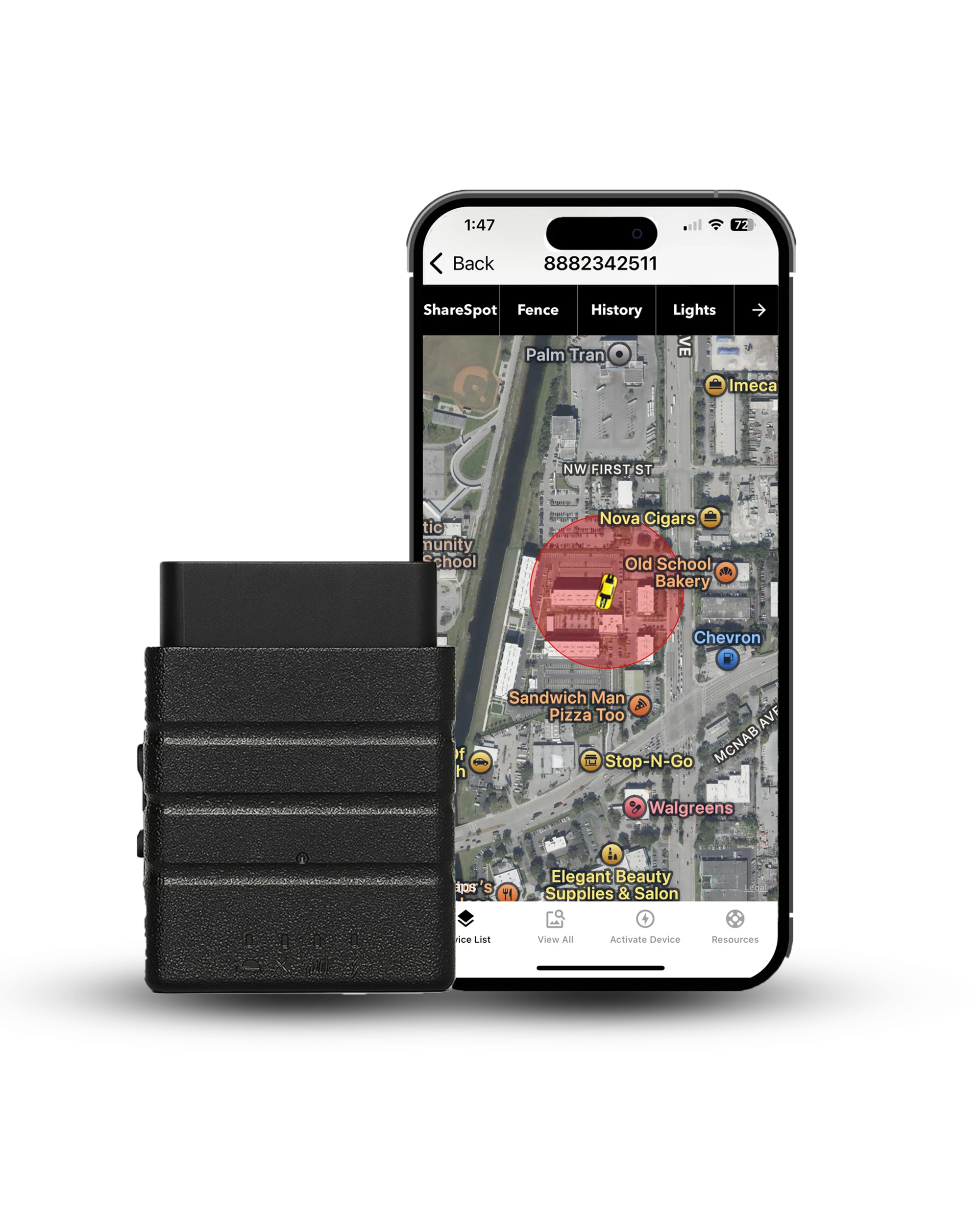
Compatible with virtually every vehicle built after 1996
Konnect OBD2 plugs in once and delivers 3-second real-time updates, geofencing alerts, and reliable coverage across 150+ countries — with no batteries to recharge and a free first year of service.
About the Author

 Buy on Amazon