
Reasons Why 16-Year-Olds Should Not Drive
-
01
Drivers 16 to 19 have about 3 times the fatal crash rate per mile
-
02
Texting pulls a driver's eyes off the road for about 5 seconds
-
03
Night driving is riskier: 35% of teen crash deaths happen from 9pm to 3am
-
04
Friends in the car raise a new driver's crash risk
-
05
GPS shows speed and location, so you can check the family rules
As an Amazon Associate, Konnect GPS earns from qualifying purchases.
Your teen drops a new permit on the counter and asks for the keys. The reasons why 16-year-olds should not drive alone yet come down to three things: not enough practice, a brain that is still growing, and friends in the car. The Insurance Institute for Highway Safety (IIHS) says 2,899 teens died in U.S. crashes in 2024. Deaths are down by half since 1996, and the number is still too high. Waiting is not the only answer, but handing over the keys with no plan is a bad one.
I'm Ryan Horban, and I have spent 15 years in GPS tracking. Handing over the keys is hard, and feeling nervous is normal. In this guide, you'll get 10 clear reasons, real numbers from IIHS, the CDC and NHTSA, and simple rules you can set this week. The goal is a teen who learns to drive safely and a parent who sleeps a little easier.
Quick answer
16-year-olds should not drive alone without limits. IIHS says drivers 16 to 19 have about 3 times the fatal crash rate per mile of drivers 20 and older. The big risks are little practice, night driving, friends in the car and phones. Learning at 16 with step-by-step licensing lowers the risk.
Why 16-Year-Olds Should Not Drive Alone: The Big Picture
The fatal crash rate per mile driven for 16 to 19 year-olds, compared with drivers 20 and older. Risk is highest at 16 and 17.
Graduated Driver Licensing (GDL)
Every state hands out driving rights in steps. First comes a learner's permit, where an adult rides along. Next comes an intermediate license with limits, like no late-night driving and few or no teen passengers. Last comes a full license. Many risks in this article are the exact things GDL rules try to block.
How to read this list
Ten reasons are a lot to say out loud. Teens who hear all ten at once hear a lecture, not worry. Pick the two or three that fit your home and set rules for those. Start with friends in the car, night driving and phones. State GDL laws limit those three for a good reason.
Top 10 Reasons Why 16-Year-Olds Should Not Drive

1. Lack of Experience
Sixteen-year-olds have not driven much yet. Driving asks your hands, eyes and feet to work together while your brain reads the road. Each of those skills gets better only with practice, and nothing replaces the hours behind the wheel.
Most new drivers can steer and brake just fine. What they miss are the warning signs. Experienced drivers spot a ball rolling into the street, or a car waiting at a side road with its wheels turned, and slow down before anything happens. New drivers often react after it happens. The National Institutes of Health says teens are less skilled at spotting and reacting to road dangers. IIHS adds that the quality of practice matters even more than the number of hours.
The risk
- Dangers get spotted late, not early
- Crash risk is highest in the first months after getting a license
- Confidence grows faster than skill
What you can do
- Log more practice hours than your state requires
- Practice in rain, at dusk, on highways and in heavy traffic
- Talk out loud about hazards so your teen learns to look ahead
- Follow your state's GDL stages instead of rushing
Need a quiet place to start? Try one of these empty places to practice driving.
2. Immaturity

Not every 16-year-old is reckless, and many are careful. Still, speeding, tailgating and texting are choices, not missing skills. Choices can change with rules and consequences. Missing skills cannot.
The National Institute of Mental Health (NIMH) explains why. The part of the brain that handles planning and good decisions is one of the last parts to grow up, and the brain keeps maturing into the mid-to-late 20s. NIMH also says that growth, plus a focus on friends, might lead teens to take more risks. So your teen can drive well alone and take chances with three friends in the car. Both are real.
The risk
- Thinking they are better drivers than they are after a few quiet months
- Driving differently when friends are in the car
- Carrying anger or a bad day into the driver's seat
- Saying yes to a dare or a laugh
What you can do
- Write the rules down so nobody has to guess
- Agree on the consequences before anyone is upset
- Give your teen an easy line to use when friends push, like "My parents would take my keys."
Rules stick best when your teen helped write them.
3. Drugs and Alcohol

Zero tolerance is the rule here. Every state has a zero-tolerance law for drivers under 21, so even a small amount of alcohol can mean a lost license and fines. Alcohol slows reaction time and hurts judgment, and a new driver has fewer skills to fall back on than an adult does.
The best thing a parent can do has little to do with driving rules. Tell your teen, ahead of time, that they can call you for a ride from anywhere at any hour, and you will not argue that night. Most teens get into a bad car because the other choice feels worse.
The risk
- Zero-tolerance laws count any amount
- Impairment costs a new driver more than an adult
- Riding with an impaired friend is just as risky
What you can do
- Offer a no-questions ride home, and mean it
- Cover riding as a passenger, not just driving
- Say the legal costs plainly, one time
- Keep the talk open instead of giving one big lecture
- Tell your teen you would rather get a late call than a worse one
One kept promise to pick up the phone can matter more than ten warnings.
If you're worried about substance use
The SAMHSA National Helpline is free, private and open 24 hours a day at 1-800-662-4357. Get Smart About Drugs and SADD also have help made for parents of teens.
4. Driving With Teen Passengers

Parents often relax this rule first, and the numbers say that is a mistake. The CDC says crash risk goes up when teens drive with other teens or young adults in the car.
Think of a car with three friends as a chat room that happens to have a steering wheel. Adults can talk and drive at once because driving has become automatic for them. Teens are still building that skill, so the talking wins.
Of teenage passenger deaths in passenger vehicles in 2024 happened in a car driven by another teenager.
Source: IIHS Fatality Facts, Teenagers
The risk
- Crash risk goes up with other teens in the car
- Showing off gets more likely with an audience
- Talking and laughing split a new driver's attention
- Families often stop enforcing this rule first
What you can do
- Allow no teen passengers for at least the first 6 months, as the CDC suggests
- Treat your state's passenger limit as a floor, not a ceiling
- If you must allow friends, start with just one
- Tell the other parents your rule
IIHS goes further: the best state laws ban all teen passengers during the intermediate stage.
5. Ignoring Road and Self-Safety

Why do teens skip the seat belt on short trips? Most think a quick drive to school is safe, but the CDC says buckling up cuts the risk of dying or getting badly hurt in a crash by about half.
The same thinking spreads to other rules. Speed limits, stop signs and lane lines turn into suggestions after a teen gets away with ignoring them a few times. Getting away with it is what makes the habit stick. Show, don't lecture: when you buckle up every time, your teen sees it.
The risk
- Short trips are when the belt gets skipped
- Skipping a rule once makes skipping it twice easier
- Rules feel fake when nothing happens after you break them
What you can do
- Buckle up yourself every time, even in the driveway
- Make the belt the first step before the engine starts
- Make passengers buckle too, and enforce it
Belts are boring, and boring is what you want.
The Konnect Teen Driving Monitor
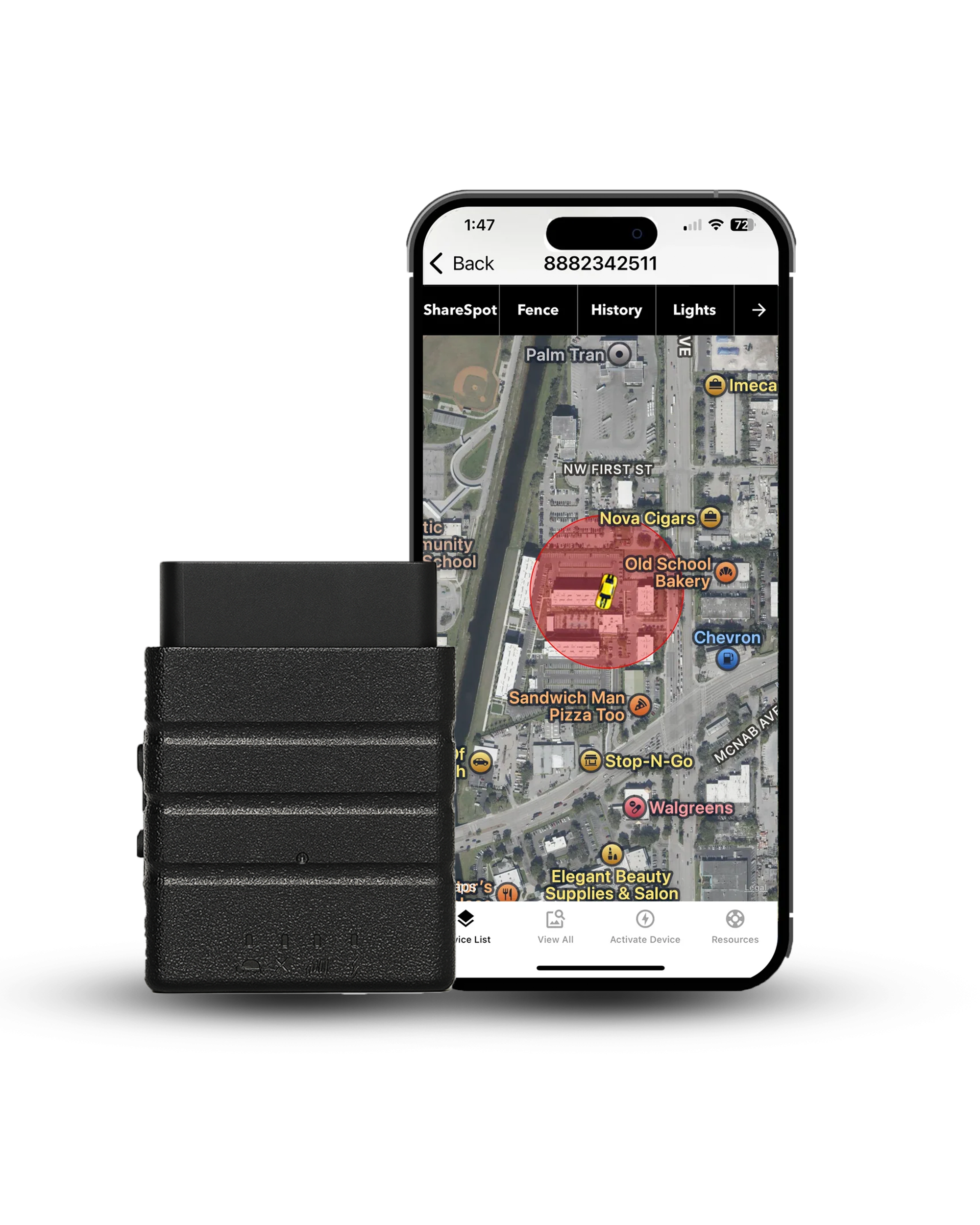
Rules only work if you can tell they're being followed. This tracker plugs into the OBD2 port under the dash in seconds, with no wiring, no tools and nothing to charge. The monitor will not teach your teen to drive, but it does show speed and location, so you can talk about real trips.

- Speed alerts at the threshold you set
- Live location, updating every 3 seconds
- Every trip and route, kept as history
- See whether the night driving rule is holding
- $39.95 device, $8.95/month unlimited
- Lifetime manufacturer's warranty
Or $199 once, with no monthly fee at all. Past about 18 months of use, that costs less than paying $8.95 a month.
Still comparing? Our guide to the 7 best GPS trackers for teenagers puts the options side by side.
6. Nighttime Driving

Friday night, 11:40, and your teen is still out with the car. Night driving stacks every problem a new driver already has. Seeing gets harder, judging speed and distance gets harder, and more tired or impaired drivers are on the road. Teen Driver Source, a research site from the Children's Hospital of Philadelphia, has a number to know. The fatal crash rate at night for drivers 16 to 19 is about 3 times the rate for adults, per mile driven.
Of teen crash deaths in 2024 happened between 9 p.m. and 3 a.m. Over half (53%) happened between 6 p.m. and 3 a.m.
Night limits have proof behind them too. IIHS says strong night and teen-passenger limits, plus waiting longer to get a license, cut fatal crashes. So almost every state's GDL law has a night rule.
The risk
- Low light makes it harder to see and to judge speed
- More tired and impaired drivers are out late
- Most teen crash deaths happen in the evening and late-night hours
- Nights out often mean friends in the car too
What you can do
- Set a home curfew, even if your state does not
- The CDC suggests teens be off the road by 9 or 10 p.m. for the first 6 months
- Practice night driving with you in the car before going solo
- Plan how to get home if curfew gets missed
- Move the curfew later a little at a time
Late hours are where small mistakes turn big.
Teenage motor vehicle crash deaths by time of day, 2024 (2,899 deaths in total). Source: IIHS Fatality Facts, Teenagers
7. Driving While Tired

Teens often run low on sleep. The Sleep Foundation lists teens as a higher-risk group for drowsy driving because they have less driving experience and often do not sleep enough. NIMH adds that too little sleep makes it harder for teens to pay attention and control impulses.
Being awake for 18 hours can slow reaction time and hand-eye skills about as much as a blood alcohol level of 0.05%, says a study the Sleep Foundation cites. The scary part is the microsleep. Microsleeps are naps of a few seconds that you do not notice. At 60 mph, four seconds covers more than 100 yards of road with nobody watching it.
There is no roadside test for sleepiness and no legal limit. The only fix is not to drive.
The risk
- Teens often do not get enough sleep
- Microsleeps happen without the driver knowing
- Being tired makes every other risk on this page worse
What you can do
- Aim for steady sleep before any day your teen drives
- No driving after a very late night, no debate
- Watch the early drive after a late shift or game
- Offer a ride before your teen has to prove they are fine
Giving a ride costs you twenty minutes.
8. Using Their Phones While Driving

Think about this: the National Highway Traffic Safety Administration (NHTSA) says reading or sending a text takes your eyes off the road for about 5 seconds. At 55 mph, that is like driving the length of a football field with your eyes closed.
NHTSA also reports that 3,208 people died in 2024 in crashes with a distracted driver. Phones are not the only problem. Changing the song, eating and a loud talk with friends pull eyes and attention away too. One more thing to tell your teen: a text from you counts. Plenty of parents teach the habit they fear without noticing.
The risk
- Eyes leave the road for about 5 seconds with every text
- New drivers are slower to react when something surprises them
- Answering a parent feels like an exception, but it is not
- Music and loud talk pull attention too
What you can do
- Put the phone in the glovebox, or use Do Not Disturb While Driving
- Do not text your teen when you know they are driving
- Set the route and music before the car moves
Put your phone rules in writing with a simple family driving agreement.
9. Driving Without a License
Turning 16 feels huge. When a friend gets a license first, driving before your own is tempting.
Driving without a license is illegal, and it skips every safety step built into the licensing system: no practice hours with a parent, no lessons on the rules of the road, and a car insurance company that may not pay if something goes wrong. Those steps are the whole point of GDL. They give new drivers time to learn before the risks pile up.
The risk
- Insurance may not cover a crash
- Legal trouble that follows your teen into licensing
- None of the supervised practice that GDL is built on
What you can do
- Keep the keys somewhere your teen has to ask for them
- Get the permit early so legal practice can start sooner
- Be clear that riding with an unlicensed friend counts too
- Make the legal path feel fast, not like a punishment
- Say what happens if a rule is broken, and follow through
The fastest road to a license is the legal one, and it is worth saying so.
10. Small Crashes and Scrapes That Keep Adding Up

Dents and scrapes are the only report card most parents get, and the grade comes late. One scuffed bumper in a school parking lot is normal. New damage every few weeks is a message.
The goal is not to punish. Repeated damage usually points to one habit, like judging gaps badly, backing up without looking, or rushing in parking lots. Each one can be fixed with practice once you know which it is. New drivers are still learning these skills, which is one more reason 16 is young.
The risk
- Damage shows up weeks after the habit started
- Small crashes get hidden if you always get angry
- Repeated damage often means near misses you never hear about
- Hiding damage can also hide a bad habit
What you can do
- Walk around the car together every couple of weeks
- Stay calm so your teen tells you instead of hiding it
- Find the one habit behind the damage, then practice it
- Split repair costs so the lesson is real but fair
Catch the habit early, and the dents stop.
Parents almost never need more rules. They need to know whether the rules they already set are actually holding.
Should 16-Year-Olds Be Allowed to Drive? How Graduated Licensing Helps
Yes, 16-year-olds can learn to drive, but they should not drive alone without limits. IIHS suggests a learner's permit at 16, at least 70 hours of practice with an adult, and a solo license at 17 with a night limit and no teen passengers.
After 15 years in GPS tracking, I'm Ryan Horban of Konnect GPS, and my answer is simple: let teens learn at 16, and keep late nights and friends in the car off the table until they earn them. The Konnect Teen Driving Monitor will not teach judgment, but it does show speed and location, so you can see whether your rules are holding.
Every state uses some form of Graduated Driver Licensing, which hands out driving rights in three steps:
- Learner's permit: your teen drives only with an adult beside them.
- Intermediate license: your teen can drive alone, but with limits on night driving and teen passengers.
- Full license: the limits come off after your teen has more experience.
IIHS says these systems cut crashes by a lot, especially when the night and passenger limits are strong. The group also lists what the best state laws include:
- Learner's permit age of 16
- At least 70 hours of supervised practice
- Intermediate license age of 17
- Night driving limit starting at 8 p.m.
- No teen passengers in the intermediate stage
Your state may ask for less than this, so check your DMV's website.
Your state's law is a floor, not a target
State rules differ a lot. Nothing stops you from setting stricter rules at home than the DMV requires. Start with the gap between your state's rules and the IIHS list above.
Is 16 Too Young to Drive?
For driving alone, often yes. For learning with an adult beside you, 16 works well.
IIHS says drivers 16 to 19 have about 3 times the fatal crash rate per mile of drivers 20 and older, and risk is highest at 16 and 17. Add what NIMH says about judgment and planning still maturing, and you can see why waiting to drive alone makes sense.
Why Should the Driving Age Stay at 16? Pros and Cons
Families who want to keep 16 give real reasons. Others look at the crash numbers and want to wait. Both sides have a point, so here they are side by side.
IIHS reports that teen crash deaths fell 50% between 1996, when the first three-step licensing program started, and 2024, from 5,819 to 2,899. Many things helped, and stronger licensing rules are one of them. Supporters of age 16 often point to this as proof that tough rules can work without raising the age.
Why some say wait
- Fatal crash rate per mile is about 3 times higher for drivers 16 to 19
- Raising the licensing age from 16 to 17 is linked to 13% fewer fatal crashes
- Teen brains are still maturing, especially judgment
Why some say keep 16
- Teens can start learning with an adult earlier
- More supervised hours get built up before college
- Families get help with rides to school, jobs and activities
- Step-by-step licensing already limits the riskiest trips
- Many mature 16-year-olds drive well
Want the bright side in more detail? Our post on positive facts about teenage driving covers it.
Should the Driving Age Be Raised to 18?
No one knows for sure, because the best studies look at moving the age from 16 to 17, not 18.
Those studies are worth a look. IIHS says raising the licensing age from 16 to 17 is linked to a 13% lower fatal crash rate among 15 to 17 year-olds (McCartt and others, 2010). The same change is linked to 9% fewer collision claims for licensed 16-year-olds (Trempel, 2009).
People who say the age should not be raised to 18 give two main reasons. Teens in towns with little public transit could lose their only ride to school or work. Some also worry that crash numbers would just move to the new starting age. Strict step-by-step licensing tries to get the best of both: teens learn at 16, and the riskiest driving waits.
My view is simple: keep 16 for learning, and make solo driving something a teen earns.
Tell your teen if you fit a tracker
If you use a tracker, tell your teen. Devices your teen knows about record the same data as hidden ones, so hiding one gains nothing and can cost you trust. Teens who hear the rules first argue less later. The goal is a talk about real trips, not catching anyone. Need help starting that talk? Read how to tell your teen you've installed an OBD2 GPS tracker.
Where the numbers come from
Statistics in this guide come from IIHS, CDC, NHTSA and NIMH pages we checked in October 2026. Laws and numbers change, so check your state DMV for the exact rules where you live.
See how fast your teen is really driving
Your teen asked for the keys. Say yes with a plan, and check that the plan is working. Konnect's Teen Driving Monitor plugs into the OBD2 port in seconds and sends speed and location alerts to your phone, with live updates every 3 seconds. $39.95 for the device with an $8.95 unlimited plan, or $199 once with no monthly fee. Lifetime manufacturer's warranty either way.
Get the Teen Driving MonitorSome images in this article were generated using AI.
About the Author

 Buy on Amazon