
Empty Places to Practice Driving Near Me: 9 Spots That Work
-
01
Start in a big, empty parking lot, and ask the owner first
-
02
Bring a licensed adult every time, even in an empty lot
-
03
Night driving is its own skill, so try it in a well-lit lot first
-
04
Move up slowly, from lots to quiet streets to busier roads
-
05
Tell your teen about any tracker before solo driving starts
As an Amazon Associate, Konnect GPS earns from qualifying purchases.
Your hands grip the wheel, and the car won't budge. You searched for empty places to practice driving near me because a real street feels like way too much, too soon. Whether you're the new driver or the parent in the passenger seat, that feeling is normal.
I'm Ryan Horban, and after 15 years in GPS tracking, I've heard the same question from families again and again: where do we even start? The answer is simple. Start somewhere quiet, flat, and legal, then add one new challenge at a time. You do not need fancy gear, just a quiet lot and a little patience.
In this guide, you'll get nine spots that work, easy ways to find them near you, what the law says about parking lot practice, and a six-week plan to follow. Pick one this weekend, and that first drive stops feeling so scary.
What Are the Best Empty Places to Practice Driving?
The best empty places to practice driving are big, flat lots at churches, schools, colleges, stadiums and business parks, during hours when few cars are around. Always ask the owner first, and bring a licensed adult.
I'm Ryan Horban of Konnect GPS, and my advice after 15 years around teen drivers is simple: start in a big, quiet, legal lot, then add one skill at a time. Once solo driving begins, Konnect sends speed and location alerts to a parent's phone, so everyone can breathe a little easier.
Nine spots follow, ordered from easiest to hardest.
9 Empty Places to Practice Driving Near Me
Each spot below teaches something different, and they run from easiest to hardest. Start at the top, and move down only when the last one feels boring.
Boring is the goal.
Empty Parking Lots to Practice Driving (Daytime)
- No traffic pressure while you learn the basics
- Plenty of room to repeat turns and parking
- Easy to find near a mall, grocery store or school
- Does not prepare you for real traffic
- No walkers or moving cars to react to
- Skills can feel easy here and shaky on a street


Big, empty lots are the best first stop for any new driver. Pick a mall, grocery store or high school lot during quiet hours, like early morning or a school break, and the painted lines are all yours.
Treat the parking lines like a game board. Pull in, back out, and straighten the car from three different angles. Use a soft gas and a soft brake, then do it all again. With no cars around, you can focus on the pedals and learn how big the car really is.
Fair warning: empty lots can fool you. Everything feels easy when nothing moves, so the same skill can feel shaky on a real street. Treat this as spot one, not the whole plan.

One cheap upgrade makes lot practice easier. These small convex mirrors stick onto the side mirrors and widen your view while you reverse and park, which cuts down the blind-spot mistakes new drivers make.
Church Parking Lots on Weekdays
- Huge, flat lots that sit empty most weekdays
- Office staff are easy to find and ask
- Busy on Sundays and during events
- Curbs and light poles can sneak up on you
- Some churches say no to outside drivers
Pull into a church lot on a Tuesday afternoon and you will often find an ocean of empty pavement. Most churches build their lots for Sunday crowds, so the rest of the week the space just sits there.
Walk in or call the office and ask if you can practice. Say who you are, how long you will stay, and that a licensed adult will be in the car. Many churches say yes when you ask nicely, and a quick thank you makes the next visit easy.
Business Parks and Industrial Areas on Weekends
- Wide lanes and big lots with few walkers
- Real stop signs, turns and tight corners
- Calm once the workers go home for the weekend
- Delivery trucks make weekdays risky
- Some lots post No Trespassing signs
Business parks look boring, and that is exactly why they work. On weekends the offices are closed and the roads are wide and calm. You get stop signs, turns and tight corners without much traffic, which is a nice step up from a plain empty lot.
Stay out on weekdays. Large trucks have huge blind spots, and nobody wants to learn next to one.
Stadium and Fairground Lots on Off Days
- Giant open space for wide turns and slow driving
- Great for practicing stops and judging distance
- No parked cars to dodge on days with no event
- Many are gated or patrolled
- Event days make them off limits
Where can you find the biggest open area for driving in town? Stadiums, fairgrounds and large event lots are usually the answer. On days with no event, they are often the biggest open space around.
The catch is access. Many of these lots are gated, and some have security guards. Call the main office, ask who manages the lot, and check the event calendar so you do not show up on game day.
Open Parking Lots at Night (Shopping Centers)
- Builds low-light confidence in a safe space
- Practice using headlights and reading signs in the dark
- Needs a well-lit lot to be safe
- Visibility is lower even in a calm lot
- Security may stop by to ask what you are doing

Night driving is like reading with a flashlight instead of a lamp: you only see what the beam touches. Practicing in a well-lit shopping center lot lets you learn that lesson in a safe place, where mistakes are cheap.
Test the headlights and watch how far the beams really reach. Read signs and spot road markings under the lights, just as you would on a real street at night.
Night driving is its own skill, not daytime driving in worse light. Stay calm and polite if security stops by, and tell them you have permission.
College Campuses on Weekends and Breaks
- Real signs, crosswalks and light traffic
- More realistic than an empty lot, less stressful than a city street
- Some campuses limit outside vehicles
- Best on weekends or holidays, less predictable otherwise

College campuses give you real road features with very little traffic on weekends and school breaks. Start in the parking lots, where you can practice every kind of parking spot.
Then move to the campus roads. You will meet real signs, stop lines and crosswalks without a busy street breathing down your neck, and crosswalks are a natural moment to talk about walking safety.
Familiar Roads With Different Speed Limits
- Builds speed-adjustment skills in a known area
- Gradual step up from residential to main roads
- More traffic as speeds go up
- Needs closer supervision than a parking lot

You are rolling down your own street at 25 mph when the sign ahead says 35. What do you do with your foot? Roads you already know are the safest place to figure that out.
Start on residential streets, where limits are low and kids, pets and parked cars can pop out of nowhere. Move to suburban streets next, where the speed goes up a little while the road still feels familiar. Then try main roads with higher limits.
Speed deserves this much attention. The Centers for Disease Control and Prevention (CDC) lists speeding, night driving and distraction among the risk factors for teen drivers.
Worried about speed once your teen drives solo? Konnect sends an alert the moment your teen goes over a limit you set, so you know without having to ask.
See the TrackerCrowded Parking Lots
- Realistic practice with walkers and other cars
- Good final step before busier roads
- Higher pressure than an empty lot
- Walkers and shopping carts appear out of nowhere
- Only try it once the basics feel boring

Crowded lots are stressful, and that is the point. Shopping centers and entertainment venues give you the closest thing to real traffic without leaving a lot: tight spaces, backing cars and walkers everywhere.
Take them seriously, too. The National Safety Council (NSC) says tens of thousands of crashes happen in parking lots and garages every year, including hundreds of deaths. Its tips are simple: drive slowly, use your signals, and look over your shoulder when you back up instead of trusting a camera alone.
Asphalt, Gravel and Dirt Roads
- Teaches traction and vehicle control on different surfaces
- Builds skills for real-world conditions ahead of time
- Bumpy and less predictable than pavement
- Not every area has a safe unpaved road nearby

What happens to the car when the road stops gripping? Gravel and dirt roads let you find out at low speed, where a slip is a lesson and not a scare.
Look for quiet rural roads, gravel driveways or dirt paths, and ask the owner before you drive on any private road or farm path. Start on gravel, where loose stones show you why smooth steering matters. Then move to dirt, where bumps and soft spots teach control. Notice how each surface changes the grip, because the same lesson shows up later in rain and snow.
Is It Legal to Practice Driving in a Parking Lot?
Often yes, but it depends on your state and the lot. The safe plan works almost everywhere: get your learner's permit, bring a licensed adult, and ask the owner first.
I'm not a lawyer, and this is not legal advice. Think of it as a checklist for staying out of trouble.
Parking lots feel like free-for-alls, but most are private property, so two sets of rules apply. Your state decides who can drive and who has to sit beside them. The owner decides who is allowed on the lot.
Run through this list before your first drive:
- Learner's permit or valid license in hand
- Licensed adult in the passenger seat, meeting your state's rules for supervisors
- Permission from the owner, the manager or the security team
- Insurance that covers the car and the person driving
Skip one, and a fun practice drive can end with a ticket, a tow or an insurance headache.
States do not agree on the details. Some allow practice on private property with the owner's okay, while others still want a permit. Police may also write tickets for careless driving in lots that are open to the public. So read your state's rules before you go, and use the USAGov state motor vehicle services page to find your state's DMV. Then call your insurance agent and ask if your policy covers a learner. Do that before the first drive, not after the first scratch.
Permit Rules in 9 Big States
Most parents ask the same thing next: how much practice does my teen need? The answer changes by state, so here are the numbers for nine large ones. They cover public-road practice with a learner's permit.
| State | Permit age | Hold permit for | Practice hours | Night hours |
|---|---|---|---|---|
| California | 15½ | 6 months | 50 | 10 |
| Texas | 15 | 6 months | 30 | 10 |
| Florida | 15 | 12 months | 50 | 10 |
| New York | 16 | 6 months | 50 | 15 |
| Pennsylvania | 16 | 6 months | 65 | 10 (plus 5 in bad weather) |
| Illinois | 15 | 9 months | 50 | 10 |
| Ohio | 15½ | 6 months | 50 | 10 |
| Georgia | 15 | 12 months | 40 | 6 |
| Michigan | 14 years, 9 months | 6 months | 50 | 10 |
Source: Insurance Institute for Highway Safety, checked against state DMV pages in October 2026. Laws change, so confirm with your DMV.
Supervisor rules differ too. California wants a licensed driver who is at least 25, while New York asks for a supervisor who is at least 21. Michigan allows a parent, guardian or a designated adult who is 21 or older. Want the bigger picture on why these rules exist? Our roundup of positive facts about teenage driving covers how graduated licensing helps.
The state pages we read cover public roads and say nothing about private lots, so owner permission and insurance still matter. Find your state's DMV on the USAGov state motor vehicle services page and read the permit rules before you start.
How to Find Empty Parking Lots Near Me
Open Google Maps, switch to satellite view, and look for big lots at churches, schools and business parks. Then drive by at the time you plan to practice, and ask the owner for the okay.
Follow these six steps and you will have a short list of good lots in about an hour:
- Open satellite view. In Google Maps, switch to satellite and zoom in. Big gray rectangles with few cars are your targets.
- Search for lot owners. Try "church," "high school," "business park," "stadium" and "fairgrounds" near you.
- Check Popular times. On a place's listing, short bars mean a quiet hour.
- Drive by first. Go at the hour you plan to practice. Count the cars, spot the light poles and curbs, and read every sign.
- Ask for permission. Call the office, find the manager, or talk to security. Say you are a learner with a licensed adult, and ask which days and hours work.
- Save the spot. Add it to a Google Maps list and write the best day and time in the note.
No big lot nearby? Look for other open areas for driving, like fairgrounds, large gravel lots or quiet park roads. The same rule applies: ask first.
Do this once, and you will have three or four good lots saved, so you never have to search again.
Best Places to Practice Driving at Each Skill Level
Not sure which spot fits you today? This table sorts all nine by level, best time and whether you need to ask first.
Start at the top and work down.
| Place | Best time | Ask first? | What to practice | Level |
|---|---|---|---|---|
| Empty lot (mall, grocery, school) | Early morning, late evening or school breaks | Yes, call the manager | Steering, braking, parking lines | Easy |
| Church lot | Weekdays | Yes, call the office | Turns, reversing, three-point turns | Easy |
| Business or industrial park | Weekends | Yes, and check the signs | Stop signs, wide turns, speed control | Easy to medium |
| Stadium or fairground lot | Days with no event | Yes, often gated | Wide turns, slow driving, stopping distance | Easy |
| Open lot at night | After dark, in a well-lit lot | Yes | Headlights, high beams, reading signs | Medium |
| College campus | Weekends and breaks | Check campus rules | Signs, crosswalks, light traffic | Medium |
| Familiar roads | Off-peak hours | Not for public roads, but you need a permit and a licensed adult | Speed changes, signals, lane position | Medium to hard |
| Crowded lot | Busy store hours, once you are ready | Follow the lot rules | Tight spaces, walkers, backing up | Hard |
| Gravel and dirt roads | Dry days | Yes, for private roads | Traction, steering, slow control | Hard |
Your 6-Week Plan to Practice Driving
Pick a spot, then follow the weeks in order. Each week adds one new challenge to what you already know.
Slow beats rushed every time.
Nerves are normal, especially in week 3 and week 6. If your teen freezes or gets upset, slow the plan down and repeat a week. Our guide on how to teach a scared teenager to drive has calm, simple ways to help.
When Your Teen Is Ready to Drive Alone
Practice builds the skill, and a little backup helps parents breathe.
Watching your teen drive off alone is one of the hardest moments in parenting, and the numbers explain the nerves. The CDC reports that in 2020, about 2,800 US teens ages 13 to 19 were killed in car crashes and about 227,000 were hurt. The CDC also says crash risk is particularly high during the first months after a teen gets a license.

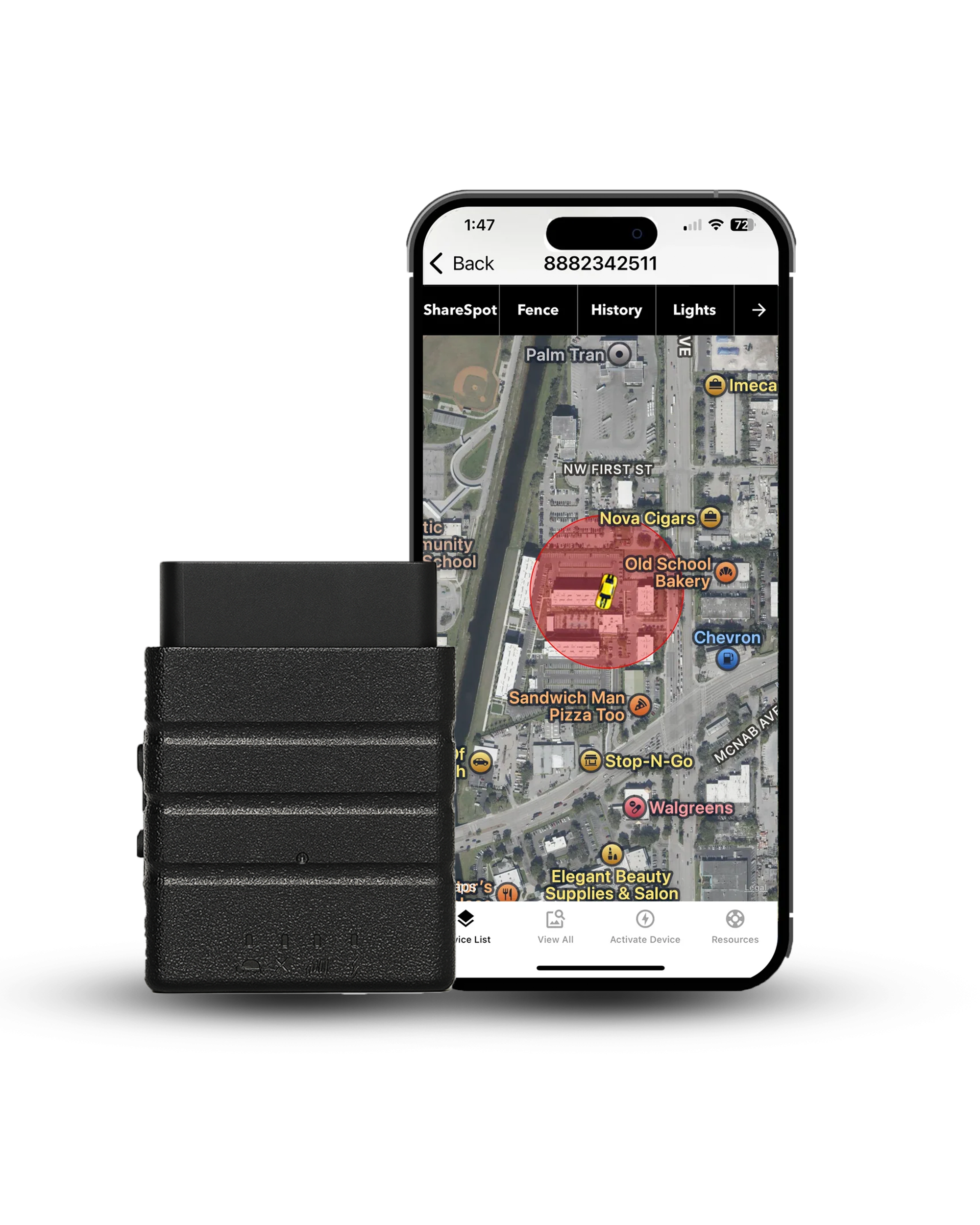
My take: a tracker is a backup, not a teacher. Practice builds the skill. Konnect simply shows where the car is, how fast it is going, and the route it took, so you can stay calm instead of guessing.

$39.95 on sale, regularly $99.95, plus an $8.95/month data plan (cancel anytime)
Plugs into your car's OBD2 port in under 30 seconds. See your teen's speed, route and location every 3 seconds.
- Plugs in under 30 seconds
- 3-second live location updates
- Speed alerts
- Geofence boundary alerts
- No charging needed
- Fits US cars from 1996 on with an OBD2 port
Tell your teen about the tracker before it goes in the car. Devices found by accident feel like traps, but one they know about becomes a shared deal about speed and boundaries. Not sure how to start that talk? Our guide on how to tell your teen you've installed an OBD2 GPS tracker gives you the words. And if your teen is 18 or older, or the car is in their name, their consent matters more than your preference, so read the GPS tracking laws in the USA first.

To review your teen's actual driving after each session, pair the GPS tracker with a dash cam. You get location data and video footage of how they handled speed changes, intersections and other drivers. When the GPS data and the video timestamps line up, you see the full drive instead of half of it.
Want to compare options before you buy? Read our list of the best GPS trackers for teenagers.
Start Small, Then Build Up
The best practice spot is the one that does not scare you. Quiet church lots on Tuesday afternoons will teach you more than one stressful drive down a busy road, because calm drivers remember what they practice.
Ask the owner, bring a licensed adult, and add one new challenge each week. Night lots, campus roads, familiar streets and gravel each teach something the last one did not. When solo driving starts, Konnect plugs into the OBD2 port and sends speed and location alerts to a parent's phone, so everyone can relax a little while confidence grows.
After 15 years in GPS tracking, I've noticed that the families who feel best about the first solo drive are the ones who practiced slowly and talked openly along the way.
Remember that tight grip on the wheel from the start? The grip fades faster than you think, and the fear goes with it.
Slow weeks now mean calm nights later.
Parking lots are just the beginning
Once your teen hits real roads solo, Konnect gives you real-time location updates every 3 seconds, speed and geofence alerts, and 12 months of route history, all from your phone. Plug it in and start tracking, with no wiring or installation needed.
Get the Konnect Teen Driving Monitor
About the Author

 Buy on Amazon