GPS Tracking Laws in California 2026

Published date: Last modified on:

By: Ryan Horban

Key Takeaways

5 things every California resident, employer, and rental operator needs to know
  • 01
    California Penal Code 637.7 makes GPS tracking without consent a criminal misdemeanor
  • 02
    Employers must give written notice before tracking employees in company vehicles
  • 03
    Tracking someone in a vehicle you own still requires their consent under California law
  • 04
    Violating PC 637.7 carries up to 6 months jail, $1,000 fine, and civil damages up to $5,000
  • 05
    Rental car owners and Turo hosts must disclose GPS tracking in written rental agreements
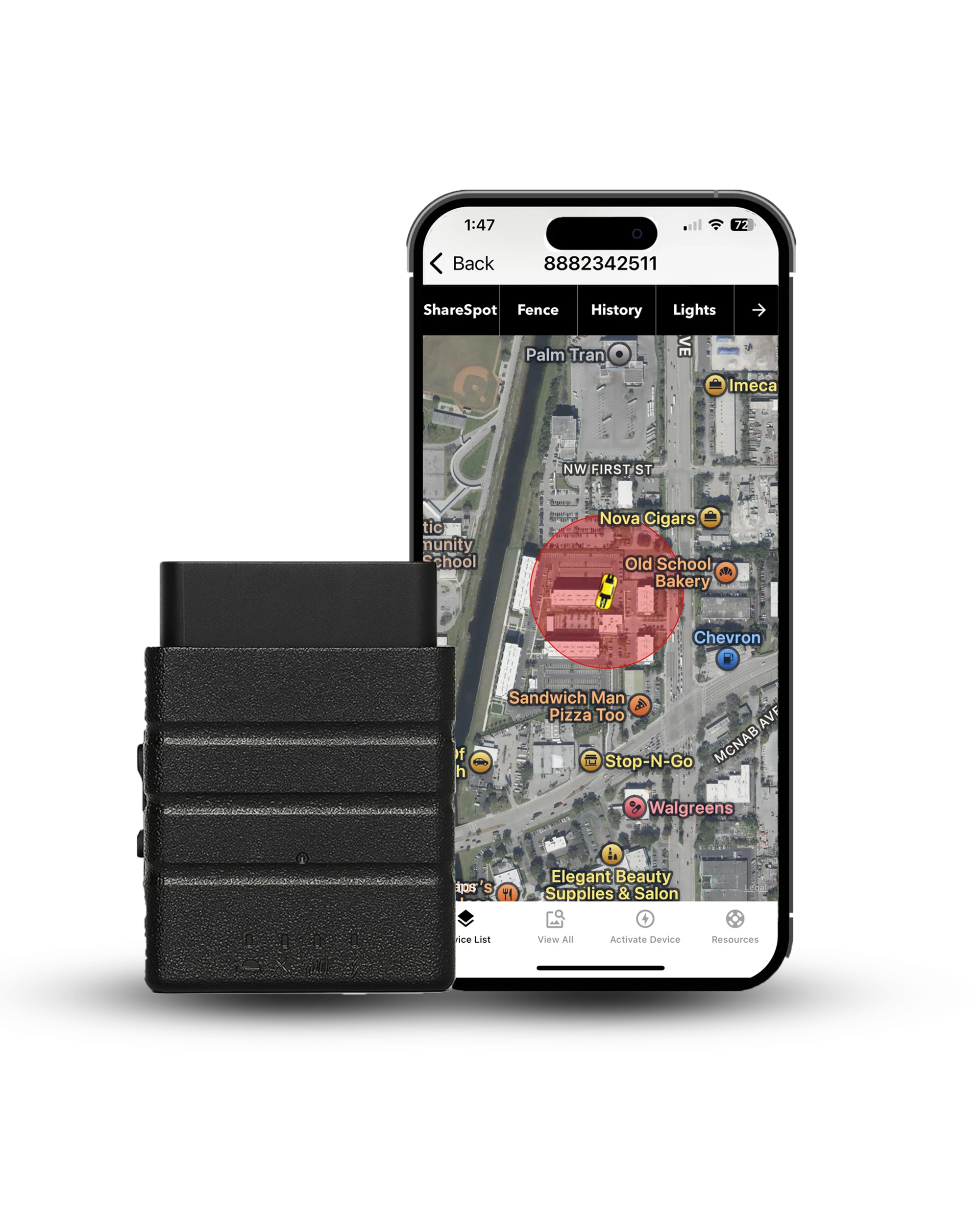
Running GPS tracking on a fleet, rental, or company assets in California? Konnect plugs into the OBD2 port, updates every 3 seconds, and includes a free first year.
Get the Konnect OBD2 Tracker

GPS Tracking Laws in California 2026 (Consent Requirements Explained)

California has some of the strictest GPS tracking laws in the United States. What's legal in Texas, Arizona, or Florida can get you charged with a misdemeanor in California. Employers who track company vehicles without written notice to employees, rental operators who monitor renters without disclosure, and individuals who track another person's car without consent all face real criminal and civil penalties under California law. Getting this wrong isn't just a compliance issue. It can cost you a professional license, result in a civil lawsuit, and put you in county jail.

I'm Ryan Horban, a GPS tracking expert with more than 15 years of hands-on experience helping rental operators, fleet managers, small business owners, and individual vehicle owners understand where GPS tracking is legal and where it crosses into criminal territory. California comes up in nearly every conversation I have with clients operating on the West Coast, and the rules here are genuinely different from every other state.

In this guide, I'll break down California Penal Code 637.7, the AB 984 employer tracking requirements, CCPA geolocation rules, consent requirements by situation, real court cases that define how these laws are applied, and exactly what rental car owners, Turo hosts, employers, and individuals need to do to stay legally compliant in 2026.

⚡ Quick Answer: Is GPS Tracking Legal in California?

GPS tracking is legal in California when the registered owner, lessor, or lessee of the vehicle has given consent. Tracking someone without their consent, including a spouse, employee, or renter, is a misdemeanor criminal offense under California Penal Code 637.7. Employers must provide written notice before tracking employees in company-owned vehicles under AB 984. Penalties include up to six months in county jail, fines up to $1,000 per violation, civil damages up to $5,000 per violation, and professional license revocation for licensed business operators.

Trusted by 50,000+ drivers
Konnect OBD2 GPS Tracker
USA Based Support
Free US shipping
30-day returns
Lifetime warranty

Konnect OBD2 GPS Tracker

World's fastest 3-second real-time car GPS tracker

🏷️ Get extra $10 off from here →
  • Updates every 3 seconds — 20x faster than most trackers
  • Plug & Play — Simply plug into your OBD2 port, no tools needed
  • Worldwide Tracking — 150+ countries with dependable real-time GPS updates
$99 $199 Save $100 ★★★★★ 4.7

The Core Law: California Penal Code 637.7 Explained

California Penal Code 637.7 is the primary statute governing GPS tracking in California. It applies to individuals, businesses, employers, rental operators, and anyone using an electronic tracking device anywhere in the state.

The statute states directly:

⚖️ California Penal Code § 637.7(a)

"No person or entity in this state shall use an electronic tracking device to determine the location or movement of a person." — California Penal Code § 637.7(a)

That is a broad criminal prohibition. Two exceptions are written into the statute.

Infographic showing California GPS tracking law, including legal restrictions on electronic tracking devices, ownership consent exception, law enforcement exception, and warning against unauthorized GPS tracking.

Exception 1: Ownership Consent

The registered owner, lessor, or lessee of the vehicle has consented to the use of the tracking device on that specific vehicle. [Cal. Penal Code § 637.7(b)]

Exception 2: Law Enforcement

A law enforcement agency is using the device through lawful means. [Cal. Penal Code § 637.7(c)]

Uses outside those statutory exceptions can create criminal and civil liability under California law. Most states allow vehicle owners to track their own property without restriction. California adds a layer that no other state matches in specificity: the person being tracked must also have consented or be the consenting owner.

What Counts as an Electronic Tracking Device Under PC 637.7

Infographic showing devices covered under California PC 637.7, including OBD2 GPS trackers, hardwired trackers, magnetic GPS devices, Apple AirTags, Bluetooth trackers, and software-enabled location tracking devices.

Under Cal. Penal Code § 637.7(d), an electronic tracking device means any device attached to a vehicle or other movable thing that reveals its location or movement through the transmission of electronic signals. This covers:

  • OBD2 GPS plug-in trackers
  • Hardwired GPS tracking devices
  • Magnetic battery-powered GPS trackers
  • Apple AirTags and Bluetooth location devices when used for movement monitoring
  • Any attached software-enabled device that transmits location data

If the device tells you where something is or has been by transmitting a signal, it falls under PC 637.7 in California.

Important Boundary: Mollaei v. Otonomo Inc. (2022)

Infographic explaining the Mollaei v. Otonomo Inc. (2022) case, showing that California PC 637.7 applies to aftermarket GPS trackers physically attached after manufacturing, while factory-installed telematics systems are treated separately under the law.

In Mollaei v. Otonomo Inc., Case No. 3:22-cv-02854 (N.D. Cal. 2022), a plaintiff argued that a data broker collecting GPS data from manufacturer-installed telematics control units violated CIPA § 637.7. The U.S. District Court dismissed the case, ruling that the statute applies to devices physically attached to a vehicle after manufacturing, not built-in factory components.

💡 The Practical Takeaway

Aftermarket OBD2 trackers, magnetic trackers, and hardwired devices installed post-purchase are clearly covered by PC 637.7. Factory-installed telematics systems occupy a separate legal space, though that boundary continues to be litigated.

The Case That Defines Co-Owner Tracking: People v. Agnelli (2021)

The most directly relevant California GPS tracking case for vehicle owners is People v. Agnelli (2021), decided by the Superior Court of California, Orange County Appellate Division.

Infographic explaining the People v. Agnelli (2021) California GPS tracking case, showing the facts of a co-owner installing a tracker during divorce proceedings, the court appeal and ruling on vague co-owner consent laws, and the 2026 legal takeaway that explicit consent remains the safest compliance practice.

The Facts

Dustin Livingston Agnelli and his wife were going through a divorce. During the proceedings in April 2017, Agnelli installed a GPS tracking device on a vehicle both spouses still co-owned. He was charged and convicted under California Penal Code 637.7.

The Appeal and Ruling

Agnelli appealed, arguing that PC 637.7 was unconstitutionally vague as applied to his situation. His defense argued that because he was a registered co-owner of the vehicle, the ownership exception in PC 637.7(b) should apply to him.

Acting Presiding Judge Terri Flynn-Peister reversed the conviction on July 13, 2021, with two other judges concurring. The court ruled that PC 637.7 was unconstitutionally vague as applied to co-owners because the statute did not address what happens when both the tracker and the tracked person are registered owners of the same vehicle. The court wrote that neither the statute's language nor its legislative history addressed the multiple-owner question, leaving police, prosecutors, and juries without clear guidelines.

What This Means in 2026

The Agnelli case did not establish that co-owner tracking is legal. It established that the law is vague in that specific situation, which is a narrower and more technical finding. The California legislature has not amended PC 637.7 to close the co-ownership gap since 2021. Co-owners who install trackers without the other co-owner's knowledge still face civil claims and potential criminal charges under updated interpretations. The safest compliance position remains unchanged: get explicit consent from anyone whose movements the tracker will record.

United States v. Jones (2012): The Federal Baseline

Infographic explaining California GPS tracking laws with a portable black GPS tracker device, legal consent rules, exceptions for law enforcement, electronic tracking device definitions, and legal boundaries involving co-owner tracking and factory-installed telematics.

The U.S. Supreme Court's unanimous ruling in United States v. Jones, 565 U.S. 400 (2012), established the federal constitutional floor for GPS tracking law nationwide.

In Jones, law enforcement attached a GPS device to Antoine Jones's vehicle and tracked his movements for 28 days without a valid warrant. The Supreme Court ruled unanimously that physically attaching a GPS device to a vehicle and using it to monitor movement constitutes a search under the Fourth Amendment, requiring a warrant.

The Jones ruling applies directly to government and law enforcement tracking. It does not restrict private individuals or businesses from tracking vehicles they own. However, the case confirmed that GPS tracking of a person's vehicle movements represents a constitutionally significant privacy intrusion, which has informed how California courts and legislators have interpreted and strengthened PC 637.7 in the years since.

California GPS Tracking Laws for Employers in 2026

Employers represent the largest category of GPS tracking users in California, and they face the most layered compliance requirements. Two laws apply simultaneously: California Penal Code 637.7 and AB 984, effective January 1, 2023.

What PC 637.7 Means for Employers

Infographic explaining employer GPS tracking rules under California PC 637.7, showing company-owned fleet vehicles, employer consent requirements, employee tracking awareness, written notice policies, privacy protections, and legal transparency obligations.

A company that owns its fleet vehicles is the registered owner and can consent to GPS tracking on those vehicles under PC 637.7(b). The company's consent as owner satisfies the ownership requirement. However, because tracking employees reveals the location and movement of a person, employers must ensure employees are aware of the tracking before it begins.

What AB 984 Added for Employers

Infographic explaining AB 984 employer GPS tracking rules, including restrictions on monitoring employees outside work hours, job-performance justification requirements, mandatory written employee notice, data collection disclosures, and employer compliance obligations.

AB 984, signed by Governor Gavin Newsom on September 29, 2022, and effective January 1, 2023, built directly on PC 637.7 and significantly tightened employer requirements. The key provisions in effect in 2026:

Employers cannot use a tracking device to monitor employees outside of work hours. [Cal. Lab. Code § 3823, as amended by AB 984]

Tracking must be strictly necessary for the performance of the employee's duties. GPS monitoring without a clear job-performance justification violates AB 984.

Employers must provide written notice to employees before tracking begins. The notice must include at minimum:

  • A description of the specific activities that will be monitored
  • A description of the worker data that will be collected
  • The frequency of monitoring
  • How the data will be used and stored
  • The employer's name and contact information

This notice requirement applies even when the employer owns the vehicle. Ownership of the vehicle does not eliminate the employee notice requirement under AB 984.

These disclosure and consent requirements have become especially important for businesses using OBD trackers in fleet vehicles and take-home company cars. Employers implementing vehicle monitoring systems should also review our guide on employee privacy laws for company car GPS tracking for broader compliance considerations involving employee privacy, notice requirements, and after-hours tracking restrictions.

Penalties for Employer Violations

Infographic explaining employer GPS tracking penalties under California AB 984 and PC 637.7, including civil fines per employee, misdemeanor criminal penalties, county jail exposure, employee lawsuits, class action risks, and escalating liability for repeated tracking violations without notice.

Civil penalties under AB 984 begin at $250 per employee for an initial violation and increase to $1,000 per employee for each subsequent violation. An employer tracking 20 employees without proper notice across multiple pay periods faces compounding liability quickly.

Criminal penalties under PC 637.7 remain available for egregious violations. A misdemeanor conviction carries up to 180 days in county jail and a fine of up to $1,000 per violation. [Cal. Penal Code § 637.7; Cal. Penal Code § 19]

Civil lawsuits under CIPA § 637.2 allow employees who are unlawfully tracked to pursue civil damages of $5,000 per violation or three times their actual economic damages, whichever is higher. Class action exposure is real when multiple employees are tracked without notice, as each affected employee represents a separate violation multiplied across the tracking period.

What Employers Must Do in 2026

Infographic outlining employer GPS tracking compliance requirements for 2026, including written employee notice, limiting tracking to work hours, documenting business justification, signed acknowledgments, pausing tracking during personal use, and annual policy updates under California law.
  • Provide written notice to all employees before activating GPS tracking
  • Limit tracking to work hours only for vehicles used personally after hours
  • Document the business justification for tracking each vehicle category or role
  • Obtain signed employee acknowledgment confirming receipt of the notice
  • Disable or pause tracking when a vehicle is used for personal trips outside work hours
  • Review and update GPS tracking policies annually as California law continues to develop

California GPS Tracking Laws for Rental Car Owners and Turo Hosts

Under PC 637.7, the registered owner of a vehicle can consent to GPS tracking on their own property. A renter who signs a rental agreement is not the registered owner, lessor, or lessee in the legal sense of the statute unless the agreement specifically establishes that relationship.

The practical compliance requirement is a written disclosure in the rental agreement before the renter takes possession of the vehicle.

The Required Disclosure Language

Infographic showing the required GPS tracking disclosure language for rental agreements under California law, including renter notification, Turo disclosure compliance, written acknowledgment of GPS tracking, and transparency requirements for fleet and theft recovery monitoring.

One sentence in your rental agreement covers your legal obligation under California law:

📝 Required Disclosure Language

"This vehicle is equipped with a GPS tracking device for security, fleet management, and theft recovery purposes. Location data may be monitored during the rental period."

That disclosure satisfies California's PC 637.7 requirement, meets Turo's policy requirement for GPS device disclosure, and creates a written record that the renter acknowledged the tracker's presence before driving away.

Rental operators looking for compliant fleet tracking hardware can also review our guide on Best OBD GPS Tracker for Rental Cars 2026, which compares real-time trackers commonly used for Turo vehicles, theft recovery, and multi-vehicle rental fleets.

Turo's Policy Requirements in California

Infographic explaining Turo's GPS tracking policy requirements in California, including mandatory GPS tracker disclosure in vehicle listings, penalties for undisclosed tracking, potential criminal liability under California PC 637.7, and Turo's ban on Apple AirTags and Bluetooth-only trackers.

Turo explicitly permits GPS trackers in listed vehicles but requires hosts to disclose them in the vehicle description. Undisclosed tracking of renters is a policy violation that can result in account suspension. In California, a Turo host who fails to disclose a GPS tracker faces not just suspension but potential criminal liability under PC 637.7 if the undisclosed tracking is reported to law enforcement.

Apple AirTags and Bluetooth-only trackers are banned on the Turo platform-wide regardless of disclosure, because they raise surveillance concerns that extend beyond vehicle security.

What Rental Operators Cannot Do Even With a Disclosure?

Infographic explaining what rental operators cannot do with GPS tracking data even after disclosure, including prohibitions on harassing renters, sharing location data without a legitimate purpose, retaining tracking records longer than necessary, and violations under California PC 637.7 and the CCPA.

A valid GPS disclosure in a rental agreement does not give rental operators unlimited license to use location data. Using GPS data to harass a renter, sharing location data with third parties without a documented legitimate purpose, or retaining detailed location records beyond what is needed for the rental period creates additional exposure under PC 637.7 and the California Consumer Privacy Act.

GPS Tracking Laws for Individuals in California

Individual use of GPS trackers is where California's law is strictest and where the most violations occur. The following situations generate the most legal questions in 2026.

Tracking Your Own Vehicle

Person using a smartphone to monitor the live location of their own parked vehicle, with a black car visible in the background and a GPS tracking map displayed on the phone screen.

Legal. If you are the registered owner installing and monitoring a tracker on your own vehicle for personal use, theft recovery, or location monitoring, you are within PC 637.7. The owner consent exception in § 637.7(b) applies directly to you.

Vehicle owners using GPS trackers for theft recovery, family safety, or day-to-day vehicle monitoring can also review our guide on Best Personal GPS Tracker for Cars, Kids & Pets (2026 Tests), which compares portable and real-time tracking devices for personal use.

Tracking a Spouse or Partner

Nighttime scene showing a woman outside her home monitoring a car's location on a smartphone while a man walks toward a parked vehicle, with a hidden GPS tracker highlighted underneath the car to illustrate unauthorized spouse or partner tracking.

Not legal without consent, even on a jointly owned vehicle. California courts have consistently charged and convicted individuals for this under PC 637.7. The People v. Agnelli case illustrates precisely how this plays out. Even though Agnelli's conviction was ultimately reversed on vagueness grounds specific to co-ownership, the case proceeded to trial and resulted in an initial conviction, confirming that law enforcement and prosecutors do charge these cases actively.

Installing a tracker on a vehicle your spouse regularly drives without their knowledge is the most common PC 637.7 violation charged in California. GPS trackers and surveillance tools are frequently involved in infidelity investigations and divorce disputes, but California law places strict limits on how they can legally be used. Readers researching the technology commonly associated with these cases can review our guide on Best Surveillance Devices for Cheating Spouse (2026 Guide).

The fact that both names may appear on the vehicle title does not protect you.

Tracking an Adult Child

Woman sitting inside her home at night monitoring her daughter's vehicle location on a smartphone, while a young girl drives a silver car outside in a suburban neighborhood.

Not without their knowledge. An adult child who drives a parent-owned vehicle may be subject to tracking if the parent has both installed the device and informed the adult child of its presence. Secret monitoring of an adult child's movements, even on a parent-owned vehicle, creates legal exposure under PC 637.7 regardless of intent.

Tracking a Minor Child

Woman sitting inside her home monitoring her minor child's school commute on a smartphone, while a teenage girl arrives at a high school in a silver sedan with students walking nearby in a daytime suburban setting.

Generally permitted. Parents tracking minor children in vehicles the parent owns are within the law. The parental authority exception is not explicit in PC 637.7 but has been consistently supported by California courts when tracking is used for safety purposes. This does not extend to tracking a minor through a vehicle the minor owns or leases independently.

Tracking Someone Else's Vehicle

Nighttime scene showing a person secretly placing a GPS tracker underneath someone else's parked vehicle in a public area, highlighting unauthorized vehicle tracking and illegal surveillance.

Criminal offence. Installing a GPS tracker on a vehicle you do not own, without the consent of the registered owner and the person whose movements the device will record, is a misdemeanour under PC 637.7, regardless of your reason for doing so.

The CCPA and Geolocation Data in 2026

California's GPS tracking laws extend beyond PC 637.7 into consumer data privacy law. The California Consumer Privacy Act (CCPA, Civil Code § 1798.100 et seq.) and the California Privacy Rights Act (CPRA, Proposition 24, 2020) both classify precise geolocation data as sensitive personal information subject to specific disclosure and consumer rights requirements.

Infographic explaining California geolocation privacy laws in 2026, including CCPA requirements for GPS data disclosure, consumer rights, sensitive location data protections, the failed AB 1355 California Location Privacy Act, and future privacy compliance expectations for businesses.

What Businesses Must Do Under CCPA for GPS Data

Precise geolocation data, defined as location information identifying a person's location within a specific radius, must be disclosed in your privacy policy. California consumers have the right to know what location data is collected, how it is used, how long it is retained, and whether it is sold or shared with third parties. Businesses that collect sensitive geolocation data must allow consumers to limit use of that data to what is necessary for the stated purpose.

AB 1355: What Happened to the California Location Privacy Act

In February 2025, the California legislature introduced AB 1355, the California Location Privacy Act. The bill proposed requiring explicit opt-in consent before any collection of individual location data, strict data retention limits, a complete ban on selling or trading location data, and civil penalties of up to $25,000 per violation enforceable by the California Attorney General.

AB 1355 failed to advance and was filed as inactive in February 2026. [Cal. AB 1355, 2025-2026 Reg. Sess., filed pursuant to Joint Rule 56, Feb. 2, 2026.]

It is not currently law. However, the bill's failure does not signal a retreat from California's direction on location data. A substantially similar bill is expected to be reintroduced in the 2026-2027 legislative session. Businesses running GPS tracking operations in California should build data minimisation and documented consent practices now rather than waiting for a new bill to pass.

Penalties: California GPS Tracking Violations at a Glance

Violation Law Penalty
Criminal GPS tracking without consent Cal. Penal Code § 637.7 Up to 180 days county jail + up to $1,000 fine per violation
Civil damages for unlawful tracking Cal. Penal Code § 637.2 (CIPA) $5,000 per violation or 3x actual economic damages, whichever is higher
Employer tracking without written notice, initial violation AB 984 $250 civil penalty per employee
Employer tracking without written notice, subsequent violations AB 984 $1,000 civil penalty per employee per violation
Professional license revocation Cal. Penal Code § 637.7 Applies to any licensed operator convicted under PC 637.7
Class action exposure CIPA § 637.2 Multiple individuals or employees can join, multiplying total liability

California vs Other States: How the Rules Compare

Situation California Texas Florida Most Other States
Track your own vehicle Legal with consent Legal Legal Legal
Track company vehicle as employer Written notice required under AB 984 Permitted with notice Permitted Generally permitted
Track spouse's vehicle Criminal offense without consent Criminal offense without consent Criminal offense without consent Criminal offense without consent
Track employee off-hours Prohibited under AB 984 Not specifically addressed Not specifically addressed Generally not addressed
Rental car disclosure Required under PC 637.7 Strongly recommended Strongly recommended Recommended
Maximum criminal penalty 180 days jail + $1,000 fine 1 year jail + $4,000 fine Up to 5 years prison Varies by state

Compliance Checklist: What to Do Before You Track in California

Split-screen infographic showing California GPS tracking compliance guidelines for rental car owners and Turo hosts, employers, and individuals, including GPS disclosure requirements, employee notice rules, data privacy practices, consent requirements, and restrictions on unauthorized vehicle tracking.

For Rental Car Owners and Turo Hosts

  • Add a one-sentence GPS disclosure to every rental agreement before the renter signs
  • Include the disclosure in your Turo listing description
  • Do not use AirTags or Bluetooth-only trackers on Turo vehicles under any circumstances
  • Do not retain location data beyond the rental period without a documented operational reason
  • Review your disclosure language whenever California privacy law updates

For Employers

  • Provide written notice to every employee before activating GPS tracking as required by AB 984
  • Limit tracking to work hours only for vehicles that employees use personally after hours
  • Obtain signed acknowledgment from each employee confirming receipt of the written notice
  • Document the specific business justification for each tracked vehicle or role
  • Disable tracking outside work hours for take-home vehicles
  • Store location data securely with access limited to personnel who have a business need
  • Consult an employment attorney before expanding your tracking program beyond fleet vehicles

For Individuals

  • Only install GPS trackers on vehicles registered in your name
  • Inform anyone who regularly drives your vehicle that a tracker is installed
  • Do not install a tracker on a vehicle you do not own without the registered owner's written consent
  • Do not use GPS location data to monitor a person's movements without their knowledge

Conclusion

California's GPS tracking laws are the strictest in the country because the state's constitutional right to privacy extends further than the federal baseline. The legislature built PC 637.7, AB 984, and CCPA geolocation requirements around that right, and the courts have enforced them consistently, as both the prosecutions under PC 637.7 and the People v. Agnelli ruling demonstrate.

The core rules are not complicated. Get consent before tracking. Provide written notice as an employer. Disclose trackers in rental agreements. Limit employee tracking to work hours. Document everything.

Where people face legal trouble in California is almost never from deliberate intent to break the law. It's from assuming vehicle ownership gives unlimited tracking rights, that a general company policy satisfies the specific AB 984 notice requirements, or that a Turo listing without a one-sentence disclosure is close enough.

None of those assumptions hold up in California in 2026.

If you're running GPS tracking on rental vehicles, a business fleet, or company assets in California, the Konnect OBD2 tracker installs in under 60 seconds, updates every 3 seconds, and gives you the real-time location data, trip history, and tamper alerts needed to protect your vehicles and stay operationally compliant, with a free first year of service to evaluate whether the system fits your operation before committing to ongoing costs.

Legal Sources

  • California Penal Code § 637.7 - Primary GPS tracking statute
  • California Penal Code § 637.2 (CIPA) - Civil damages for privacy violations
  • California AB 984 (2022), effective January 1, 2023 - Employer tracking notice requirements
  • California Consumer Privacy Act (CCPA), Civil Code § 1798.100 et seq. - Geolocation as sensitive personal information
  • California Privacy Rights Act (CPRA), Proposition 24 (2020) - CCPA amendments
  • California AB 1355 (2025-2026), filed inactive February 2, 2026 - Proposed Location Privacy Act
  • People v. Agnelli, Superior Court of California, Orange County Appellate Division (2021) - Co-owner vehicle tracking, PC 637.7 vagueness ruling
  • Mollaei v. Otonomo Inc., Case No. 3:22-cv-02854 (N.D. Cal. 2022) - Built-in telematics vs. attached tracking devices under CIPA § 637.7
  • United States v. Jones, 565 U.S. 400 (2012) - Fourth Amendment GPS tracking warrant requirement
Konnect OBD2 GPS Tracker with phone app

Compliant fleet tracking for California operators

Konnect OBD2 installs in under 60 seconds and delivers 3-second real-time updates, trip history, and tamper alerts to protect your rental, fleet, or company vehicles — with a free first year of service to evaluate the system before committing to ongoing costs.

About the Author

Ryan Horban
Ryan Horban
GPS Tracking Expert 15+ Years of Experience

Over the past 15+ years, I’ve worked with rental operators, fleet managers, Turo hosts, small business owners, and everyday vehicle owners researching how GPS tracking laws apply in real-world situations. My work focuses on practical GPS compliance, vehicle tracking technology, fleet monitoring systems, theft recovery tools, and privacy-related tracking regulations across the United States.

For this guide, I reviewed California Penal Code § 637.7, AB 984 employer tracking requirements, CCPA geolocation privacy rules, relevant California court decisions, and current Turo disclosure policies to explain how GPS tracking laws are applied in California in 2026.

My goal is simple: make complex GPS tracking laws easier to understand so businesses and individuals can stay compliant while still protecting their vehicles, drivers, and property.

Frequently Asked Questions

On company-owned vehicles, undisclosed tracking may be technically permissible in some states but creates legal risk in most. New York Civil Rights Law §52-c, Connecticut Public Act 98-142, and Delaware Code Title 19 §705 each require written notice before electronic monitoring begins. California requires a separate written consent that cannot be bundled into a standard employment agreement. In New Jersey, Indiana, and Nevada, advance employer notice became a statutory requirement between 2021 and 2023. The cleanest approach in any state is a written notice before activation, with a signed acknowledgement on file.

Yes, and many fleet operators do. The requirement is that your policy must explicitly state that monitoring is continuous, around the clock, seven days a week, on all company-owned vehicles. Courts have generally held that employees have no reasonable expectation of privacy in company-owned assets, but several arbitration panels have required employers to prove the employee was clearly informed of 24/7 monitoring before discipline tied to off-hours data can be upheld. Vague language like "during business use" creates the gap that gets challenged.

Placing a GPS tracker on a vehicle you don't own exposes your business to criminal and civil liability in nearly every state. Texas Penal Code §16.06 classifies it as a Class A misdemeanour. California Penal Code §637.7 makes it a misdemeanour on the first offence and a felony on repeat violations. Michigan and Tennessee have similar statutes. Keep all tracking on company-titled assets only, and document that boundary explicitly in your policy scope section.

Standard practice in fleet operations is 30 to 90 days for routine operational data. If your business uses GPS records for customer billing verification, most contracts allow billing disputes within 60 to 90 days, so retention should at a minimum match that window. For fleets subject to FMCSA regulations, some driver activity records must be retained for six months under 49 CFR Part 395. Define the specific retention period in your written policy before data collection begins, not after a dispute arises.

For multi-state operations, yes, at least once. GPS tracking statutes changed in at least five states between 2021 and 2024 based on the NCSL index, and several states have pending legislation. A one-time legal review covering each state where drivers operate, followed by an annual internal check against the NCSL tracker, is a practical approach for most businesses. The cost is a fraction of a single wage-and-hour or privacy dispute over undisclosed monitoring.

Back to blog