
Best Hidden Car GPS Trackers in 2026
-
01
Magnetic trackers are easy to move, while OBD2 trackers run on the car's own power
-
02
Faster updates usually cost more, so check which plan you need
-
03
Tracking someone else's car without their okay is a crime in most states
-
04
Water resistant does not mean waterproof, so some units need a case
-
05
Add up the first-year cost before you buy
As an Amazon Associate, Konnect GPS earns from qualifying purchases.
Hey, want the best hidden car GPS trackers, but not sure which one really stays out of sight? Maybe you want to find a stolen car fast, see where a work truck goes, or watch over a new teen driver. Whatever your reason, the tracker has to work, and it has to stay hidden.
I'm Ryan Horban, and I've spent 15 years helping drivers, parents and fleet owners choose GPS trackers. Thieves pull out whatever they can see, so a tracker in plain view usually ends up in the trash. Out of sight is the whole point.
In this guide, you'll get six hidden trackers we put on a real 2017 Nissan Pathfinder, what each one does well, where each one falls short, and what year one really costs. You'll also learn where to hide one and how to do it legally, so you can pick with confidence and sleep better.

What Is the Best Hidden GPS Tracker for a Car?
For a car you own and keep, the best hidden GPS tracker is an OBD2 plug-in unit, and our #1 pick is the Konnect OBD2. Because it runs on the car's power, it never needs a charger. If you need to move the tracker between vehicles, SpaceHawk is our top magnetic pick. Whichever you choose, budget for the plan too, because a year of service often costs more than the tracker.
I'm Ryan Horban, and after 15 years in GPS tracking, my honest answer is this: for a car you keep, choose a tracker that plugs into the OBD2 port, because it hides under the dash and never goes dark. Konnect GPS builds exactly that kind of tracker. For anything without an easy power source, I point people to a magnetic unit like SpaceHawk.
Hidden Car Tracker Comparison
| Tracker | Best for | Update speed | Battery or power | Cost | What stands out |
|---|---|---|---|---|---|
 #1
Konnect OBD2
#1
Konnect OBD2
|
Cars you keep | Every 3 seconds | Runs on the car's power, never needs charging | $39.95 device, then $8.95/mo with no contract | Plugs in under the dash. Tamper alert if unplugged, a year of trip history, lifetime warranty. |
 #2
SpaceHawk
#2
SpaceHawk
|
Best magnetic | Every 3 seconds | 1 to 3 weeks | $39.95 device, plans from $19.95/mo ($9.95/mo on a 2-year prepay) | IP67, built-in magnet, lifetime warranty. |
 #3
EverLast Nano
#3
EverLast Nano
|
Longest runtime | Slower than 3 seconds | About 138 days with the extended pack, 15 days without | $149.95 on sale (regularly $199.95), plans from about $24.95/mo | Months between charges. Magnet and waterproof case in the box. |
 #4
LandAirSea 54
#4
LandAirSea 54
|
First year with no monthly bill | 3 seconds on the premium plan | About 10 days at 2 hours of driving a day, up to 6 months in low-power mode | About $29.95 device plus a SilverCloud plan, or a bundle with a year included | Tied with SpaceHawk as smallest at 2.275 in. Water resistant only. |
 #5
Vyncs
#5
Vyncs
|
OBD2 without a monthly bill | 60 seconds on Basic | Plugs into the car, never needs charging | $99.99 a year with device and SIM, plus a $39.99 one-time activation fee | Billed yearly rather than monthly. |
 #6
SpyTec GL300
#6
SpyTec GL300
|
Budget real-time | Every 5 seconds | 6 to 25 days, depending on reporting rate | About $29.95 device plus a monthly plan | One year of history. Needs a waterproof case for outside mounting. |
How We Tested These Hidden Car GPS Trackers
The photos in this guide are ours. We charged each unit from flat, set it up in its app, mounted it on our 2017 Nissan Pathfinder, and drove a route to see what the app showed against where the car really was. The criticism below comes from that drive, not from a spec sheet.
One honest note: the battery numbers below come from the makers unless we say otherwise, because we have not run every unit through a full drain test.


- Magnet strength and whether the unit stayed put
- Real update speed against the advertised interval
- Device price plus the first-year subscription total
- Size and how easily each unit concealed
- App quality and alert reliability
- Warranty terms and how support responded
6 Best Hidden Car GPS Trackers, Reviewed
Six trackers made to sit out of sight on a car, ranked by how well they fit most drivers. Each gets honest pros, honest cons and a real price.
Start with the one that matches how you drive.
Konnect OBD2: Best Hidden GPS Tracker For Cars You Keep

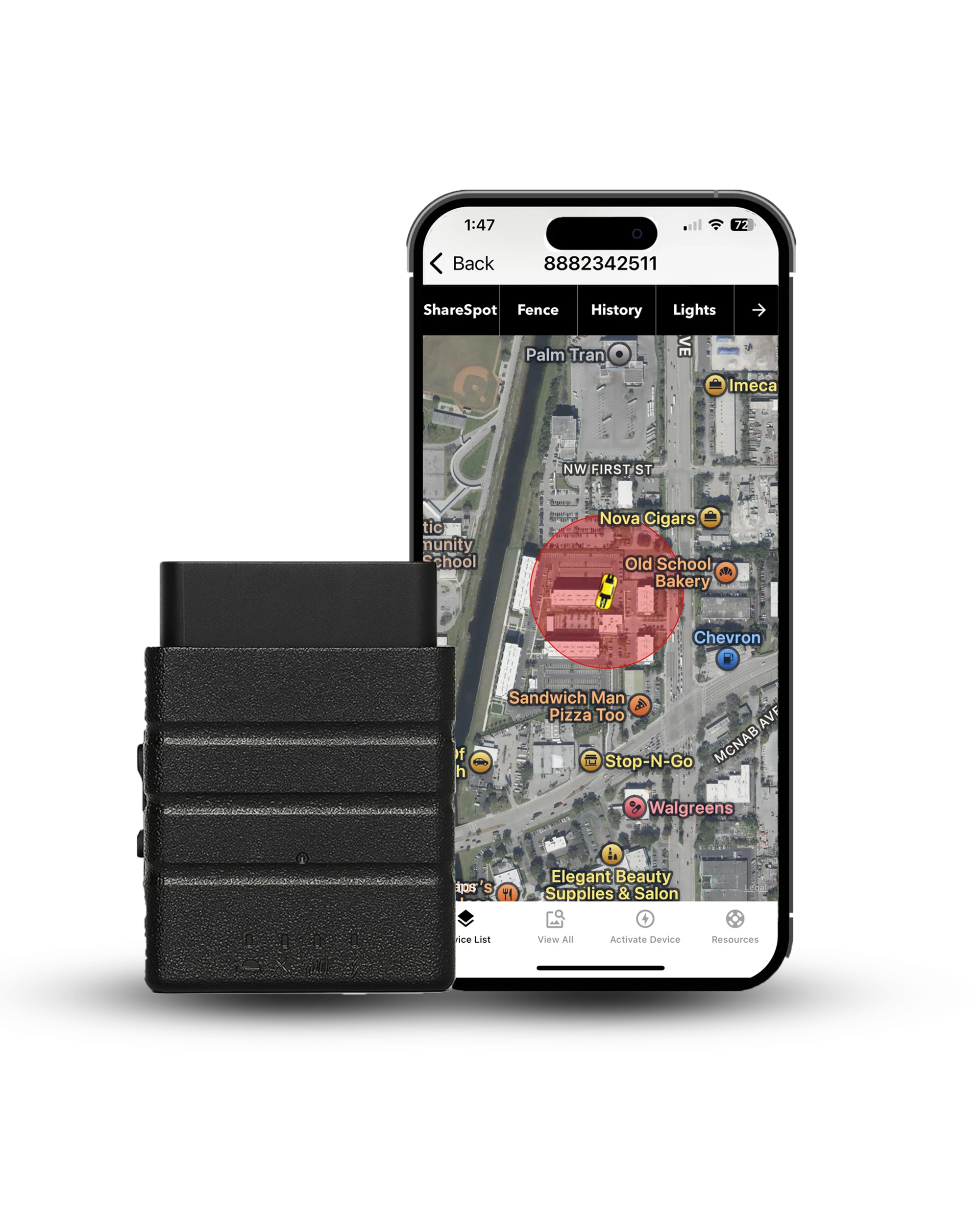
Konnect plugs into the OBD2 port under the dash, which hides it in plain sight with nothing to mount. Every US car built since 1996 has that port, and the tracker runs on the car's own power, so you never pull it out to charge.
Location updates arrive every 3 seconds over 4G LTE, with a built-in SIM card and accuracy to about 6 feet. You get speed alerts, geofence alerts, and a tamper alert if someone unplugs it. Trip history goes back a full year, with route replay on a live map.
Honest limits: Konnect tracks location and nothing else. Fuel, engine codes and driving habits like hard braking are not part of what it reports, so look elsewhere if you want those. And anyone who knows where the OBD2 port is can find the unit, which is why the tamper alert matters.
Key Features
- Updates every 3 seconds over 4G LTE
- Accuracy within about 6 feet
- Plugs into the OBD2 port, no mounting
- Runs on the car's power, never needs charging
- Speed and geofence alerts
- Tamper alert if unplugged
- Full year of trip history with route replay
- Built-in SIM, 155-plus countries
- Works on vehicles from 1996 on with an OBD2 port
- Lifetime warranty with free replacement
- 30-day money-back guarantee
Pros & Cons
- Updates every 3 seconds, 20 times faster than Vyncs Basic
- No battery to charge, ever
- No contract and no activation fee
- Lifetime warranty and a 30-day refund window
- Needs a car with an OBD2 port, so no trailers or equipment
- Cannot move between vehicles as fast as a magnet
- Tracks location only, with no fuel, engine code or driving-habit data
- Anyone who knows the port can find it, though a tamper alert fires if it is unplugged
SpaceHawk Mini GPS: Best Magnetic Hidden Car Tracker

SpaceHawk is a wireless magnetic tracker built to sit under a vehicle and report position as fast as every 3 seconds. Nothing to wire, nothing to plug in, and the internal magnet holds without a separate case. Accuracy runs to roughly 6 feet in open sky.
The 1500 mAh cell gives 1 to 3 weeks in regular mode, which is the honest headline number rather than a low-power figure. The IP67 housing means it survives road spray, which matters more than most spec sheets let on and is where several rivals here need an accessory case.
SpaceHawk is designed and built in the USA from domestic and imported parts, and carries a lifetime warranty with free USA-based technical support behind it.


Key Features
- Updates as fast as every 3 seconds
- Roughly 6 ft accuracy
- 1500 mAh, 1 to 3 weeks regular mode
- IP67 rated, no case required
- Built-in magnet
- 2.275 in x 0.945 in
- 4G LTE with satellite assist
- 150-plus countries
- Geofence and speed alerts
- Lifetime warranty
Pros & Cons
- Fastest update rate here at 3 seconds
- Magnet and weatherproofing built in, not sold separately
- Smallest footprint alongside the LandAirSea 54
- Lifetime warranty and USA-based phone support
- 1 to 3 weeks of battery, so it needs retrieving to charge
- The 3-second rate drains it fastest
- The $9.95 plan price needs a two-year prepay
EverLast Nano: Best Hidden GPS With Long Battery Life

If SpaceHawk and Konnect cover most jobs, the EverLast Nano covers the one they cannot: a vehicle or asset you will not get near again for months. With the extended battery pack fitted it runs about 138 days between charges, and roughly 15 days on the internal cell alone.
That runtime is the whole argument for it. Everything else is a trade. The extended pack makes the unit noticeably larger than the pucks above, and reporting runs on a slower interval than the 3-second units here, which is part of how the battery lasts.
Key Features
- About 138 days with the extended pack
- Roughly 15 days on the internal battery
- Ultra-strength magnet included
- Waterproof case included
- 4G coverage in the US, Canada and Mexico
- SIM card included
- SOS button
- Month-to-month plans, cancel anytime
Pros & Cons
- Runtime nothing else on this page approaches
- Extended pack and waterproof case in the box
- No contract and no termination fee
- Genuine set-and-forget option for parked assets
- Bulkier than the pucks, so harder to conceal
- Slower reporting interval than the 3-second units
- Coverage stops at North America
- The headline runtime needs the extended pack fitted, not the unit alone
LandAirSea 54: Tiny Size, And One Bundle Includes A Year Of Service

The LandAirSea 54 ties with SpaceHawk as the smallest tracker on this page at 2.275 by 0.945 inches, with a strong internal magnet, coverage across 155 countries, a year of historical playback, and an unconditional lifetime warranty. Made in the USA from domestic and imported parts.
The subscription picture needs care, because it is where most write-ups get this device wrong. Bought from Amazon or from LandAirSea directly, the 54 requires a SilverCloud plan, and update speed is what you are paying for: 3-second reporting sits on the premium tier, with slower intervals costing less. Separately, GPS Tracker Shop sells the same device bundled with a full year of one-minute tracking included, which is where the no-monthly-fee claim comes from. Both are real. They are just different purchases, so check which one a listing is actually selling.
One correction worth making, because it contradicts what a lot of pages claim: LandAirSea's own user guide describes the 54 as water resistant, not waterproof, and recommends the optional waterproof magnetic mount if you are putting it outside the vehicle. Water spray at speed can get into the device. Budget for that enclosure if it is going under a car.
Key Features
- 2.275 in x 0.945 in, tied for smallest here
- Strong internal magnet
- Updates as fast as 3 seconds on the premium plan
- Historical playback for up to a year
- Coverage in 155-plus countries
- Roughly 10 days at 2 hours of movement a day
- Up to 6 months in low-power mode
- Unconditional lifetime warranty
Pros & Cons
- Tied for the smallest housing on this page
- One bundle includes a full year of service
- Mature SilverCloud app with strong store ratings
- Unconditional lifetime warranty on the hardware
- Water resistant only, so outside mounting needs the extra enclosure
- 3-second updates sit on the priciest plan tier
- Battery drops sharply the more the vehicle moves
- Two very different purchase routes are easy to confuse
Vyncs: OBD2 Hidden GPS Tracker With Yearly Billing

Vyncs plugs into the OBD2 port under the dash, which puts it out of sight without any mounting at all, and draws power from the vehicle so it never runs flat. For a car you own and keep, that combination beats any magnet.
The billing model is the other draw. Rather than a monthly charge, Vyncs bills yearly: Basic 4G+ runs $99.99 a year with the device, SIM and a year of service included, with Pro and Premium tiers above it, plus a one-time $39.99 activation fee in year one only. Basic reports every 60 seconds and the higher tiers sample faster. Coverage extends worldwide, and the unit adds accident and impact detection along with engine-off reporting.


Key Features
- Plugs into the OBD2 port, no mounting
- Draws power from the vehicle, never needs charging
- Billed annually rather than monthly
- 60-second updates on the Basic tier
- Faster sampling on Pro and above
- Worldwide coverage
- Accident and impact detection
- Engine-off reporting
Pros & Cons
- No battery to manage, ever
- Annual billing rather than a recurring monthly charge
- Concealed by design, since the port sits under the dash
- Adds vehicle data a magnetic tracker cannot see
- Only works on a vehicle with an OBD2 port, so no trailers or equipment
- Cannot be moved between vehicles as quickly as a magnet
- Basic tier reports every 60 seconds, not in real time
- Activation fee on top of the first year
SpyTec GL300: Cheapest Route To Real-Time Updates

Roughly the size of a pack of chewing gum, the GL300 gives real-time position updates as fast as every 5 seconds and keeps a year of history, at a device price well below most of this list.
Two things to know before ordering. The tracker is not waterproof, so mounting it under a car means buying the waterproof case as well. And SpyTec's current flagship is the Atlas rather than the GL300, so check which unit a listing is actually selling, since both appear under the SpyTec name.


Key Features
- Updates as fast as every 5 seconds
- Stores a full year of location history
- 4G SIM card included
- Free iPhone and Android apps
- Roughly 6 to 25 days depending on reporting rate
- Small enough to sit in the palm of a hand
Pros & Cons
- 5-second updates at a low device price
- Full year of stored location history
- Very small and easy to conceal inside a vehicle
- SIM included, nothing to source separately
- Not waterproof, so outside mounting needs the case
- Superseded by the SpyTec Atlas, which muddles listings
- Battery range of 6 to 25 days is unusually wide
- Reviewers report support running through email
Honorable Mentions
These did not make the six, and each is worth a look depending on the job:
- Americaloc GL300W: a GL300-family magnetic tracker with up to a year of stored history
- LandAirSea Sync: an OBD2 plug-in from the same maker as the 54, not a magnetic unit
- Linxup OBD: OBD2 tracking aimed at small fleets
- MOTOsafety OBD: teen-driver focused, with a daily driver report card
- Invoxia Cellular GPS: long-runtime tracker suited to motorcycles and bikes
Each one fits a narrower job than the six above, so check it against how you plan to use the tracker.
Top Features of a Hidden GPS Tracker
Some people call it a secret tracker, but the good ones all share the same handful of features. Check these before you spend a dollar.
Start with size, because size decides where a tracker can hide.
Six things are worth checking:
- Size. Small enough to vanish into a seat cushion or a bumper gap. The two smallest magnetic trackers here measure 2.275 by 0.945 inches.
- Power. Battery trackers need recharging, from every 1 to 3 weeks on SpaceHawk to months on EverLast Nano with its extended pack. OBD2 trackers use the car's own power.
- Update speed. Every 3 seconds follows a moving car closely. At 30 miles per hour, a car travels half a mile between 60-second updates.
- Water protection. IP67 handles road spray. Water resistant does not, so the LandAirSea 54 and SpyTec GL300 need a case under the car.
- Mount. Strong magnets hold under a car on bumpy roads. OBD2 plugs need no mount at all.
- Real cost. The plan often matters more than the price tag.
Pick the two that matter most for your car, then do the cost math.
Run the numbers. SpaceHawk costs $39.95 plus $19.95 a month on the month-to-month plan, which adds up to $279.35 in year one. Konnect costs $39.95 plus $8.95 a month with no contract and no activation fee, so year one is $147.35. Vyncs bills $99.99 a year with the device included, plus a one-time activation fee in year one. SpaceHawk's two-year prepay drops its plan to about $9.95 a month, which shrinks the gap. Either way, the cheap tracker is not always the cheap year.
Where Is the Best Place to Hide a GPS Tracker in a Car?
For a plug-in tracker, the best spot is the OBD2 port under the dash. For a magnetic tracker, pick a dry spot inside the car, like under the rear seat cushion, unless the unit is built for the weather.
I always tell people to pick the spot first and the tracker second. The spot decides how well the signal gets out, how easily you can reach the device, and how hard it is for a thief to find.
These five spots work on most cars:
- OBD2 port under the dash. Plug it in and you are done. Hidden in plain sight, it runs on the car's power. If you cannot find the port, our guide on where to find the OBD2 port in any vehicle shows the usual spots.
- Under the rear seat cushion. Dry and easy to reach, with a signal that passes through foam and fabric. Charging takes under a minute.
- Behind the glove box or inside the center console. Plastic all around means a strong signal. Skip this spot if you open the glove box a lot and might snag the tracker.
- Inside the rear bumper. Plastic bumper covers let the signal through, and a magnet can grab the metal bar behind them. Road spray reaches this spot, so use a unit rated IP67 or add a waterproof case.
- Trunk side panel. Tuck it behind the soft lining on the side, not in the spare-tire well. The well sits low and is wrapped in metal, which can block the signal.
Every spot has a trade-off, so match it to how often you plan to reach the tracker.
Test the spot before you hide the tracker for good:
- Charge the tracker and set it up in its app.
- Place it in the spot and close everything up.
- Take a 10-minute drive and watch the app.
- Check that the dot shows the right street, then lock the tracker in.
If the dot lags or jumps around, move the tracker and test again.
Why No Hidden Car Tracker Is Truly Undetectable
Heard the word undetectable and wondered if it is real? Not quite, because every cell tracker gives off a little signal and takes up a little space.
Your tracker sends its location over the cell network every few seconds. Bug detectors can pick up that signal, and a person with a flashlight can spot a magnet unit under a bumper.
Three things give a tracker away:
- Magnet units stuck to bare metal in plain view
- Loose wires, or anything hanging out of a port
- Radio signals that a bug detector can pick up
Good hiding spots fix the first two. The third is the reason no tracker is invisible, and the reason the goal is "hard to find," not "impossible to find."
For cars you keep, I like OBD2 for this reason: the tracker looks like part of the car, and Konnect sends a tamper alert if someone unplugs it. If you are the one searching your own car, our guide on how to locate a GPS tracker on a car walks you through it.
Why Conceal A Tracker At All
Concealment is not about secrecy from a driver. On a vehicle you own, a hidden device does four practical jobs a visible one cannot.
For teen drivers, the rule flips: tell them the tracker is there. Knowing about a tracker changes how a teen drives. Finding one later costs you more trust than the speeding did.
Is It Legal to Put a Hidden GPS Tracker on a Car?
Yes, if the car is yours, leased to you, or owned by your business. If it belongs to someone who has not agreed, it is a crime in most states.
Everything on this page assumes the vehicle is registered to you, leased by you, or owned by your business. Putting a tracker on a car to monitor a partner, an ex, or an adult family member who has not agreed to it is a crime in most states. California's Penal Code 637.7 is typical: without the consent of the registered owner, lessor or lessee, it is a misdemeanor, and it can escalate into stalking charges that carry far heavier penalties. During a separation or divorce it can also damage your own legal position, whatever the title says.
If you suspect a partner of something, a family law attorney is the right first call, not a tracker. And if you have found a device on your own vehicle and do not know who put it there, photograph it in place and contact local law enforcement before removing it. Support is available from the National Domestic Violence Hotline at 1-800-799-7233 or thehotline.org, and from stalkingawareness.org.
Want the rules for your own state? Our GPS tracking laws in the USA guide breaks them down state by state.
Thinking about a tracker with live audio? Recording a conversation you are not part of can break federal wiretap law, and many states want everyone's okay. Our guide to a GPS tracker with live audio monitoring explains what is allowed.
The most important features of a hidden GPS car tracker are portability, battery life, and a strong magnetic mount.
Final Verdict: The Best Hidden GPS Tracker for Your Car
The best hidden tracker is the one nobody finds and you never have to think about. For a car you own and plan to keep, that is the Konnect OBD2. Konnect sits under the dash on the car's own power, reports every 3 seconds, sends speed, geofence and tamper alerts, and keeps up to a year of trip history.
Need to move a tracker between vehicles? SpaceHawk is our magnetic pick, thanks to its 3-second updates, built-in magnet and IP67 housing. EverLast Nano wins if you need months, not weeks, between charges, and the LandAirSea 54 fits if skipping a monthly bill in year one matters more than update speed.
After 15 years in this business, I can tell you the tracker people regret is the one that went dark or the one a thief found first.
Every magnetic tracker here has to come off and charge eventually. The Konnect OBD2 tracker hides in the port under your dash and draws power from the car, reporting every 3 seconds indefinitely, with speed and geofence alerts, up to a year of trip history, and a lifetime manufacturer's warranty.
About the Author

 Buy on Amazon