
Tamper Proof GPS Bracelet
-
01
Only a locking strap stops the wearer removing the device, which matters most in mid to late stage dementia
-
02
Geofencing alerts a caregiver the moment someone leaves a safe zone. That warning is what buys response time
-
03
An SOS button lets the wearer call for help without finding, unlocking or dialing a phone
-
04
Bringing the person into the decision raises the odds they keep wearing it. It is also the right thing to do
-
05
If they still drive, an OBD2 tracker covers the biggest risk and asks them to wear nothing
As an Amazon Associate, Konnect GPS earns from qualifying purchases.
I'm Ryan Horban. For the last 15 years I've worked with GPS vehicle trackers, fleet tracking devices, and commercial GPS tracking systems. Families ask me about wearables constantly, usually after a scare. The questions are always the same three. Will it stay on? Will I know fast enough? And will Mom agree to it?
Those questions have real answers, and they are not the same answer for every family. A locking bracelet solves one specific problem, which is a person removing the device. Nothing else about it is special, and it is the wrong tool if the person still drives.
Every factual claim below links to where it came from.
Why families look at locking braceletsHow often wandering actually happens, and what the risk looks like.
What makes one non removableThe three mechanisms on the market, and how they differ.
Features that matterLive tracking, geofencing, SOS, water resistance and battery.
One device up closeThe PAJ Easy Finder, and the important thing it is not.
When they say noPractical ways to get agreement rather than a fight.
Bracelet or car trackerWhich one fits, and why it is often not the wearable.


Konnect OBD2 GPS Tracker
No strap, no charging, nothing to agree to wear. Plugs into the port under the dash and reports every 3 seconds, where most trackers report once a minute.
- Plug in and go, no install
- 3-second updates
- Geofence and speed alerts
- 1 year of trip history
- Lifetime warranty
- USA-based support
Why Families Look At Locking Bracelets
Wandering is not a rare event. The Alzheimer's Association puts it at six in ten people living with dementia. Many wander repeatedly. Anyone with memory problems who can still walk is at risk, including in the early stages.
People living with dementia who will wander at least once. Most families plan for it only after the first time.
The Association's own guidance is worth reading before you buy anything, because a device is one layer of several. If the person is not found within 15 minutes, its advice is to call 911. Tell them the person has dementia. A tracker does not replace that call. What it does is let you make it with an address instead of a description.
What Makes A Bracelet Non Removable
Three different mechanisms get sold under the same phrase, and they are not equivalent. Knowing which one you are buying matters more than the brand name.
Strap that locks with a key
The strap closes with a lock and the caregiver keeps the key. SureSafe's dementia tracker uses this approach. Strongest of the three, and the one that raises the most questions about consent.
Optional locking clasp
A normal wearable with a locking clasp sold separately. The same device then works either way as the condition progresses. Theora Connect offers a clasp the caregiver can remove but the wearer cannot.
A clasp that is simply hard to open
No lock, just a fastening that needs two hands. MedicAlert uses this on its non removable dementia IDs, and suggests wearing it on the writing hand. Least restrictive, and often enough.
Non removable is relative
Every one of these can come off with enough determination or a pair of scissors. The strap buys time and defeats absent-minded removal. Treat it as a delay, never as a guarantee.
Features To Look For In A Tracking Bracelet
Past the strap, five things decide whether the device does its job on the day it matters.
One correction worth making, because it comes up often. Water resistance and fall detection are separate features. A waterproof band survives the shower. Only a device that actually advertises fall detection will tell you someone went down in it.
The PAJ Easy Finder Up Close

PAJ Easy Finder 4G
A POCKET TRACKER, NOT A BRACELET
Lead with the caveat, because the marketing around this category blurs it. The Easy Finder is a compact tracker sized for a bag, a pocket or a coat lining. There is no strap and no locking mechanism. If a removable device is your actual problem, this is not the answer to it.
For a relative who carries a bag or jacket, the device does its core job well and cheaply. Location updates run every 30 seconds while the person is moving. The PAJ portal shows them in an app or a browser. The SOS button triggers an alert. A voice message function lets you exchange short messages too. Some families find that more reassuring than a location dot.
- Updates every 30 seconds in motion
- Battery around 10 days of use, 14 on standby
- Water resistance IP65, splashes and rain
- Route history 365 days in the portal
- Network 4G with the SIM already fitted
- Subscription from $5.50 a month
- What works
- Cheapest running cost in this guide
- Two-way voice, not just a location dot
- A full year of route history
- SIM fitted, so it works out of the box
- What does not
- No strap, so it cannot be worn or locked on
- IP65 only, so not for the shower
- Easily left behind with the bag it lives in
- Subscription required, device alone does nothing
If they are still driving, that is the gap a bracelet leaves open. Konnect closes it in about thirty seconds.
Shop KonnectWhen They Say No

Resistance is the normal response, not the difficult one. To a lot of people a tracker reads as a label. Or as the first step toward losing the car, then the house. That reaction deserves an answer rather than a workaround.
The argument that lands is usually the honest one. A tracker is what makes the walk to the shops possible. The alternative to knowing where they are is not letting them go alone. Framed that way it buys independence rather than removing it.
-
1Bring them into the decision. Choosing the device together works far better than presenting one already bought. People keep wearing what they picked.
-
2Lead with independence. Say plainly what it protects. Their freedom to go out alone. Then say what it is not, which is a check on their whole day.
-
3Offer a smaller version. A two week trial, or only on walks and shopping trips. A partial yes now beats a full no that hardens.
-
4Make it comfortable. Weight, strap material and fit decide whether it stays on. An uncomfortable band gets pulled off, lock or no lock.
-
5Bring in their doctor. The same conversation often lands differently coming from a clinician, and it puts the decision where it belongs.
Pick the device by how fast it warns you, not by how hard it is to take off. A locked strap on a slow tracker is the worst of both.
Ryan Horban, GPS Tracking Expert
Bracelet Or Car Tracker

This is the decision most families get backwards. A wearable covers someone on foot. A vehicle tracker covers someone behind the wheel. For a senior who still drives, that is where the serious risk sits.
| Question | Tracking bracelet or watch | OBD2 car tracker |
|---|---|---|
| Who is it for | Someone at risk of wandering on foot | Someone still driving, or being driven |
| Do they have to wear it | Yes, and that is the whole difficulty | No, it lives under the dashboard |
| Charging | Regular, and someone has to remember | None, it draws from the car |
| Update speed | Typically 30 to 60 seconds | Every 3 seconds on Konnect |
| Can they refuse it | Yes, by taking it off or not wearing it | Not realistically, though they should still be told |
Plenty of families end up running both, and there is nothing wrong with that. The wearable handles the afternoon walk. The car tracker handles the drive to an appointment that turns into a trip two hours away.
Why Konnect suits this situation
Four reasons, and none of them are clever. Setup is plugging it into a port. No wiring, no appointment, nothing for a relative to operate. Geofencing works the same way it does on a wearable, so leaving a familiar area raises an alert. Updates land every 3 seconds against an industry norm of once a minute. At driving speed that gap is most of a mile. A full year of trip history shows a pattern building. That is often the earliest sign driving is becoming a problem.
What Konnect deliberately leaves out
Some OBD2 trackers advertise harsh braking scores and idle timers. Konnect does neither, on purpose. Pulling that data means a device polling the vehicle's computer continuously, all day. That constant polling leaves open the potential for electrical issues.
Konnect was built to stay light on the vehicle's electrical system and fast on position. For most families the question is where the car is and where it has been, not a driving scorecard. Anyone who wants behavior scoring should look at a deep-ECU platform. Understand what that polling asks of an older vehicle.
Some photos in this article were generated using AI
Tracking an adult needs their agreement, or the authority to decide for them
Locking a device onto another adult is a bigger step than buying one. Where the person still has decision-making capacity, it should not go on without their agreement. That holds whatever the family thinks is best. Where capacity is impaired, the decision usually belongs to whoever holds legal authority. That means a guardian, a power of attorney or a healthcare proxy. Work it through with their doctor.
If the person lives in a care facility, bring its staff into the conversation. Restraint and monitoring policies vary between facilities. Fitting one without their knowledge can cut across them.
Practical support and the current wandering guidance are free from the Alzheimer's Association, including a 24/7 helpline. A device is one layer. Door alarms, a neighborhood heads-up and a local police registry are the others.
Cover the risk they cannot take off
A bracelet only works if it stays on. If your parent still drives, the car is the one thing you can track without a wearable. Konnect plugs in, updates every 3 seconds, and carries a lifetime warranty with USA-based support.
Get the Konnect OBD2 Tracker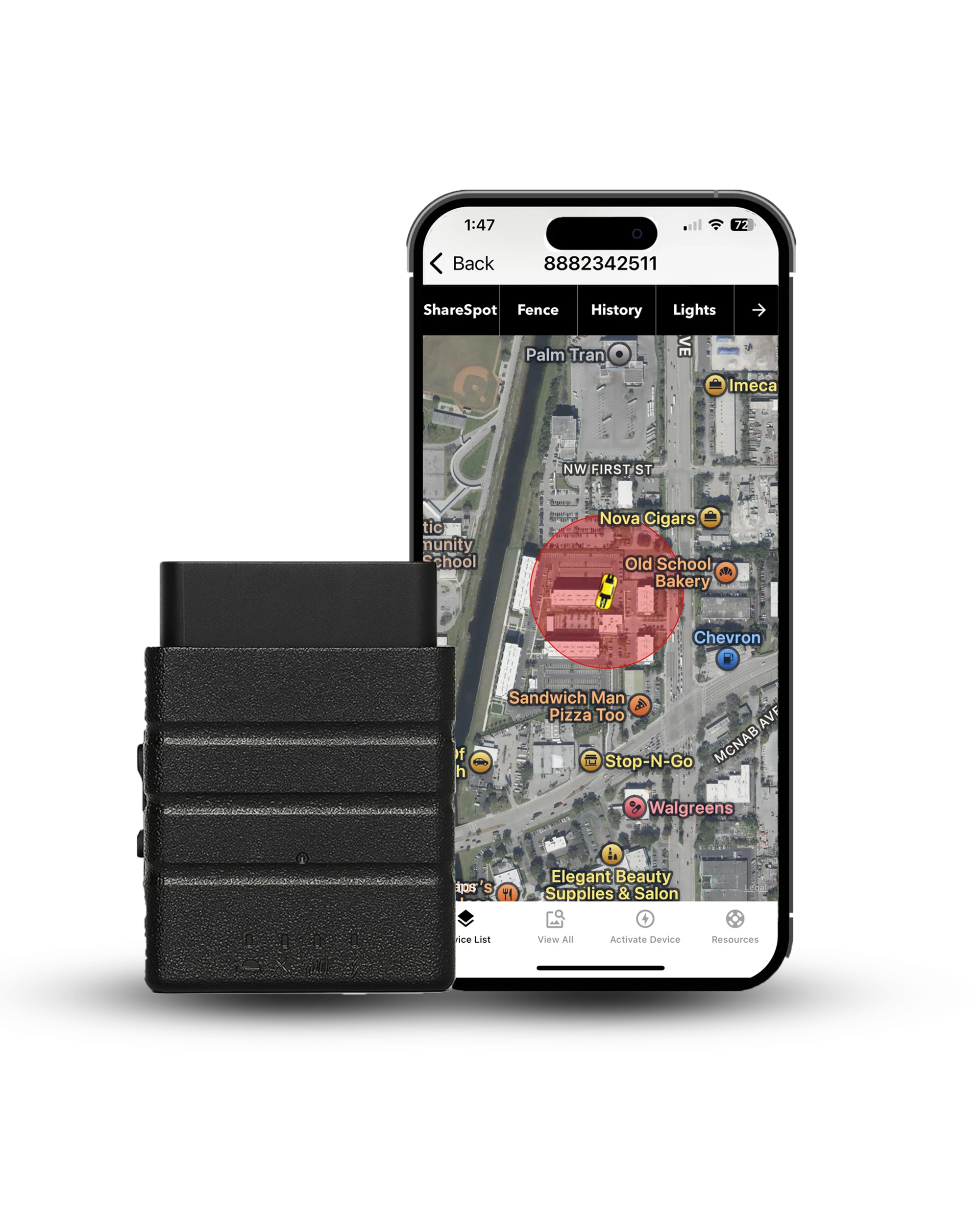
 Buy on Amazon