
SAE J1850 Protocol: VPW vs PWM Communication Standard
-
01
J1850 includes VPW for GM and PWM for Ford with different wiring
-
02
Pin 10 presence identifies PWM while absence indicates VPW protocol
-
03
GM and Ford vehicles from 1996 to 2007 use J1850 protocols
-
04
Some low-cost scanners lack full J1850 support causing connection issues
-
05
CAN replaced J1850 but older vehicles still rely on these protocols
SAE J1850 Protocol: VPW vs PWM, Compatible Vehicles, and How It Works
You plug your scanner into the OBD2 port and it spits back SAE J1850 VPW. Great. Now what does that actually mean?
I've been working with vehicle tracking systems and OBD2 diagnostics for over 15 years across rental fleets, construction sites, and everything in between. And I still see people confused by this one. The protocol your car runs determines whether your scanner connects, whether your OBD2 GPS tracker reads data correctly, and whether you're chasing a ghost fault by just a communication hiccup or a real one.
Here at Konnect GPS, we get it and this stuff can feel overwhelming fast. So I wrote this.
In this guide you will learn what SAE J1850 is, the real difference between VPW and PWM, which GM and Ford vehicles use each one, how to identify your protocol in 30 seconds, and why it still works today even with CAN bus taking over, also how it all ties into your OBD2 GPS device.
If you drive a vehicle built between 1996 and 2007, keep reading, this is the guide you needed yesterday.

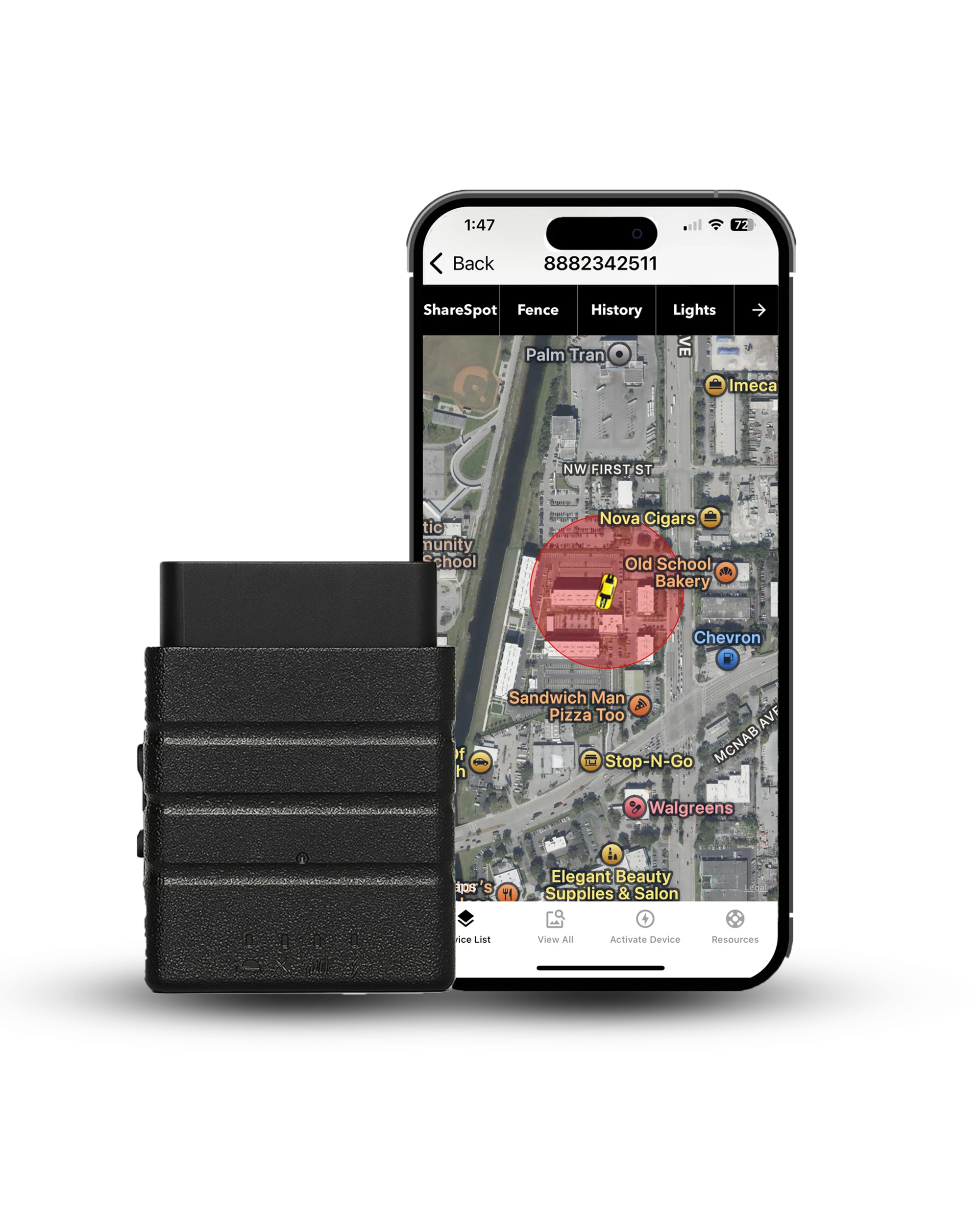
Konnect OBD2 GPS Tracker
World's fastest 3-second real-time car GPS tracker
- Updates every 3 seconds: 20x faster than most trackers
- Plug & Play: Simply plug it into your vehicle's OBD2 port and you're done.
- Worldwide Tracking: Monitor vehicles in over 150 countries with dependable, real-time GPS updates.
What Is SAE J1850 Protocol?
SAE J1850 is a serial communication protocol, the standardized language your car's electronic control units (ECUs) use to share data with each other and with any OBD2 diagnostic tool you plug in. Developed and officially adopted by the Society of Automotive Engineers in 1994, it came in two variants, VPW for GM vehicles and PWM for Ford. For over a decade, it was the go-to communication standard for American-made cars and trucks from 1996 through 2007.

Photo Credit: ResearchGate.net
I know it sounds technical already. Stick with me, it's simpler than it sounds. Think of it like this. Your car has dozens of computers running at the same time:
- One managing the engine
- One controlling the transmission
- Another keeping an eye on your emissions system
They all need to share data constantly and SAE J1850 is the network that made that happen, routing all that communication through a single standardized bus.
So where does J1850 sit in the protocol world?
SAE J1850 is classified as a Class B protocol, which just means medium-speed. Here's how the three classes stack up:
| Class | Speed | Used For |
|---|---|---|
| Class A | Slow | Simple body functions (seat memory, mirrors) |
| Class B | Medium | Diagnostics, emissions, engine data J1850 lives here |
| Class C | Fast | Safety-critical systems (ABS, airbags) |
SAE J1850 is not too slow, not blazing fast. Right in the sweet spot for what it was designed to do.
The part I always find interesting, before J1850, every US manufacturer was doing their own thing. Ford had its own wiring logic. GM had theirs. Chrysler was off in its own corner entirely.
No standardization, no cross-compatibility. Walk into an independent shop with a Ford and a GM on the same day? Good luck, you needed two completely different toolsets.
Then the EPA and California's CARB emissions regulations pushed everyone onto a standardized OBD2 system by 1996. J1850 was the protocol most American manufacturers chose to meet that requirement. Suddenly, a tech in Ohio could walk up to any 1996 GM or Ford with a standard scan tool and pull fault codes without needing a brand-specific interface. For independent shops and fleet managers running mixed fleets, that kind of standardization was worth its weight in gold.
If you want the full story on how that mandate came together, I covered the complete history of OBD-II in a separate guide, it's a surprisingly interesting read.
How SAE J1850 Fits Into the OBD2 System
OBD2 itself is a standardized system that allows five different communication protocols underneath it, not a single protocol. SAE J1850 is one of them. The physical connection point is always the same with a 16-pin SAE J1962 connector sitting under your dashboard, within reach of the driver's seat.

When you plug in a scanner or an OBD2 GPS tracker, it connects through that port and immediately starts talking to your ECU over the J1850 bus. The data flowing back covers everything your vehicle is doing in real time:
- Engine RPM and vehicle speed: Monitored continuously so your ECU knows exactly how hard the engine is working and how fast the vehicle is moving at any given second.
- Coolant temperature and O2 sensor readings: Critical for emissions compliance and fuel efficiency, two things the EPA cares about deeply and your engine depends on daily.
- Active and pending Diagnostic Trouble Codes (DTCs): The fault codes your scan tool pulls when something goes wrong, telling you and your tech exactly which system triggered the warning.
I've plugged into hundreds of these ports across GM and Ford fleet vehicles over the years. Here's what I tell every fleet manager I work with, once you know which protocol your vehicle runs, scanner selection, GPS tracker compatibility, and fault diagnosis all stop being guesswork and get a whole lot easier.
What's the Actual Difference Between SAE J1850 VPW and PWM?
The main difference between SAE J1850 vs VPW is, VPW runs on a single wire at 10.4 kbps and was GM's choice. PWM runs on two wires at 41.6 kbps and was Ford's. Same J1850 standard underneath but completely different way of sending data. VPW and PWM are both part of the SAE J1850 standard, but they're not interchangeable. They encode data differently, run at different speeds, use different wiring, and were adopted by different manufacturers for different reasons.

I get this question most often. Someone's scanner won't connect, or their OBD2 GPS tracker isn't reading data, and nine times out of ten it comes down to one thing because they don't know which J1850 variant their vehicle runs.
Now let me show you exactly why that distinction is more important before you buy a scanner or plug in a GPS tracker.
1. J1850 VPW: The General Motors' Choice
VPW stands for Variable Pulse Width. GM developed this as their implementation of J1850, officially calling it Class 2. VPW runs on a single wire at 10.4 kbps and encodes data by varying the length of each pulse and a longer pulse means one thing, a shorter pulse means another. What I've always appreciated about VPW, it's remarkably fault tolerant.
I've tested it on vehicles with corroded connectors, marginal grounds, and questionable wiring harnesses on job sites. VPW still communicates and that single-wire simplicity is genuinely robust in rough real-world conditions.
Chrysler also used a VPW variant called PCI with the same physical layer, slightly different implementation. Worth knowing if you're working on late 90s Dodge or Chrysler vehicles.
2. J1850 PWM: The Ford's Approach
PWM stands for Pulse Width Modulation. Ford's version, internally called SCP (Standard Corporate Protocol), runs on two wires, pins 2 and 10 on your OBD2 connector and at 41.6 kbps. Instead of varying pulse length like VPW, PWM uses fixed-frequency pulses where the ratio of on-time to off-time determines whether a bit is a 1 or a 0.
The dual-wire differential setup makes PWM more resistant to electrical noise, which works in a vehicle packed with ignition systems, alternators, and all kinds of electromagnetic interference. Ford also used it on some Lincoln, Mercury, Mazda, and Jaguar models during their ownership years. One thing worth flagging is that PWM runs at 41.6 kbps, which is four times faster than VPW's 10.4 kbps. For basic diagnostics that speed difference is negligible.
For real-time data logging across a GPS-tracked fleet though, faster data throughput does make a difference in how frequently your device can poll vehicle parameters.
Side by Side Comparison of VPW vs PWM
| Feature | J1850 VPW | J1850 PWM |
|---|---|---|
| Used by | GM, Chrysler | Ford, Lincoln, Mercury, Mazda |
| Also known as | Class 2 / PCI | SCP |
| Wire count | Single wire | Dual wire |
| OBD2 pins | Pin 2 | Pins 2 and 10 |
| Data rate | 10.4 kbps | 41.6 kbps |
| Signal type | Variable pulse width | Fixed frequency PWM |
| Noise resistance | Good | Better |
| Vehicle years | 1996–2007 | 1996–2007 |
Which One Is Faster And Is It Actually Important?
PWM is four times faster than VPW on paper. In my experience though, for a shop tech pulling DTCs on a 2002 Silverado or a 2004 F-150, you're never going to feel that speed difference during a routine diagnostic session.
Where it genuinely works is in fleet GPS tracking and real-time data logging. When you're monitoring 50 vehicles simultaneously, the tracking speed, idle time, engine load, and fuel consumption all with a faster polling rate means more accurate, more frequent data updates. That's the difference between knowing your driver was speeding and knowing exactly when, where, and for how long.
I've set up OBD2 GPS trackers on both VPW and PWM fleets. PWM vehicles tend to deliver slightly snappier live data feeds. Not dramatic, but measurable when you're managing a large operation.
Which Cars Use SAE J1850?
If you're driving an American-made vehicle built between 1996 and 2007, there's a solid chance you're running SAE J1850. That's the window. Before 1996, OBD2 wasn't mandatory and after 2007, most manufacturers had already started migrating to CAN bus, and by 2008 it was federally required for all US vehicles.

So let's get specific.
1. J1850 VPW Vehicles: General Motors (1996-2007)
GM ran VPW across virtually their entire lineup during this era. If you own any of these, you're on J1850 VPW:
- Chevrolet: Silverado, Tahoe, Suburban, Impala, Malibu, Trailblazer
- GMC: Sierra, Yukon, Envoy
- Cadillac: Escalade, DeVille, CTS (early models)
- Buick: LeSabre, Century, Rendezvous
- Pontiac: Grand Prix, Grand Am, Bonneville
- Chrysler / Dodge: Some models used a VPW variant called PCI (same physical layer, different implementation)
I've pulled codes on a 2003 Chevy Silverado more times than I can count. Classic VPW vehicle with single wire, pin 2, rock solid once you have the right tool in hand.
2. J1850 PWM Vehicles: Ford and Partners (1996-2007)
Ford used PWM across their main lineup and carried it through to several brands under their ownership during this period:
- Ford: F-150, Explorer, Mustang, Focus, Taurus, Expedition
- Lincoln: Town Car, Navigator, LS
- Mercury: Grand Marquis, Mountaineer
- Mazda: Several models during Ford's ownership era
- Jaguar: Some models while under Ford ownership
Worth noting but most Ford vehicles started transitioning away from PWM after 2004, moving toward ISO 9141-2 or KWP2000 on certain models before the full CAN switchover in 2008. If you're working on a 2005-2007 Ford, always verify with the factory service manual before assuming PWM.
How to Tell Which Protocol Your Car Uses (The 30-Second Pin Test)

I've done this check on job sites with nothing but a flashlight. You don't need a factory manual or a dealer tool, just find that 16-pin J1962 connector under your dash, usually right near the steering column, and look at which pins have metal contacts.
The 30-Second OBD2 Pin Test
| What You See | Your Protocol |
|---|---|
| Metal contacts in pins 2, 4, 5, 16 — but NOT pin 10 | J1850 VPW (GM) |
| Metal contacts in pins 2, 4, 5, 10, and 16 | J1850 PWM (Ford) |
| Metal contacts in pins 6 and 14 | CAN bus (2008+) |
Pin 10 is your tell. Present means Ford PWM, absent means GM VPW and that one pin tells you everything about which protocol you're dealing with. I've seen techs spend an hour troubleshooting a scanner connection issue that a 30 second pin check would've solved before they even opened the hood.
Not sure exactly where your OBD2 port is? I put together a guide on finding the OBD2 port in any vehicle that covers every common location by vehicle type.
How SAE J1850 Powers Vehicle Diagnostics and GPS Tracking
Most people think of SAE J1850 purely as a diagnostics protocol, plug in a scanner, pull some codes, done. And yes, that's a big part of what it does. But there's another layer here that doesn't get talked about nearly enough, especially if you're running a fleet or thinking about adding an OBD2 GPS tracker to an older vehicle.
Let me walk you through both sides.
The Diagnostics Side: How J1850 Talks to Your Scanner
When you plug a scan tool into the J1962 port on a J1850 vehicle, here's what actually happens. The tool sends a request message out over the J1850 bus. The ECU receives it, processes it, and sends back a response, all within milliseconds. That back-and-forth is how your scanner surfaces Diagnostic Trouble Codes, live sensor data, and system status in real time.
The data your scanner can access over J1850 includes:
- Diagnostic Trouble Codes (DTCs): Both active faults and pending codes that haven't triggered the check engine light yet
- Live sensor data: Engine RPM, vehicle speed, throttle position, fuel trim, intake air temperature
- Freeze frame data: A snapshot of what your engine was doing at the exact moment a fault code triggered
- Emissions readiness monitors: Tells you whether your vehicle will pass a state inspection before you even drive to the testing station
That last one saves people a lot of wasted trips. I've used it countless times on fleet vehicles before scheduling emissions testing and you know before you go.

The GPS Tracking Side: Where J1850 Gets Really Useful
Here's where it gets interesting for fleet managers and vehicle owners alike.
An OBD2 GPS tracker like the ones we offer here at Konnect GPS, plugs directly into that same J1962 port. On a J1850 vehicle, it communicates over the J1850 bus exactly the same way a scan tool does. The OBD GPS tracker reads live vehicle data continuously and transmits it in real time.
What that means practically:
- Real-time speed monitoring: Pulled directly from the vehicle's speed sensor via J1850, not estimated from GPS coordinates alone
- Engine on/off detection: The tracker knows the moment your vehicle starts or shuts down
- Idle time tracking: Critical for fleet fuel management, and J1850 makes it precise
- Mileage and odometer data: Accurate vehicle usage reporting without manual log sheets
- Fault code alerts: Some OBD2 trackers can flag DTCs as they appear, so you know about a developing engine issue before your driver does
I've deployed OBD2 trackers on mixed fleets and some running J1850 VPW, some PWM, some newer CAN vehicles. The data quality on J1850 vehicles is solid. Speed readings are accurate, engine status is reliable, and the plug-and-play installation means zero downtime getting a unit live on a vehicle.
Does Your OBD2 Scanner Actually Support J1850?
At this point a lot of people get caught out and it's worth flagging before you spend money on a tool. Not every scanner that claims "OBD2 compatible" actually supports all five OBD2 protocols. Some budget Bluetooth ELM327 dongles and especially the cheap clones are flooding the market and quietly dropping J1850 VPW support to cut costs.
You plug it into your 2001 Suburban, it sits there doing nothing, and you spend an hour wondering what's wrong with your truck. Nothing's wrong with the truck. The tool just doesn't speak its language.
For J1850 vehicles, look for scanners that explicitly list J1850 VPW and J1850 PWM support brands like Autel, Innova, and BlueDriver cover all five OBD2 protocols reliably. If you're shopping for an OBD2 GPS tracker for a pre-2008 GM or Ford, the same rule applies, you should first confirm J1850 compatibility before you buy.
Why the Industry Moved On CAN Bus (SAE J1850 vs CAN Bus)
SAE J1850 did its job well for over a decade. But by the mid 2000s, the automotive industry was changing so fast, the more ECUs per vehicle, more safety systems, more data moving around at higher speeds. J1850 wasn't built for that world.
Nobody in 1994 was building for 100 ECUs per vehicle. CAN bus was.

How the Auto Industry Outgrew J1850
J1850's single-wire bus topology at 10.4 or 41.6 kbps couldn't scale to handle that kind of traffic. J1850 was like trying to run a city's worth of internet traffic through a single dial-up line. Something had to give. On the other hand CAN bus officially ISO 15765-4 became mandatory for all US vehicles from January 1, 2008. CAN Bus runs at 500 kbps standard, with CAN-FD pushing up to 1 Mbps and beyond. That's not a modest upgrade. That's a completely different league.
Think about a 2002 GM truck versus a 2015 one. The older vehicle might have 10-15 ECUs on board. A modern vehicle can have anywhere from 50 to 100. Every single one of those modules needs to communicate and sometimes simultaneously, sometimes in milliseconds.
SAE J1850 vs CAN Bus: What the Difference Means for Your Vehicle
Numbers tell this story better than anything. J1850 topped out at 41.6 kbps on its fastest variant. CAN bus runs at 500 kbps standard and CAN-FD pushes past 1 Mbps. I've worked with both protocols across hundreds of vehicles. The difference isn't just speed, but also the capacity, reliability, and how many modules can talk simultaneously without the whole network choking.
Now next let's see how they actually stack up side by side.
SAE J1850 vs CAN Bus
| Feature | SAE J1850 VPW | SAE J1850 PWM | CAN Bus |
|---|---|---|---|
| Data rate | 10.4 kbps | 41.6 kbps | 500 kbps–1 Mbps |
| Wire count | Single | Dual | Dual (differential) |
| US mandatory from | 1996 | 1996 | 2008 |
| Max ECUs supported | Limited | Limited | 50–100+ |
| Noise resistance | Good | Better | Excellent |
| Error detection | CRC byte | CRC byte | Multi-layer CRC |
| Still in use | Legacy vehicles | Legacy vehicles | All modern vehicles |
CAN bus won because the industry outgrew J1850 because more modules, faster data, higher safety demands. That's not a knock on J1850. For what it was designed to do in 1994, it was genuinely excellent engineering. But if you're working on anything built after 2007, you're in CAN territory.
And if you're working on anything built between 1996 and 2007 from GM or Ford, J1850 is still very much in the picture and knowing it well is still important.
Conclusion
SAE J1850 may be a legacy protocol, but legacy doesn't mean irrelevant. There are tens of millions of pre 2008 GM and Ford vehicles still running on American roads right now and every single one of them speaks either VPW or PWM every time you plug something into that OBD2 port.
Before you walk away, here's the short version of everything that can helps:
- 1996-2007 GM vehicle: You're on J1850 VPW. Single wire, pin 2, 10.4 kbps.
- 1996-2007 Ford, Lincoln, or Mercury: You're on J1850 PWM. Two wires, pins 2 and 10, 41.6 kbps.
- Buying a scanner or OBD2 GPS tracker for an older vehicle: Verify protocol support first. One wrong purchase wastes an afternoon and your money.
- Pin 10 is your fastest tell: Thirty seconds with a flashlight and you know exactly what you're dealing with.
Knowing which one your vehicle runs is the difference between a diagnostic session that works for the first time and one that leaves you standing in a parking lot wondering why your scanner won't connect.
I've been in that parking lot. Trust me, a 30-second pin check is worth it every single time.
If you're running an older fleet or a pre-2008 vehicle and thinking about adding an OBD2 GPS tracker, make sure whatever you buy supports J1850. At Konnect GPS, our OBD2 trackers work across both J1850 and CAN bus vehicles because real fleets don't get to pick one era and stick to it.
Any questions about protocol compatibility or finding the right tracker for your vehicle, we're here. Call us at 1-888-418-6212 or drop us a message to the Konnect GPS team directly at Contact Us and we'll point you in the right direction.
And if you want to keep going, here's where I'd head next: How to Find the OBD2 Port in Any Vehicle, if you're still hunting for that port under your dash
Already know your vehicle protocol and need an OBD2 GPS tracker?
The Konnect GPS OBD2 Tracker plugs straight into your OBD2 port, no tools, no installation, real-time updates every 3 seconds with free US shipping and a lifetime warranty.

Buy From Here & Get Additional $10 OFF
Author Disclosure
Written by Ryan Horban, GPS Tracking & OBD2 Diagnostics Expert
For more than 15 years, I've worked hands-on with GPS tracking systems and OBD2 diagnostics across construction fleets, delivery trucks, rental vehicles, and service vans.
For this guide on SAE J1850, I drew directly from years of plugging into GM and Ford fleet vehicles running both VPW and PWM protocols. I've diagnosed scanner compatibility failures firsthand, deployed OBD2 GPS trackers across mixed-protocol fleets, and done the 30-second pin check more times than I can count on job sites, in parking lots, and under dashboards with nothing but a flashlight.
What I cover here isn't pulled from a spec sheet. It's what I've learned doing this work daily across real vehicles, real fleets, and real diagnostic sessions.
👉 Connect with me on LinkedIn →
🌐 Visit: https://www.ryanhorban.net

Frequently Asked Questions
What is the SAE J1850 interface?
The SAE J1850 interface is a standardized serial communication protocol used in vehicles built from 1996 through 2007, primarily by GM and Ford. It allows electronic control units (ECUs) throughout the vehicle to exchange data with each other and with any OBD2 diagnostic tool or GPS tracker plugged into the J1962 port under the dash. It operates as a Class B medium-speed protocol, sitting between slow body-function networks and the high-speed safety systems used for ABS and airbags.
What is the difference between J1850 VPW and J1850 PWM?
J1850 VPW (Variable Pulse Width) and J1850 PWM (Pulse Width Modulation) are two distinct variants of the same SAE J1850 standard. Here is how they differ:
- VPW runs on a single wire (pin 2) at 10.4 kbps and was adopted by GM and Chrysler. It encodes data by varying the length of each pulse.
- PWM runs on two wires (pins 2 and 10) at 41.6 kbps, four times faster, and was adopted by Ford, Lincoln, Mercury, Mazda, and Jaguar. It uses fixed-frequency pulses where the on-to-off ratio determines each bit.
Despite sharing the J1850 name, they are not interchangeable. A scan tool or OBD2 GPS tracker that supports only one variant will not connect to a vehicle running the other. The fastest way to tell which one your vehicle uses is the pin test: no contact in pin 10 means VPW; a contact present in pin 10 means PWM.
Which vehicles use J1850 VPW?
J1850 VPW was the protocol of choice for General Motors across their entire 1996–2007 lineup, including:
- Chevrolet: Silverado, Tahoe, Suburban, Impala, Malibu, Trailblazer
- GMC: Sierra, Yukon, Envoy
- Cadillac: Escalade, DeVille, early CTS
- Buick: LeSabre, Century, Rendezvous
- Pontiac: Grand Prix, Grand Am, Bonneville
- Chrysler / Dodge: Select models using a VPW variant called PCI, same physical layer, slightly different implementation
If you own any of these vehicles built between 1996 and 2007, you are on J1850 VPW.
Which vehicles use J1850 PWM?
J1850 PWM was Ford's implementation, officially called SCP (Standard Corporate Protocol), and it carried through to several brands under Ford's ownership during this era:
- Ford: F-150, Explorer, Mustang, Focus, Taurus, Expedition
- Lincoln: Town Car, Navigator, LS
- Mercury: Grand Marquis, Mountaineer
- Mazda: Several models produced during Ford's ownership period
- Jaguar: Some models while under Ford ownership
Note that many Ford vehicles began transitioning away from PWM after 2004, moving toward ISO 9141-2 or KWP2000 on certain models before the full CAN switchover in 2008. If you are working on a 2005–2007 Ford, verify with the factory service manual before assuming PWM.
How do I identify which OBD2 protocol my car uses in 30 seconds?
Find the 16-pin J1962 OBD2 connector under your dashboard, usually near the steering column, and look at which pins have metal contacts. The single test that tells you everything is pin 10:
- No metal contact in pin 10 - J1850 VPW (GM vehicle)
- Metal contact present in pin 10 - J1850 PWM (Ford vehicle)
- Metal contacts in pins 6 and 14 - CAN bus (2008 or newer)
All you need is a flashlight. No factory manual, no dealer tool, no special equipment. Pin 10 is the tell every time.
Will an OBD2 GPS tracker work on a J1850 vehicle?
Yes, but only if the tracker explicitly supports J1850 VPW or PWM. Not every OBD2 GPS tracker on the market does. Plugging an incompatible device into a pre-2008 GM or Ford vehicle results in no data, no tracking, and a wasted purchase.
A compatible OBD2 GPS tracker on a J1850 vehicle can read and transmit:
- Real-time vehicle speed pulled directly from the speed sensor
- Engine on/off status detected the moment the vehicle starts or shuts down
- Idle time for accurate fleet fuel management
- Mileage and odometer data without manual log sheets
- Active fault code alerts so you know about engine issues before your driver does
Always verify J1850 VPW and PWM compatibility before buying. The Konnect OBD2 GPS Tracker supports both J1850 variants and CAN bus, making it compatible with pre-2008 GM and Ford vehicles as well as all modern vehicles.
Which is faster - J1850 VPW or J1850 PWM?
PWM is four times faster than VPW. VPW runs at 10.4 kbps; PWM runs at 41.6 kbps. For a shop technician pulling fault codes in a routine diagnostic session, that speed difference is not noticeable in practice.
Where it matters is in real-time fleet GPS tracking and data logging. When monitoring multiple vehicles simultaneously for speed, idle time, and engine load, a faster polling rate on PWM vehicles produces more frequent and accurate data updates. It is a measurable difference when managing a large operation, though not dramatic for individual vehicle use.
Why did the industry move from J1850 to CAN bus?
J1850 was designed in 1994 for vehicles with 10 to 15 ECUs. By the mid-2000s, modern vehicles were running 50 to 100 modules simultaneously, engine, transmission, ABS, airbags, infotainment, climate, and more, all needing to communicate in real time. J1850's maximum speed of 41.6 kbps simply could not handle that volume of data traffic.
CAN bus (ISO 15765-4) runs at 500 kbps standard, with CAN-FD pushing past 1 Mbps, a leap of more than 12 times the fastest J1850 variant. It also supports more modules on the same network simultaneously with stronger error detection. The EPA mandated CAN bus for all US vehicles sold from January 1, 2008 onward. J1850 did its job well for over a decade, but the industry simply outgrew it.
Are bit times essential for SAE J1850 communication?
Yes. Bit times are the basic unit of timing for all J1850 serial communication, ensuring that data is transmitted and received in a synchronized way between ECUs. Without consistent bit timing, messages sent over the J1850 bus would be misread or lost entirely. Both VPW and PWM rely on precise bit timing to maintain reliable communication across every vehicle system connected to the network.
Can I use a modern OBD2 scanner on a J1850 vehicle?
Yes, as long as the scanner explicitly lists support for J1850 VPW or PWM, whichever your vehicle runs. Quality scanners from brands like Autel, Innova, and BlueDriver cover all five OBD2 communication protocols including both J1850 variants, making them fully compatible with pre-2008 GM and Ford vehicles.
The problem comes with cheap Bluetooth ELM327 clones that quietly drop J1850 VPW support to reduce manufacturing costs. You plug into a 2001 Suburban, the dongle sits there doing nothing, and you spend an hour troubleshooting a problem that does not exist. Always check the protocol compatibility list on any scanner or OBD2 GPS tracker before purchasing for a pre-2008 vehicle.
 Buy on Amazon