
Best Personal GPS Tracker for Cars, Kids & Pets (2026 Tests)
Key Takeaways
-
01
Bluetooth covers short range; GPS and satellite cover long distances
-
02
Faster updates mean better accuracy but shorter battery life overall
-
03
Secure mounting keeps your tracker working through movement and weather
-
04
Alerts matter most, notifying you instead of constant manual checking
-
05
Subscription costs often exceed the tracker's upfront device price
As an Amazon Associate, Konnect GPS earns from qualifying purchases.
8 Best Personal GPS Trackers for Cars, Pets, Kids & More (2026 Guide)
Hey, welcome to my best personal GPS tracker guide for 2026.
Most personal GPS trackers claim they're the best. In real use, a lot of them fall short. Signals drop, batteries die early, mounts slip off, and the app shows a location that's already out of date. I've seen all of it, which is why this guide covers the trackers that kept working when conditions were not perfect.
I'm Ryan Horban, and I've spent the last 15+ years testing GPS trackers the unglamorous way, on personal and rental cars, fleet vehicles, pets that refuse to stay put, trailers that seem to grow legs overnight, and gear that disappears the second you turn your back.
In this guide, I'll break down which trackers work best for pets, cars, kids, hiking, and everyday items, and explain why. By the end, you'll know which personal GPS tracker fits your situation and which ones to skip.
Bluetooth tag or GPS tracker
These are two different products that get shelved together. A Bluetooth tag has no radio of its own and no idea where it is. The tag simply announces itself, and someone else's phone passing nearby reports the sighting. A GPS tracker works out its own position from satellites and sends it over a cellular or satellite network, which is why a tag is fine for keys in a coat pocket and useless for a dog three miles into the woods.
Quick Comparison: Top 8 Personal GPS Trackers at a Glance
If you want the short version, this side-by-side comparison makes it easy to see which personal GPS tracker fits your situation without digging through every review. Compare use case, upfront cost, standout feature, and realistic battery life to narrow down the right tracker quickly.
| Product | Best for | Device cost | Top feature | Battery life | Where to buy |
|---|---|---|---|---|---|
 SpaceHawk Mini SpaceHawk Mini
|
Vehicles, trailers, mobile assets | About $44 | 3-second real-time updates plus a magnetic mount | 2 to 3 weeks in active use | Buy on Amazon |
 Spot X SOS Spot X SOS
|
Hiking, off-grid travel, emergencies | About $249 | Satellite SOS with two-way messaging | Up to about 10 days | Buy on Amazon |
 Tile Mate Tile Mate
|
Keys, bags, everyday items | About $25 | Bluetooth crowd-location network | Up to 3 years | Buy on Amazon |
 Tractive GPS Tractive GPS
|
Dogs and cats | About $49 | Live pet tracking with escape alerts | 5 to 7 days | Buy on Amazon |
 AngelSense AngelSense
|
Alzheimer's, dementia, special needs | About $49 | Wandering alerts and auto-answer calling | About 1 day | Buy on Amazon |
 Apple AirTag Apple AirTag
|
Luggage and keys, for Apple users | About $29 | Precision Finding, no subscription | About 1 year | Buy on Amazon |
 Jiobit Jiobit
|
Kids and special-needs children | About $129 | Secure wearable with smart geofencing | 7 to 10 days | Buy on Amazon |
 Spark Nano 7 Spark Nano 7
|
Budget vehicle tracking | About $30 | Low-cost GPS with a magnetic case | 5 to 14 days | Buy on Amazon |
How We Tested These Personal GPS Trackers
I evaluated every personal GPS tracker in this guide the way you would actually use one rather than the way a brand suggests you should.

Konnect GPS purchased every tracker used in this guide with our own budget. We don't accept free units, early access devices, or review samples, and no brand had input into what made the list or how products were ranked. I led the testing personally, and our team helped deploy these trackers across real situations: family vehicles, teen drivers, rental cars, fleet assets, trailers, pets, kids, an elderly parent, and everyday gear. We tracked them over normal use cycles instead of short demo runs.
Here's what the testing focused on:
- Location accuracy: Did the tracker report where it actually was, or did it lag behind reality?
- Signal reliability: How did it perform when cellular coverage weakened or dropped?
- Battery behavior: Real battery life under different update settings, not marketing estimates.
- Mounting, wearing, and durability: Did magnets, clips, collars, or housings stay put in heat, rain, and vibration, and did wearable trackers stay comfortable and secure for kids, pets, or an elderly parent?
- App performance and alerts: How fast updates loaded, and whether safety alerts like geofence breaches or wandering arrived on time when it mattered.
We also paid attention to the small things that matter long term, like charging hassles, app glitches, false alerts, and how often a tracker needed babysitting. Only the trackers that stayed reliable under everyday use made this list. Everything else got cut.
SpaceHawk Mini GPS Tracker: Best Overall for Vehicle, Trailer & Assets Tracking

SpaceHawk is a portable tracker built for the jobs that need a device you can move between assets: a family car, a work truck, a utility trailer, or a piece of equipment parked somewhere it should not be at 2 a.m.
What makes SpaceHawk stand out against portable rivals such as the Spark Nano is refresh speed. Updates land as often as every 3 seconds, which is the fastest rate on this list. The housing helps as much as the electronics: SpaceHawk is small, waterproof, and built around a strong magnetic mount, so it attaches inside or outside a vehicle without tools.
For less than $100, SpaceHawk gives you a clear picture of where your own vehicles and equipment are and where they have been. Track things you own, or vehicles your business operates with drivers who know the policy, and it earns its keep quickly.
Visit website: spacehawkgps.com
Product Highlights
- Fast, reliable live tracking: Delivered consistent location updates as often as every 3 seconds, which made it easy to follow a teen driver's route or a vehicle's movement in real time.
- Secure mounting: The built-in magnetic mount held firmly under cars and trailers without shifting from vibration or weather.
- Weather-ready design: The waterproof housing handled outdoor placement and rain without signal drops or moisture issues.
- Practical battery life: Lasted roughly 1 to 3 weeks in active use, depending on update frequency, without becoming a charging headache.
- Simple tracking app: The iOS and Android app loaded locations quickly and stayed usable without constant troubleshooting.
- Compact, easy to place: The small form factor made it easy to tuck into a glove box, trunk, or trailer hitch box.
| Product | Key features | Specs | Amazon rating |
|---|---|---|---|
|
SpaceHawk Mini
|
|
|
4.2 stars from 53 ratings |
Pros
- Waterproof housing for all-weather use
- Customizable update frequency for tailored tracking
- Works with Windows, Mac, iOS and Android
- Suitable for personal, fleet, or outdoor tracking
- Strong magnetic mount for secure attachment
Cons
- Coverage is built around the United States
- Requires good cellular service for accurate tracking
- Battery life decreases with more frequent updates
- Comes off the vehicle to recharge, unlike a plug-in OBD2 unit
Go with the SpaceHawk Mini GPS Tracker if you want dependable, real-time tracking for a family vehicle, a teen driver, a trailer, or mobile assets, and you don't want to deal with weak mounts, delayed updates, or unreliable apps.
SpaceHawk GPS on YouTube, from the brand's own channel.
Spot X With SOS Protection: Best Personal GPS Tracker for Hiking & Remote Travel

Spot X With SOS Protection
- Two-way satellite connect: talk and text from anywhere using Bluetooth or a dedicated US number
- SOS to search and rescue: trigger an alert, talk to responders, get help on the way
- Share location worldwide: send GPS coordinates to anyone via satellite
The Spot X With SOS Protection is a satellite-based personal GPS tracker built for hiking, camping, and remote travel where cellular coverage doesn't exist. Instead of relying on cell towers, the device uses the Globalstar satellite network to send GPS coordinates, messages, and SOS alerts from almost anywhere. Location check-ins run on timed intervals of 5, 10, 30, or 60 minutes, and the device supports two-way satellite messaging through its built-in keyboard or a paired phone.
This tracker is for people who spend time off the grid and want a direct line to help if something goes wrong. Emergency communication is the real difference. Unlike cellular trackers, Spot X lets you trigger SOS and exchange messages with search-and-rescue responders, which makes it a practical safety tool for backcountry trips rather than everyday tracking.
Product Highlights
- Satellite-based tracking: Continued working well beyond cell coverage using the Globalstar satellite network.
- SOS with two-way messaging: Allowed back-and-forth communication with emergency responders after an SOS was triggered.
- Flexible update intervals: Location updates could be set at 5, 10, 30, or 60 minutes to balance battery life and visibility.
- Long battery runtime: Rated up to 240 hours in tracking mode, which suited multi-day trips without recharging.
- Standalone operation: A built-in screen and QWERTY keyboard meant it worked even without a phone nearby.
- Rugged, trail-ready design: Handled outdoor conditions and clipped easily to a pack using the included carabiner.
| Product | Key features | Specs | Amazon rating |
|---|---|---|---|
|
Spot X SOS
|
|
|
4.0 stars from 716 ratings |
Pros
- Bluetooth connectivity for easy pairing with cellphones
- Dedicated US number for direct standalone messaging
- 24/7 SOS to search and rescue services
- Global GPS coverage for accurate location sharing
- Can message any cell number or email worldwide
Cons
- Requires purchase of a service plan
- Limited use outside Globalstar satellite coverage areas
- Highest device price on this list
- Extra cost for international messaging may apply
- Some users may find the device bulky
Go with the Spot X With SOS Protection if you hike, camp, or travel beyond cell coverage and want a personal GPS tracker that still lets you communicate if something goes wrong.
Tile Mate: Best Bluetooth Tracker for Everyday Personal Items

Tile Mate
- Find nearby: ring lost items within Bluetooth range with the app or a smart home device
- Track from afar: see last location on a map when your Tile wanders beyond Bluetooth
- Locate lost phone: double-press Tile to make your phone ring, even on silent
The Tile Mate is a Bluetooth-based personal item tracker designed for everyday things like keys, wallets, backpacks, and purses. Instead of using GPS or cellular networks, it relies on Bluetooth and the Tile community network to help you find items nearby or see their last known location on a map.
This tracker is built for people who lose small items around the house, office, or while running errands and want a simple, low-maintenance solution. With a battery that can last up to three years and no required monthly subscription, Tile Mate fills a different role than GPS trackers. The job is recovering everyday items quickly, not following live movement over distance.
Long battery life, simplicity, and wide compatibility across iOS, Android, and smart home devices make it an easy pick for basic item tracking.
Product Highlights
- Bluetooth item tracking: Reliably rang nearby items within Bluetooth range and showed the last known locations when out of range.
- Long battery life: The non-replaceable battery lasted months without attention, which suited a set-it-and-forget-it use case.
- Phone-finding feature: Double-pressing the Tile made a misplaced phone ring, even on silent.
- Tile network support: When an item moved beyond Bluetooth range, the anonymous Tile community helped update its location.
- Smart home compatibility: Worked with Alexa, Google Assistant, and Siri for quick voice-based finding.
- Compact and lightweight: Small enough to attach to keys or drop into a bag without adding noticeable bulk.
| Product | Key features | Specs | Amazon rating |
|---|---|---|---|
|
Tile Mate
|
|
|
4.4 stars from 25,527 ratings |
Pros
- Attaches easily to keys, backpacks, purses
- Can locate items outside Bluetooth range on a map
- Compatible with iOS, Android, and smart home devices
- Long battery life of up to 3 years
- Enables phone-finding, even on silent mode
Cons
- Battery is non-replaceable
- Less effective if outside Bluetooth range
- Requires a premium plan for Smart Alerts
- Network-dependent for remote location features
- Premium plan required for item reimbursement
Go with the Tile Mate if you want a simple, low-maintenance way to keep track of keys, bags, or everyday items without charging or monthly fees.
Tractive GPS Tracker: Best Personal GPS Tracker for Dogs & Cats

Tractive
- Track anywhere: see your dog's live location, near or far (subscription required)
- Healthy and happy: monitor sleep, activity, and get health alerts
- Fit and fun: track progress and compare activity levels with other dogs
The Tractive GPS Tracker is a collar-mounted personal GPS tracker built specifically for dogs and cats. Tractive uses cellular connectivity to deliver live location tracking with updates as fast as every 2 to 3 seconds, along with activity and health monitoring features that go beyond basic location tracking.
This tracker is made for pet owners who want to know where their pet is and how they're doing. Escape-prone dogs, outdoor cats, and pets that roam beyond the yard are the clearest fit. With unlimited range, virtual fences, and health insights, Tractive focuses on everyday pet safety rather than short-range item finding. Real-time GPS, a fast refresh rate, and built-in wellness monitoring in a lightweight, waterproof collar unit are what put it at the top for pets.
Product Highlights
- Live GPS tracking with fast updates: Refreshed locations every 2 to 3 seconds, which made following a moving dog feel accurate instead of delayed.
- Unlimited range: Continued tracking without distance limits, whether the pet stayed nearby or wandered far from home.
- Virtual fences and escape alerts: Sent notifications quickly when a pet left a defined safe area.
- Activity and health monitoring: Tracked movement, rest patterns, and changes that could signal health issues.
- Lightweight, waterproof design: Held up to rain, mud, and daily wear without bothering the dog.
- All-in-one app: Combined location tracking, alerts, and activity data in a single interface.
| Product | Key features | Specs | Amazon rating |
|---|---|---|---|
|
Tractive GPS
|
|
|
4.0 stars from 26,890 ratings |
Pros
- Real-time GPS tracking without distance limits
- Integrated SIM card and data covered by subscription
- Health alerts for unusual sleep and activity patterns
- Monitors a wellness score for fitness tracking
- Escape alerts notify when a dog leaves a set area
Cons
- Requires a monthly subscription starting at $5
- Subscription needed for full feature access
- Device dependent on cellular network coverage
- Alert notifications might be delayed
- The collar clip is a known weak point, and replacements cost extra
Go with the Tractive GPS Tracker if you want real-time location tracking for dogs or cats along with activity and health insights.
AngelSense GPS Tracker: Best for Alzheimer's & Dementia Care

AngelSense
- Always know where: accurate, real-time tracking indoors and out
- Be alerted instantly: proactive warnings for wandering and danger zones
- Talk from anywhere: two-way speakerphone with auto-answer for remote support
The AngelSense GPS Tracker is a wearable personal GPS tracker built for people with Alzheimer's, dementia, autism, and other special needs, where wandering and disorientation are real risks. AngelSense uses 4G cellular connectivity to provide continuous, real-time location tracking indoors and outdoors, paired with proactive alerts and two-way voice support.
This device is built for caregivers and families who need more than dots on a map. AngelSense focuses on prevention and response: catching wandering early, communicating instantly, and locating a loved one fast if something goes wrong. Secure wearing options, auto-answer calling, and smart alerts separate it from general-purpose GPS trackers.
Product Highlights
- Continuous real-time tracking: Provided all-day location updates indoors and outdoors without relying on manual check-ins.
- Proactive wandering alerts: Sent notifications for unexpected movement, unsafe locations, or routine changes instead of waiting for a boundary breach.
- Two-way speakerphone with auto-answer: Allowed immediate communication without requiring the wearer to press any buttons.
- Secure, sensory-safe wearing options: A non-removable sleeve and alternative wear styles helped keep the device in place.
- Emergency search tools: Live map sharing, audible alarms, and directions made it easier to locate someone quickly.
- Caregiver-focused app: Centralized alerts, history, and controls without unnecessary clutter.
| Product | Key features | Specs | Amazon rating |
|---|---|---|---|
|
AngelSense
|
|
|
4.1 stars from 738 ratings |
Pros
- Includes a SIM card with unlimited live tracking
- Assistive speakerphone and 60 voice minutes a month
- Emergency search tools and live location sharing
- Easy-to-use app for iOS, Android, or PC
- Full-day battery, ultra-small and lightweight
Cons
- Monthly subscription of $49.99 after the first month, the highest here
- Built for specific use cases rather than general tracking
- Device alarm might be intrusive in some situations
- Daily charging is required
- Cancellation is handled by chat or phone rather than in the app
Go with AngelSense if you're caring for someone with Alzheimer's, dementia, or special needs, and you need proactive alerts, reliable communication, and continuous monitoring.
What twelve months of AngelSense's $49.99 plan costs, against a device that runs about $49. On a lot of personal trackers, the subscription is the real purchase.
Source: AngelSense listed subscription pricing, calculated over one year.
Apple AirTag: Best For Tracking Your Personal Items

Apple AirTag
- Quick connect: instantly pair with iPhone or iPad in one tap
- Find with sound: play the built-in speaker or ask Siri for help
- Super close: Ultra Wideband guides you for precise location on specific iPhone models
The Apple AirTag is a Bluetooth-based personal item tracker designed for everyday things like keys, wallets, bags, and luggage. AirTag works through Apple's Find My network, using nearby iPhones to update an item's location without relying on cellular data or a monthly subscription. For close-range finding, AirTag adds Ultra Wideband support on compatible iPhones to guide you precisely to an item.
This tracker is built for people in the Apple ecosystem who want a simple, low-cost way to recover personal items. AirTag isn't a live GPS tracker, and it won't replace cellular devices for vehicles or pets that roam far. The strength is convenience: quick setup, long battery life, and a large network of devices in populated areas.
Apple's crowdsourced network, precise nearby finding, and the absence of a subscription make this one of the easiest item trackers to live with day to day.
Product Highlights
- Crowd-sourced location updates: Leveraged nearby Apple devices to report an item's location far beyond Bluetooth range.
- Precision Finding: On supported iPhones, guided directly to nearby items with directional cues instead of just a map dot.
- Built-in speaker: Made locating items in a room or car straightforward with an audible ring.
- No subscription required: Ongoing tracking didn't add monthly costs, which matters when tracking multiple items.
- Long battery life: The replaceable coin cell ran close to a year under normal use.
- Privacy by design: Anonymous, encrypted updates reduced concerns when using a shared network.
| Product | Key features | Specs | Amazon rating |
|---|---|---|---|
|
Apple AirTag
|
|
|
4.7 stars from 175,768 ratings |
Pros
- Simple one-tap setup with iPhone or iPad
- Lost Mode for automatic notifications when found
- Built-in speaker for easy audible locating
- Anonymous, encrypted communication for privacy
- Ultra Wideband for precise nearby tracking
Cons
- Compatibility limited to the Apple ecosystem
- Ultra Wideband not supported on all iPhones
- No real-time GPS tracking capability
- Limited utility for non-iOS users
- Battery needs eventual replacement
Go with the Apple AirTag if you use an iPhone and want a simple, low-maintenance way to keep track of keys, bags, or luggage without monthly fees.
The three things that decide whether a personal tracker works for you are the tracking technology, the battery life you can actually live with, and whether it stays attached. Everything else is a bonus.
Jiobit: Best Personal GPS Tracker for Kids

Jiobit
- Data plans for Jiobit: keeps your tracker connected and you informed
- Monthly or annual: choose the subscription that fits your needs
- No extra SIM: built-in cellular, ready to use out of the box
The Jiobit GPS Tracker is a small, wearable personal GPS tracker built for children, with a strong focus on safety, secure wearing, and reliable alerts. Jiobit uses cellular, Wi-Fi, Bluetooth, and GPS together to improve location accuracy while keeping battery life practical for daily use. There's no separate SIM to manage, since you connect it through Jiobit's app and choose a monthly or annual plan.
This tracker is made for parents and guardians who want reliable location awareness without putting a phone in a child's pocket. Jiobit works especially well for younger kids, school routines, bus rides, and situations where discreet placement matters. Multiple mounting options make it easier to keep the device attached and out of reach.
The secure attachment system combined with smart geofencing and real-time tracking puts it a step ahead of basic clip-on trackers for kids.
Product Highlights
- Real-time location tracking: Provided consistent updates using a mix of GPS, cellular, Wi-Fi, and Bluetooth signals.
- Smart geofencing alerts: Sent notifications when a child leaves or arrives at trusted places like school or home.
- Multiple secure mounting options: Attached to clothing, backpacks, shoes, or belts and stayed in place.
- Child-friendly size and weight: Lightweight enough to wear all day without discomfort.
- Strong data security: Encrypted tracking data and privacy protections designed for kids.
- 7 to 10 day battery life: Lasted several days between charges with normal tracking settings.
| Product | Key features | Specs | Amazon rating |
|---|---|---|---|
|
Jiobit
|
|
|
4.0 stars from 2,463 ratings |
Pros
- Multiple mounting options for convenience
- Smart geofences for immediate alerts
- Long battery life of 7 to 10 days
- Water-resistant for durability
- Combines cellular, Wi-Fi, Bluetooth and GPS for better accuracy
Cons
- Requires a subscription for functionality
- Limited to cellular and GPS coverage
- No international tracking capability
- Support is email-only, with a wait of a day or two
- Needs more frequent charging than a Bluetooth tag
Go with Jiobit if you want a discreet, reliable personal GPS tracker for children that focuses on secure wearing and dependable alerts.
BrickHouse Security Spark Nano 7: Best Budget Personal GPS Tracker

BrickHouse Security Spark Nano 7
- 4G coverage across North America with a discreet magnetic attachment
- Concealed, waterproof design for real-time vehicle monitoring
- Affordable subscription options with no long-term contracts
The BrickHouse Security Spark Nano 7 is a compact, magnetic personal GPS tracker built for vehicles and mobile assets, with a strong focus on affordability. The Nano 7 uses 4G LTE cellular connectivity to provide real-time location tracking, route history, speed alerts, and geofencing through a web or mobile app.
This tracker is designed for people who want real GPS tracking without a high upfront cost. The Nano 7 works well for cars, trucks, motorcycles, and occasional asset tracking, where you still want live data but don't need ultra-fast refresh rates. Subscription plans stay flexible, with no long-term contracts, which makes it easier to control costs. Value is what puts it in this spot: legitimate GPS tracking and solid features at a much lower device price than most competitors.
Product Highlights
- Affordable entry price: One of the lowest-cost GPS trackers in this guide, while still offering real-time tracking.
- Magnetic waterproof case: Attached securely under vehicles and handled outdoor exposure without issues.
- 4G LTE tracking: Provided consistent location updates across North America with usable accuracy.
- Adjustable update intervals: Allowed 5, 30, or 60-second updates depending on the subscription tier.
- Driving and movement alerts: Included speed alerts, geofences, and trip history for basic monitoring.
- Flexible subscription plans: Month-to-month options without contracts made it easier to manage costs.
| Product | Key features | Specs | Amazon rating |
|---|---|---|---|
|
Spark Nano 7
|
|
|
4.6 stars from 7,322 ratings |
Pros
- 4G coverage across North America
- Discreet and easily attachable to vehicles
- Waterproof, ensuring durability in tough conditions
- Real-time tracking with detailed reports
- Multiple affordable subscription options available
Cons
- Subscription required for operation
- Limited to North American coverage
- Monthly fees can add up over time
- Needs regular charging for uninterrupted service
- Slower refresh rate than the faster trackers on this list
Go with the BrickHouse Security Spark Nano 7 if you want an affordable personal GPS tracker for vehicles and don't need ultra-fast updates.
What Is a Personal GPS Tracker?
A personal GPS tracker is a device that uses GPS satellites and cellular or satellite networks to monitor the real-time or historical location of vehicles, pets, children, elderly family members, or personal belongings.

People use personal GPS trackers for safety, recovery, and reassurance. That might mean finding a lost pet, keeping an eye on a teen driver, watching over a parent with dementia, knowing a child made it home from school, or making sure a piece of equipment hasn't moved when it shouldn't have.
How a Personal GPS Tracker Works
A personal GPS tracker works by collecting location data from GPS satellites and sending that data to an app you can check on your phone or computer.
The tracker figures out its position, then sends that location through a cellular or satellite connection. An active tracker shows you updates in near real time. A passive tracker stores movement data so you can review where something went later. Most trackers also add context: when something starts moving, how fast it's going, when it stops, and whether it enters or leaves a specific area.
That range of detail is what makes these devices work for cars, kids, pets, elderly parents, and people with special needs. You can understand behavior and movement without having to be there in person.
Buying Guide: How to Choose the Right Personal GPS Tracker
This buying guide is here to help you make a smarter decision. In my experience, most people overestimate flashy features and underestimate the practical ones. That usually leads to spending more than needed and still ending up with the wrong tracker.

Before you buy a personal GPS tracker, consider these six things first:
- Tracking technology (Bluetooth, cellular GPS, or satellite)
- Update speed and accuracy
- Battery life in real use
- Mounting, size, and wearability
- Alerts and notifications
- Subscription costs and flexibility
Each of these affects how useful the tracker will be once you start using it. Below, I'll walk you through this the same way I do when someone asks me for a recommendation in real life.
1. Tracking Technology (Bluetooth vs Cellular vs Satellite)
Tracking technology is how a personal GPS tracker figures out location and sends it back to you. In personal tracking, this determines whether you're getting short-range item recovery, real-time movement tracking, or off-grid safety coverage. This is the decision that makes or breaks your purchase. A tracker whose technology doesn't match your real-world use won't fail on paper, but it will fail you.

I've seen people buy the wrong type and assume all GPS trackers work the same way. They don't:
- Bluetooth tracking: Best for short-range item recovery like keys, wallets and bags. Relies on nearby phones, not live GPS.
- Cellular GPS tracking: Uses GPS satellites plus cell towers for live or near-real-time updates. Ideal for cars, teen drivers, kids, pets, seniors, and assets.
- Satellite tracking: Sends location through satellites when there's no cell service. Slower updates, but critical for hiking and remote travel.
If you want to understand how dedicated GPS trackers compare to smartphone apps in real driving conditions, read our detailed guide on GPS Tracker vs Phone Tracking App.
My rule of thumb is simple. If what you're tracking can move far, fast, or without you nearby, Bluetooth isn't enough, so choose cellular GPS. If you're heading off-grid, satellite tracking is non-negotiable.
2. Update Speed & Accuracy
Update speed is how often a personal GPS tracker refreshes and reports location. Accuracy is how close the reported location is to the real-world position. Together, these decide whether you're seeing live movement or just periodic check-ins. Faster updates feel reassuring because you can follow movement as it happens.
There's a tradeoff, though. The faster the updates, the more battery the tracker burns. Slower updates save power but give you less detail. The goal is to find the right speed for what you're tracking.

Update speed in real use breaks down like this:
- 3 to 10 second real-time updates: Best for vehicles, pets, and anything that moves quickly or unpredictably. You can follow turns, stops, and direction changes without guessing.
- 30 to 60 second updates: Good for general monitoring when you don't need second-by-second movement. This strikes a better balance between usable tracking and battery life.
- Passive or check-in tracking: Designed for hiking or emergency-only use. The tracker stores or sends location at set intervals, prioritizing battery life over live movement.
If you don't need to watch movement live, don't pay for real-time updates. You'll charge more often and use less of what you're paying for. Choose the update speed that gives you the answers you need without breaking your wallet.
3. Battery Life
Battery life should match how often you're realistically willing to recharge the tracker. Some personal GPS trackers are designed for daily charging, which is fine for medical or child trackers that stay on all day and prioritize safety alerts. Others stretch closer to a week, which works better for vehicles and pets, where constant charging would be a hassle. Bluetooth trackers sit on the other end of the spectrum, lasting months or even years because they aren't doing live GPS tracking.
One thing I always remind people: battery claims are based on ideal settings. In real use, faster updates, movement, and poor signal conditions will drain batteries faster than advertised. Plan for slightly less battery life than what's listed.
Read related: GPS Tracker Battery Life Fact Sheet & Guide For 2026
4. Mounting, Size, and Wearability
Mounting, size, and wearability determine where and how a personal GPS tracker can be placed and whether it will stay there during real use. This matters as much as tracking accuracy, because a tracker only works if it stays attached and comfortable enough to keep using. If a tracker shifts, falls off, or gets removed, tracking stops.

I've seen great trackers fail simply because the mounting option didn't match the use case.
- Mounting (vehicles and assets): Look for strong magnetic or fixed mounts that can handle vibration, speed, and weather if you're tracking cars, trailers, or equipment.
- Wearability (people, pets and items): For kids, seniors, and pets, prioritize secure, comfortable wearing options that won't be taken off or cause irritation. For backpacks and luggage, a small, low-profile tracker that stays put inside a pocket works best.
When choosing a tracker, always ask yourself: will this stay attached and comfortable all day? If the answer isn't yes, it's not the right tracker.
5. Alerts and Notifications
Alerts and notifications are how a personal GPS tracker tells you something has changed, instead of forcing you to constantly check a map. Location alone doesn't help much unless the tracker can flag important events for you. These alerts turn raw location data into actionable information, especially when you can't monitor the app all day.
- Movement alerts: Notify you when a vehicle, pet, or item starts moving unexpectedly.
- Geofencing alerts: Send notifications when something enters or leaves a defined safe area, like home, school, or work.
- Speed alerts: Useful for monitoring teen drivers or company vehicles and catching risky behavior early.
- Escape or wander alerts: Critical for pets, kids, and seniors, triggering warnings the moment boundaries are crossed.

When choosing a tracker, prioritize alerts you'll actually use. The best personal GPS trackers tell you when you need to pay attention.
6. Subscription Costs
Most personal GPS trackers require a monthly subscription, and that's normal because live tracking needs cellular or satellite data. What really counts is how transparent and flexible that pricing is. Look for clear GPS tracker SIM card plan details, month-to-month options, and an easy cancellation process. I've seen plenty of trackers with low upfront prices end up costing more over time because of expensive or inflexible plans. Always check the total long-term cost, not just the price of the device itself.
Conclusion
Choosing a personal GPS tracker comes down to what you're tracking and how much certainty you need. After testing these devices in real situations, including family vehicles, teen drivers, kids, pets, an elderly parent, and everyday items, one thing is clear: different trackers solve different problems.
If you're tracking a family vehicle, a teen driver, a trailer, or mobile assets and want fast, reliable location updates you can trust, a cellular-based tracker like the SpaceHawk Mini makes the most sense. If your focus is the safety of an elderly parent or someone with special needs, AngelSense fits that role best. For kids walking to school or riding the bus, Jiobit balances secure wearing with dependable alerts. For dogs and cats, Tractive delivers real-time tracking plus health insights. For hikers heading off-grid, Spot X keeps you reachable when cell service doesn't. And if you just want to keep tabs on personal items like keys, bags, or luggage without a monthly fee, the Apple AirTag or Tile Mate does the job simply and effectively.
The mistake most people make is trying to force one tracker to handle every situation. Match the tracker to the use case, keep expectations realistic, and you'll end up with something that works quietly in the background. When the tracker stays attached, the alerts make sense, and you stop thinking about whether it's working, that's when you know you made the right choice.
Tracking a person is different from tracking a thing
Everything on this page assumes you own the vehicle or asset, or that you are a parent or legal guardian of the child you are keeping safe. Placing a tracker on a vehicle you do not own, or monitoring another adult without their agreement, is a crime in several states and can support civil claims as well. A shared or jointly titled car is not the simple case people assume, particularly during a separation.
Tracking an adult family member, including an elderly parent, works best when they know about it and have agreed to it wherever they are able to. If you have found a device on your own vehicle and do not know who put it there, photograph it where it sits and contact local law enforcement before removing anything. For support, the National Domestic Violence Hotline is available on 1-800-799-7233 or at thehotline.org, and the Stalking Prevention, Awareness, and Resource Center publishes guidance at stalkingawareness.org.
This page is general information rather than legal advice. Rules vary by state, so speak with an attorney about your own situation.
Tracking a vehicle rather than a person or a pet?
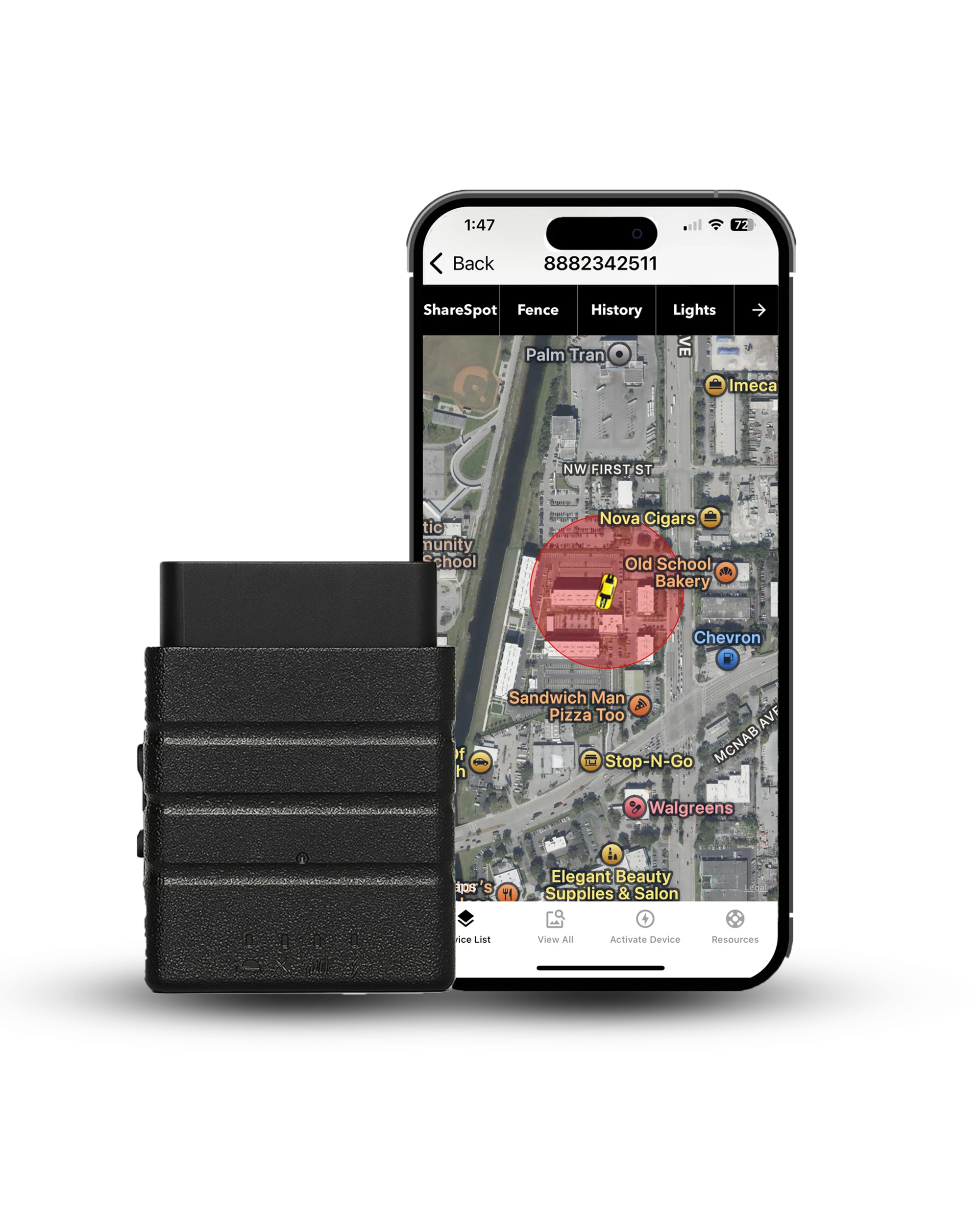
The Konnect OBD2 tracker plugs into the port under the dash in about ten seconds. No charging, no magnets to check, and location updates every 3 seconds. $39.95 with an $8.95 unlimited plan, or $199 once with no monthly fee at all.
Get the Konnect OBD2 TrackerAbout the Author

 Buy on Amazon