
GPS Tracking For Airport Shuttles
-
01
Real-time tracking improves routing and provides accurate ETAs to passengers
-
02
Route optimization reduces fuel costs across high-frequency shuttle operations
-
03
Live location data enables fast response during emergencies or breakdowns
-
04
OBD2 trackers provide vehicle diagnostics to reduce maintenance issues
-
05
Plug-and-play OBD2 trackers simplify deployment across shuttle fleets
As an Amazon Associate, Konnect GPS earns from qualifying purchases.
GPS Tracker For Airport Shuttles
Air travel is running at close to record volume, and every one of those passengers needs a way to get from the curb to the terminal. That demand lands directly on airport shuttle operators. So how does a GPS tracker for airport shuttles actually help you run a tighter operation?
U.S. airlines carried 84.1 million scheduled passengers in October 2025 alone, with monthly enplanements running within a few percent of the all-time high set in June 2024.
Bureau of Transportation Statistics, October 2025 U.S. Airline Traffic DataIn this guide, you'll learn:
- What GPS technology gives a shuttle fleetThe operational advantages that show up in week one.
- How live location improves routingReal-time updates, rerouting, and ETAs passengers can rely on.
- Where it cuts cost and raises safetyFuel, maintenance, and emergency response.
- What to look for in the hardwareTechnical considerations before you buy for a fleet.
We'll also work through a real operator using GPS across a mixed fleet, then compare the tracker options worth shortlisting. By the end you'll have a clear picture of how GPS tracking helps you run a smoother, more reliable airport shuttle service.
Best Airport Shuttle GPS Fleet Tracker

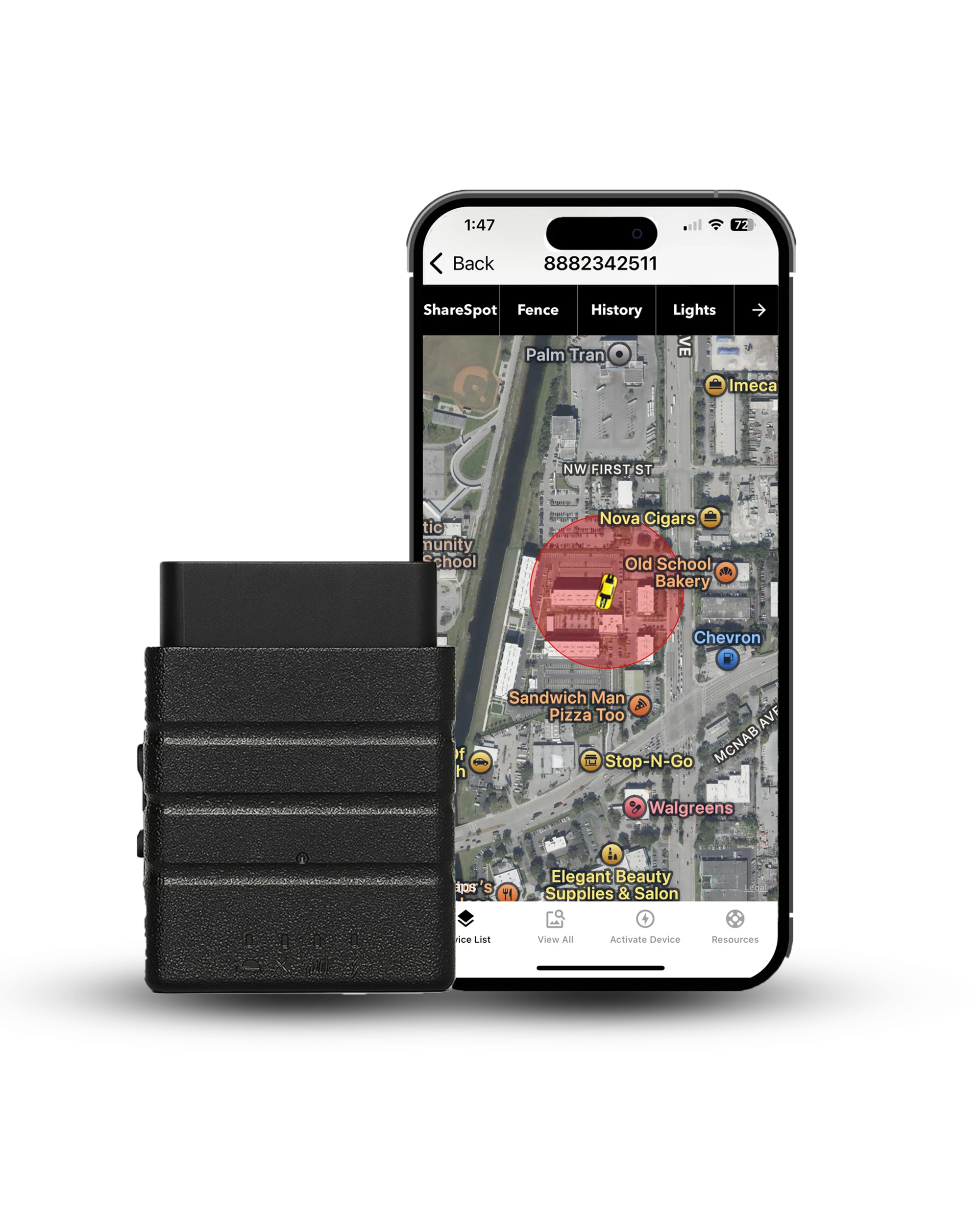
Konnect OBD2 GPS Tracker
Plugs into each shuttle's OBD2 port in under a minute, with no installer and no wiring. Live location every 3 seconds at $39.95 for the device and $8.95 a month per vehicle, with no contract.
- 3-second live updates
- Geofence and speed alerts
- Tamper and unplug alerts
- 1 year trip history
- 150+ countries
- Lifetime warranty
- U.S.-based support
- No contracts
Key Features of Airport Shuttle GPS Fleet Tracking
GPS keeps airport shuttle operations smooth and schedules on track. A network of satellites gives you pinpoint location data on every shuttle in your fleet. That helps dispatch keep tabs on vehicles, and it lets you share accurate arrival times with clients. Passengers who know exactly when their shuttle arrives can relax instead of wondering about delays. Here's where the impact shows up:
-
Real-time vehicle tracking
Track shuttles as they move. If one hits traffic, dispatch sees it immediately and can reroute other vehicles to keep the schedule intact.
-
Efficient route management
GPS keeps shuttles on the most efficient routes, even at peak. A sudden road closure means a quick redirect rather than a missed pickup.
-
Reliable scheduling
Monitoring traffic and vehicle position together lets you hold a more accurate schedule, which cuts passenger wait times.
-
Passenger safety
In an emergency you have the shuttle's exact location, so help goes to the right place immediately.
GPS technology has become essential for delivering efficient, responsive airport shuttle service. The technology helps you run the fleet more effectively while making sure passengers get safe, reliable transportation every time.
Case Study: How King Transportation Uses GPS

Take King Transportation as an example. Operating around Philadelphia, Princeton, and beyond, they run live GPS tracking across a mixed fleet of sedans, limousines, SUVs, and buses. Their setup shows what the technology does in the airport shuttle world.
King Transportation uses GPS with passenger safety as the stated priority. As soon as a traveler lands, real-time notifications keep them informed about their driver and vehicle location, which is what makes the handoff from terminal to curb feel seamless rather than uncertain.
Beyond tracking individual vehicles, GPS streamlines their operation. They manage a fleet in the hundreds while holding to timely, safe arrivals. That combination of customer experience and operational efficiency is the whole argument for fleet GPS in this industry.

Reviews shown courtesy of kinglimoinc.com
Passenger Benefits of GPS Trackers for Airport Shuttles
Real-Time Updates and Reliability
Imagine your passengers knowing exactly where their shuttle is and when it will arrive. Real-time GPS tracking gives them that certainty. They see the vehicle's current location and get an accurate ETA, which makes the whole trip less stressful. That matters most at busy hubs, where an unexpected delay can unravel a connection. Real-time updates build trust by showing your service is responsive and ready for last-minute changes.
A Personal Touch on Every Ride
GPS tracking is about more than knowing where the shuttle is. Integrated with a mobile app, you can send passengers ride notifications straight to their phone. A slight schedule adjustment or a traffic update keeps them in the loop instead of guessing. Some shuttle services go further and let passengers choose a preferred route, which makes the journey feel tailored.
Safety and Peace of Mind
Safety is everything in airport transportation, and GPS adds a real layer of it. If something unexpected happens, whether a breakdown or a sudden route change, the vehicle's location is known instantly and your team can respond. That constant visibility reassures passengers that help is never far away.

On a shuttle route the tracker is not really about theft, it is about the phone call you do not have to make. When a passenger asks where their van is, you want an answer measured in seconds, not a promise to check.
Technical Considerations for Implementing GPS in Airport Shuttles
Hardware and Software Requirements
OBD2 port: the 16-pin diagnostic connector every U.S. car and light truck built since 1996 carries, usually under the steering column. A tracker that plugs into it draws power from the vehicle and can read engine data, which is why fleet deployment takes seconds per vehicle rather than a shop appointment.
Implementing GPS across a shuttle fleet comes down to the right blend of hardware and software. The main hardware component is the GPS tracking device, which on most fleets plugs into the vehicle's onboard diagnostics port. OBD2 trackers handle location, and depending on the model they also surface diagnostics data that helps you stay ahead of maintenance.
On the software side, pick a platform that fits your existing setup. You want real-time tracking, route optimization, and analytics in something your dispatchers will actually use daily. The operational benefits stack up:
-
Lower fuel costs
Optimized routing cuts miles driven, and on a high-frequency shuttle loop those miles add up fast.
-
Better productivity
Real-time visibility means vehicles are where they should be, when they should be.
-
Improved safety
Monitoring how vehicles are driven protects drivers, passengers, and your insurance position.
-
Lower maintenance costs
Catching a fault early is cheaper than a shuttle stranded with passengers aboard.
Those benefits compound into a real return over time. Even a small daily fuel saving through better routing becomes significant across a fleet.
A note on diagnostics: OBD2 trackers as a category can read engine data, fault codes, and driving behavior, but feature sets vary by model. Konnect covers real-time location, speed alerts, geofence alerts, tamper and unplug alerts, and a year of trip history. Konnect does not include harsh-braking or idling detection, so if driver-behavior coaching is central to your operation, check that specifically before you buy.
Tracker Options for Airport Shuttle Operations
OBD2 trackers suit shuttle fleets for a simple reason: plug-and-play setup means no professional installation, no downtime, and no per-vehicle labor cost. You also get real-time tracking and geofence alerts, which is what fleet management actually runs on. Here are three options worth shortlisting, including one portable unit for the luggage side of the operation.
| Tracki | Konnect OBD2 | Vyncs | |
|---|---|---|---|
| Product |  |
 |
 |
| Best For | Luggage and loose assets | Plug-and-play shuttle tracking | Vehicle health and roadside help |
| Type | Portable magnetic | OBD2 plug-in | OBD2 plug-in |
| Device Price | $28.88 | $39.95 | $99.99/yr incl. first year |
| Plan | $19.95/mo month-to-month | $8.95/mo, no contract | One-time activation fee applies |
| Coverage | 190 countries | 150+ countries | U.S., Canada, Mexico |
| Buy | Buy on Amazon | Shop Konnect | Buy on Amazon |
Swipe the table sideways to compare every column.
For the shuttles themselves, an OBD2 unit is the right call: it never needs charging, it deploys in seconds, and it stays powered as long as the vehicle runs. Konnect is the pick for fleets that want the fastest refresh rate and flat per-vehicle pricing. Vyncs suits operators who care most about diagnostics and roadside assistance. Tracki is not a vehicle tracker in the same sense, but a portable magnetic unit earns its place tracking checked bags, trailers, or equipment that moves between vehicles.


Getting Your Shuttle Fleet Tracked
Adding GPS to an airport shuttle operation delivers better efficiency, stronger passenger safety, and lower running costs. There is an upfront investment, but on a fleet running high-frequency loops the savings usually cover it quickly.
Start with one vehicle, confirm the data matches what your dispatchers need, then roll it across the fleet. With a plug-in tracker that rollout is measured in minutes per vehicle rather than shop days.
Track Every Shuttle in Real Time
Konnect plugs into the OBD2 port in under a minute per vehicle, updates every 3 seconds, and costs $39.95 with an $8.95 monthly plan and no contract.
 Buy on Amazon