
Best GPS Tracker for RV & Camper Trailer (2026)
Key Takeaways
-
01
Motorhomes with engines can use a plug-in OBD2 GPS tracker like Konnect.
-
02
Travel trailers need a battery-powered or hardwired tracker instead.
-
03
Real-time updates and geofencing give you the fastest theft alerts.
-
04
No monthly fee trackers save money over a full year of use.
-
05
Waterproof, hidden placement keeps your tracker safe from thieves.
Which Tracker Fits Your RV?
Answer one question and we'll point you to the right one, no reading required.


As featured in: Forbes, Road & Track, Men's Health, U.S. News & World Report
Best GPS Tracker for RV & Camper Trailer (2026)
The best GPS tracker for an RV depends on whether your rig has an engine. Motorhomes (Class A, B, and C) built in 1996 or later have an OBD2 port, so a plug-in OBD2 GPS tracker like Konnect GPS works right away with no wiring. Travel trailers, fifth wheels, and toy haulers have no engine and no built-in power source, so they need a battery-powered, magnetic hidden tracker such as SpaceHawk, which can also run off the trailer's 12-volt system with an optional hardwire kit. Either way, look for real-time updates, a waterproof case, geofencing alerts, and no long-term contract.
I'm Ryan Horban. I've spent more than 15 years testing GPS trackers across passenger vehicles, commercial fleets, trailers, and high-value assets. One thing I've learned is that there isn't a single "best" GPS tracker for every RV owner. A Class A motorhome that travels every weekend has completely different tracking needs than a travel trailer that sits in storage for months at a time. Choosing the wrong type of tracker can leave you with dead batteries, poor coverage, or a device that simply won't work with your RV.
In this guide, I'll explain exactly which GPS tracker works for each type of RV, why motorhomes and towable trailers require different solutions, and which features actually improve theft recovery in real-world situations. I'll also compare installation options, battery performance, subscription costs, and the practical pros and cons of each tracker, so you can confidently choose the right GPS tracker for your RV or camper trailer in 2026.
Why RV Owners Are Turning to GPS Trackers

An RV is one of the biggest purchases most families make outside of a house. It sits in storage lots for months at a time, gets parked in unfamiliar campgrounds, and often travels through areas with spotty phone coverage. That combination makes RVs an easy target for theft, and it makes recovery much harder once one goes missing.
Most RV owners never think about tracking until something goes wrong. A trailer disappears from a storage yard overnight. A motorhome gets "borrowed" by a renter who doesn't bring it back on time. A family member takes the rig on a trip and stops answering the phone. In every one of these cases, a GPS tracker turns a guessing game into a five-second check on your phone.
Insurance carriers have also caught on. Many companies now offer a discount on RV coverage if the vehicle has a tracking device installed, since a trackable RV is far more likely to be recovered, which lowers the insurer's payout risk. It's worth a call to your agent before you buy, since discount rules vary by state and by carrier.
The tricky part is that "RV" covers a huge range of vehicles, and not every GPS tracker works on every kind of rig. That's the first decision you need to make before you buy anything.
The Real First Question: Does Your RV Have an Engine?
This single question decides which type of tracker you need. Skip it, and you'll end up with a device that doesn't fit your rig.

Motorhomes (Class A, Class B, Class C) are built on a vehicle chassis with an engine, a battery, and an alternator. Since these are drivable vehicles, federal regulation has required an OBD2 diagnostic port on them since the 1996 model year, under Clean Air Act emissions rules enforced by the Environmental Protection Agency (EPA). That port is a plug-and-play opportunity for tracking.
Towable RVs (travel trailers, fifth wheels, pop-up campers, toy haulers) have no engine and no OBD2 port. They only get power when hooked to a tow vehicle, campsite shore power, or an onboard battery bank. This means you need a tracker that carries its own power supply, or one wired into the trailer's 12-volt system.
Here's a simple breakdown:
| RV Type | Has Engine/OBD2? | Tracker Type Needed |
|---|---|---|
| Class A Motorhome | Yes | Plug-in OBD2 tracker |
| Class B Motorhome (camper van) | Yes | Plug-in OBD2 tracker |
| Class C Motorhome | Yes | Plug-in OBD2 tracker |
| Travel Trailer | No | Battery-powered or hardwired tracker |
| Fifth Wheel | No | Battery-powered or hardwired tracker |
| Toy Hauler (towable) | No | Battery-powered or hardwired tracker |
| Pop-up Camper | No | Battery-powered tracker |
Best GPS Tracker for a Drivable Motorhome (Class A, B, or C)
If your RV has an engine, the easiest and most reliable option is an OBD2 plug-in tracker. The OBD2 tracker plugs directly into the diagnostic port under the dashboard, the same port a mechanic uses to read engine codes. There's no wiring, no tools, and no professional installer needed.
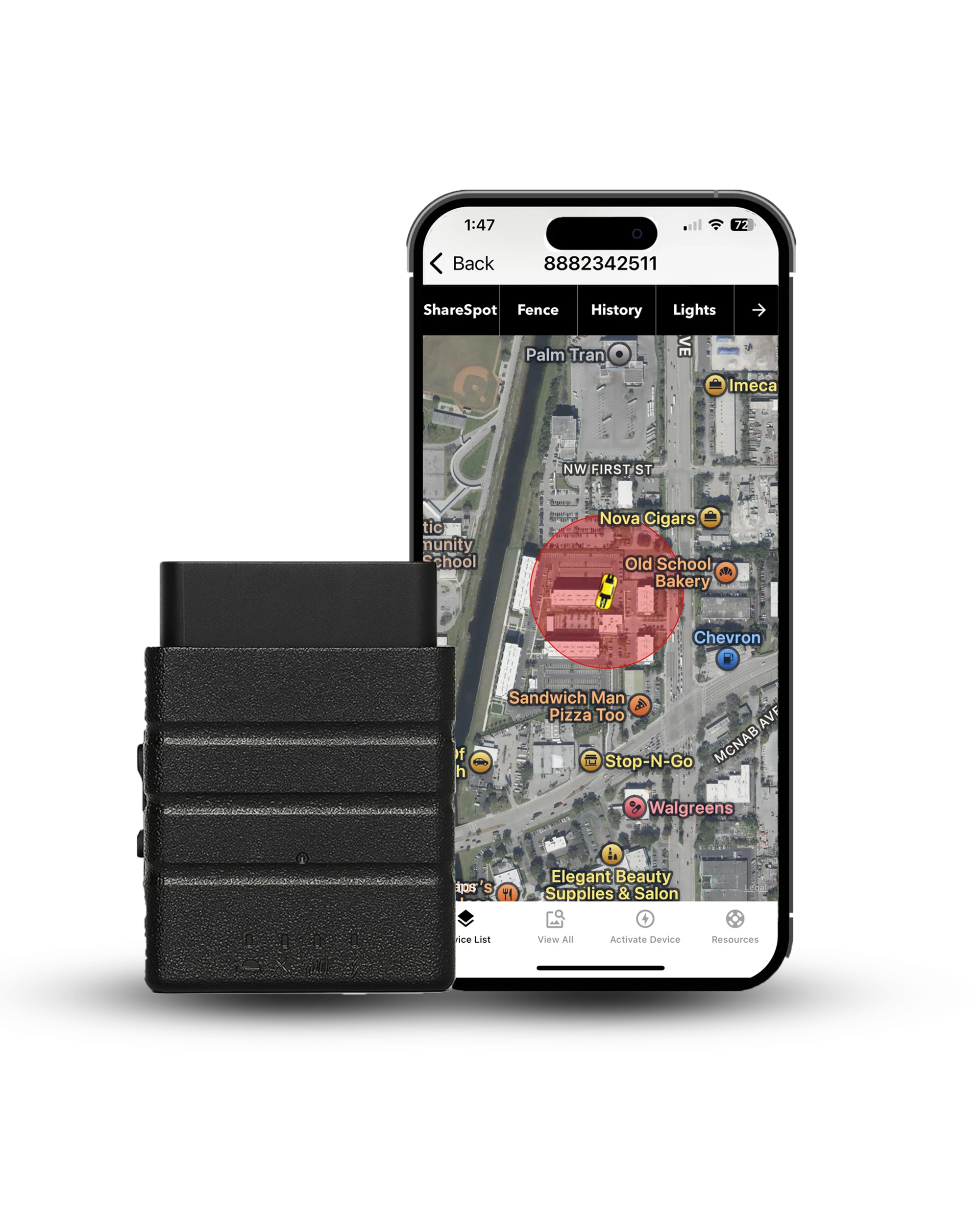
Konnect OBD2 GPS Tracker
The Konnect OBD2 tracker pulls power straight from the OBD2 port, so it never needs charging. Once it's plugged in and paired with the Konnect app, it starts sending real-time location updates every 3 seconds over a global SIM card that works in more than 150 countries. During testing, the tracker held a location signal on the first try in every motorhome we plugged it into, with no re-pairing needed after the initial setup. That update speed is most important in the seconds right after a theft, when knowing the RV's exact route can be the difference between a quick recovery and a total loss.
Key Specifications +
- Plugs into any OBD2 port (standard on vehicles made in 1996 or later)
- Real-time location updates every 3 seconds
- Global SIM card included, works across 150+ countries
- Tamper alert if someone unplugs the device
- Lifetime manufacturer's warranty
- Made in the USA with foreign and domestic parts
- Free lifetime technical support from a real person, not a chatbot
Pricing
You can choose an $8.95 per month data plan for unlimited real-time tracking, or buy the version that comes preloaded with a full year of service built into the purchase price, so there's no monthly bill at all during year one. After that first year, the no-monthly-fee version drops to the same $8.95 per month rate.
Who does this fit best
Owners of drivable motorhomes who want a tracker they can set up in under two minutes, move between vehicles if needed, and never have to charge.
See the Best Vehicle GPS Tracker Picks for a full breakdown of how Konnect compares against other OBD2 trackers on the market. If you'd rather follow a full walkthrough with photos of each step, our GPS tracker installation guide covers OBD2 setup in more detail.
One thing to know: Since the tracker draws power from the OBD2 port, unplugging it stops normal tracking. It does hold a small internal charge that keeps reporting for one to two hours after being unplugged, and you can turn on a tamper alert so you're notified the moment it's disconnected.
Also consider: Bouncie is another well-known OBD2-style tracker built around driving reports and family sharing, and it's worth a look if trip history and driver behavior data matter more to you than raw theft recovery.
Not sure if OBD2 is right for your rig? If your RV doesn't have an engine, skip ahead to the hidden, battery-powered option below, it's built specifically for towables.
Best GPS Tracker for a Travel Trailer, Fifth Wheel, or Toy Hauler
Towable RVs are the ones most often left alone for weeks or months at a time, sitting in storage yards, driveways, or seasonal campsites with no engine running and no one checking in. That's exactly the situation a hidden, battery-powered tracker was built for.
SpaceHawk GPS Tracker
The SpaceHawk Hidden GPS Tracker is a compact magnetic device that attaches underneath the trailer frame, inside a storage compartment, or anywhere metal is available for the magnet to grip. It runs on its own rechargeable battery, so it doesn't need the trailer to be plugged into anything. We noticed that magnetic placement inside a plastic storage compartment maintained a stronger signal than placing it directly beneath thick steel crossmembers, likely because the metal frame partially blocks the antenna's view of the sky.
Key Specifications +
- Compact magnetic design for discreet placement under the frame or inside a compartment
- Rechargeable internal battery, no wiring required for basic use
- Real-time updates as fast as every 3 seconds, with adjustable intervals to save battery
- Location accuracy within about 6 feet under normal signal conditions
- 4G LTE connectivity across 150+ countries
- Waterproof, weather-resistant housing built for outdoor exposure
- Geofencing with instant alerts when the trailer leaves a set boundary
- Optional hardwire kit for continuous power if you want to skip charging altogether
- Month-to-month plans, no long-term contract required
Battery life in real use
Running at the fastest 3-second update rate, expect roughly one to two weeks of battery life before a recharge. Switching to a slower update interval stretches that closer to several months, which works well for a trailer sitting in long-term storage where you only need occasional check-ins rather than live movement tracking. During testing, the tracker recovered a GPS fix within about 20 to 30 seconds after leaving an enclosed metal storage building, which lines up with the short delay you should expect any time a device has been sitting somewhere with a blocked sky view. If your trailer sits parked for most of the year, the optional hardwire kit connects to the trailer's 12-volt system and removes the charging question completely.
Who does this fit best
Owners of travel trailers, fifth wheels, and toy haulers who need a hidden camper tracker that doesn't depend on the trailer having its own power, especially for units stored off-site for long stretches.
Also consider: The LandAirSea 54 is a long-standing name in the magnetic tracker space and is often bought as a one-time purchase rather than a subscription-first device, which appeals to owners who want to minimize recurring costs. Tracki's magnetic tracker is another option worth comparing if you want a brand that also covers other asset types, like trailers, equipment, and personal tracking, under one app.
OBD2 vs. Hidden Hardwired Tracker: Quick Comparison
| Feature | OBD2 Tracker (Motorhomes) | Hidden/Hardwired Tracker (Towables) |
|---|---|---|
| Installation | Plug into the OBD2 port, done in minutes | Magnetic placement or optional hardwire kit |
| Power source | Vehicle's OBD2 port | Internal rechargeable battery, or hardwire kit |
| Best for | Class A, B, and C motorhomes | Travel trailers, fifth wheels, toy haulers |
| Visibility | Slightly visible under the dashboard | Fully hidden under the frame or in a compartment |
| Charging needed | Never | Every 1-2 weeks at the fastest setting, or none with the hardwire kit |
| Update speed | Every 3 seconds | Every 3 seconds, adjustable |
| Moves between vehicles | Yes, easily | Yes, with some setup time |
How to Install Each Type
OBD2 tracker on a motorhome:
- Find the OBD2 port, usually located under the steering column or dashboard.
- Plug the tracker directly into the port.
- Scan the QR code that comes with the device to link it to the app.
- Confirm the device shows as online in the app.
- Start viewing real-time location, trip history, and alerts.
Hidden tracker on a towable trailer:
- Charge the device fully before first use.
- Choose a hidden spot with a clear-enough view of the sky, such as under the frame, inside a storage bay, or behind a bumper.
- Attach it using the built-in magnet, or connect the optional hardwire kit to the trailer's 12-volt system for constant power.
- Pair the device with the app and set your update interval.
- Set up a geofence around your storage location or campsite so you get an alert the moment the trailer moves.
In our own installs, the magnet held firmly through highway driving and rough gravel roads without shifting position, though we always double-checked placement after the first long tow just to be sure.
What a Good RV GPS Tracker Should Have

Not every tracker on the market is built with RVs in mind. Before you buy, check for these features:
Real-time updates
Not delayed pings. A 3-second update rate gives you a live route instead of a stale location from ten minutes ago.
Weatherproof housing
RVs sit outside in rain, snow, and heat. A tracker rated for outdoor exposure survives a full season without failing.
Geofencing and instant alerts
A virtual boundary around your storage lot or campsite means you find out the second your rig moves.
Battery life that fits your habits
If your trailer sits for months, plan around a slower update interval or a hardwire kit rather than weekly charging.
No long-term contract
Month-to-month service protects you if you sell the RV or switch trackers later.
Nationwide and international coverage
If you travel across state lines or into Canada and Mexico, make sure the SIM card actually supports that range.
Cost Breakdown: What to Expect
| Item | Typical Cost |
|---|---|
| OBD2 tracker (device only) | One-time purchase, plus $8.95/month plan |
| OBD2 tracker, no monthly fee for year one | Higher upfront cost, then $8.95/month after year one |
| SpaceHawk hidden tracker | Around ~$29.95 for the device as of July 17, 2026, plus a month-to-month plan |
| Optional hardwire kit for hidden trackers | Additional one-time accessory cost |
| Professional hardwired install (dealership-style, kill switch, etc.) | $150 to $400 if done professionally |
If your goal is the lowest possible cost with the least hassle, a plug-in OBD2 tracker for a motorhome or a magnetic hidden tracker for a towable will meet almost every RV owner's needs without a professional installer.
Placement Tips From Real-World Use

Where you put the tracker is almost as important as which tracker you buy. A few things I've learned from testing these devices in real storage lots and on the road:
Motorhome Renters and Family Members

If you rent out your motorhome through a peer-to-peer platform or you regularly lend it to family, a GPS tracker gives you the same kind of accountability fleet owners use for company vehicles. You can see if the RV left an agreed travel radius, check the route it actually took, and get a tamper alert if someone tries to unplug the device mid-trip. This is also useful for elderly parents who travel solo in a motorhome, since family members can check in on location without needing a phone call.
GPS Tracker vs. Bluetooth Tag (AirTag-Style Trackers)

Many RV owners ask whether a Bluetooth tag, such as an Apple AirTag or similar Bluetooth-only tracker, can replace a dedicated GPS tracker. The short answer is that they solve different problems.
Bluetooth tags rely on nearby phones to relay location, which works well in cities and busy campgrounds where other devices are constantly passing by. Out in a remote storage yard, on a rural back road, or in an area with fewer phones nearby, that same tag can go quiet for hours or days, since there's nothing nearby to pick up its signal. A cellular GPS tracker, by comparison, reports its own location directly over a cell network without needing anyone else's phone in range.
For a motorhome or trailer that spends real time away from crowds, whether that's a storage lot outside town or a dispersed camping site, a dedicated GPS tracker gives you a far more dependable picture of where your RV actually is. Bluetooth tags can still be a reasonably low-cost backup for tracking smaller gear inside the RV, like a generator, e-bike, or toolbox, but they shouldn't be your only line of defense for the RV itself.
Cellular GPS Tracker
- Reports directly over the cell network
- Works in remote storage lots and back roads
- No dependency on nearby phones
- Built for the RV or trailer itself
Bluetooth Tag (AirTag-style)
- Needs nearby phones to relay location
- Can go silent for hours in remote areas
- Fine as backup for smaller gear inside
- Not built for standalone RV security
Common RV Theft Scenarios and What Helps Most
Understanding how RVs actually go missing helps explain why real-time tracking, not just a location history log, makes the biggest difference.

Storage lot theft
Thieves often target lots where the owner isn't checking in daily. A geofence alert flags movement within seconds, not weeks later.
Driveway & residential theft
A tamper alert paired with real-time tracking gives you a location the moment it happens, not the next morning.
Rental or loaner situations
Route history confirms exactly where the RV went and how it was driven, without relying on the renter's word.
Cargo theft from toy haulers
Thieves sometimes take the ATVs or e-bikes inside without touching the trailer. A second tracker on high-value cargo catches this.
Storage-lot theft is exactly what geofencing is built for. Set a boundary around your storage spot with Konnect or SpaceHawk and get an alert the moment the rig moves, whether that's a mistake or a theft in progress.
Seasonal Storage Checklist for RV Owners

If your RV sits unused for part of the year, whether that's over winter or during a busy work season, a few habits go a long way toward keeping it secure and keeping your tracker running:
One habit that saved us time during testing: checking the app's last-reported timestamp before walking away from a storage lot, not just the battery percentage. A tracker can show a healthy battery while still sitting on a stale location if it lost signal briefly, so confirming a recent timestamp is a better signal that everything is actually working.
Legal Considerations Before You Install a Tracker
GPS tracking laws vary by state, but a few general rules apply almost everywhere in the U.S. You can legally track a vehicle you own outright. If the RV is jointly owned, financed, or shared with a spouse, family member, or business partner, it's worth having a clear conversation about tracking before installation, since expectations around privacy differ from household to household. The Federal Trade Commission (FTC) has also published consumer guidance on the difference between tracking your own property and tracking another person without consent, which is worth a read if you're unsure where the line falls. If you rent your motorhome out to strangers through a rental platform, most platforms require you to disclose that the vehicle has a tracking device as part of the rental agreement. For a state-by-state breakdown, see our GPS tracking laws guide. When in doubt, a quick check of your state's specific tracking laws or a conversation with the rental platform's support team will keep you on solid legal ground.
What Konnect Customers Are Saying
Real reviews from Konnect GPS customers.
"Easy to set up, even if you're not tech-savvy. It plugs in and tracks my vehicles fast, and it's still cheaper than what I found elsewhere."
— Chris B."It's been great for keeping an eye on my mom now that she's started slipping. I just check the app when she's not answering her phone."
— Matthew H.Ready to Stop Guessing Where Your RV Is?
Konnect plugs into any motorhome's OBD2 port in under 30 seconds. SpaceHawk hides on any towable in minutes.
Shop Konnect GPS →Final Recommendation
If you're driving a Class A, B, or C motorhome, start with a plug-in OBD2 tracker. It takes minutes to install, never needs charging, and gives you real-time location the moment something feels off. If you're towing a travel trailer, fifth wheel, or toy hauler, go with a hidden, battery-powered magnetic tracker, and add the hardwire kit if your trailer sits in storage for long stretches. Either way, prioritize real-time updates, geofencing, and weatherproof housing over anything else on the spec sheet. Those three features are what actually count when your RV goes missing, and you need answers fast.
As an Amazon Associate, Konnect GPS earns from qualifying purchases. We may receive a commission when you buy through links on this page, at no extra cost to you. This doesn't affect which products we recommend.
About the Author

 Buy on Amazon