Best Vehicle GPS Tracker (2026): Tested, Ranked & Compared
-
01
Use case determines the right tracker before features or pricing comparisons
-
02
Real-time tracking speed varies widely and impacts safety and monitoring
-
03
OBD trackers suit daily vehicles while magnetic trackers suit flexible or covert use
-
04
Fleet systems are complex and unnecessary for most personal tracking needs
-
05
Best GPS Tracker for Vehicles in 2026: Top Picks Based on Real Testing
Most GPS trackers promise that they are the “Best Vehicle GPS Tracker” but when a vehicle goes missing or a driver takes a route they shouldn’t, that promise often falls apart. I’ve seen trackers lag, drop signals, or bury critical alerts behind confusing apps. That’s the problem.
So, this is the guide for you and will definitely solve this.
Hey, I’m Ryan Horban, and over the last 15+ years I’ve tested GPS trackers across fleets, rental vehicles, and everyday cars. I didn’t just read spec sheets for this guide. I installed these trackers, hid them, tracked them, and lived with the alerts.
In this review, I’ll walk you through the top 7 GPS trackers for vehicles, ranked by real-world testing like how fast they update, how reliable they stay, what they actually cost over time, and who they make sense for. Reading this now can save you from wasting money on a tracker that promises “real-time” tracking and disappears when things go wrong.
If you’re tired of guessing where your vehicle is, or who’s driving it, you’re in the right place. Let’s fix that.
 |
|
||||||||
 Buy on Amazon
 Quick Top Picks: Best Vehicle GPS Trackers in 2026.
If you’re in hurry, this snapshot shows how the top vehicle GPS trackers stack up and who each one is actually built for. I’ve kept this practical, so you can spot the right fit fast based on how you’ll really use it.
| Konnect | SpaceHawk | Geotab GO 9 | Vyncs | Bouncie | LAS 54G | Spark Nano 7 | |
|---|---|---|---|---|---|---|---|
| Product |  |
 |
 |
 |
 |
 |
 |
| Best For | Daily drivers, families & fleet tracking | Theft recovery & discreet installs | Large fleets & commercial operations | Budget tracking with diagnostics | Families & teen drivers | Portable, global, flexible tracking | Backup or secondary tracking |
| Cost | ~$99 | ~$44 | Customised | ~$79-$89 | ~$89.99 | ~$39.95 | ~$12.95-$17 |
| Top Features |
3-second real-time updates, OBD install, speed alerts, geofencing
|
Magnetic, hidden, battery or hardwired option, global coverage | Fleet analytics, driver behaviour, diagnostics, compliance reporting |
OBD plug-in, trip history, driving alerts, vehicle health data
|
Driver behavior insights, accident alerts, OBD install | Magnetic, portable, global coverage, fast update | Magnetic case, adjustable intervals, compac |
| Battery Life | Vehicle-powered | 2-3 weeks | Vehicle-powered | Vehicle-powered | Vehicle-powered | 1-3 weeks | ~7–14 days |
| Buy Now | Buy on Amazon | Buy on Amazon | Buy on Amazon | Buy on Amazon | Buy on Amazon | Buy on Amazon | Buy on Amazon |
How We Tested and Picked These Vehicle GPS Trackers

To keep this guide honest and useful, I want to be clear about how these GPS trackers were tested. For this guide, I worked alongside a small testing team at Konnect GPS to evaluate real-world performance. Each tracker was installed and used in real driving conditions, focusing on:
- Tracking accuracy and update speed,
- Reliability during daily use,
- Ease of installation and app usability,
- Alert accuracy and usefulness,
- And subscription costs and long-term value.
Trackers were ranked based on how well they solved specific problems like family safety, theft recovery, fleet oversight, or flexible asset tracking. A tracker didn’t win because it had more features, it won because it worked better for its intended use. Every product on this list earned its position based on performance, not preference.
AFFILIATE LINKS
This guide contains affiliate links that help support our work.
OUR OWN PRODUCT
Konnect OBD2 GPS Tracker is a product owned by our company.
THIRD-PARTY PRODUCTS
For products including those below, we may earn a small commission if you purchase through our links — at no extra cost to you.
Editorial integrity. Rankings are based on real-world performance testing. Commercial relationships do not influence our rankings or editorial judgment.
Where affiliate links appear in this guide, we've disclosed that relationship at the top of the article. Affiliate commissions do not influence rankings, Konnect ranks #1 because it outperformed all other trackers in testing, not because it's our product.
The goal was simple: recommend GPS trackers that actually work in the real world. Let’s begin with the tracker that proved the most reliable across all testing criteria, the Konnect OBD2 GPS Tracker.
 |
|
||||||||
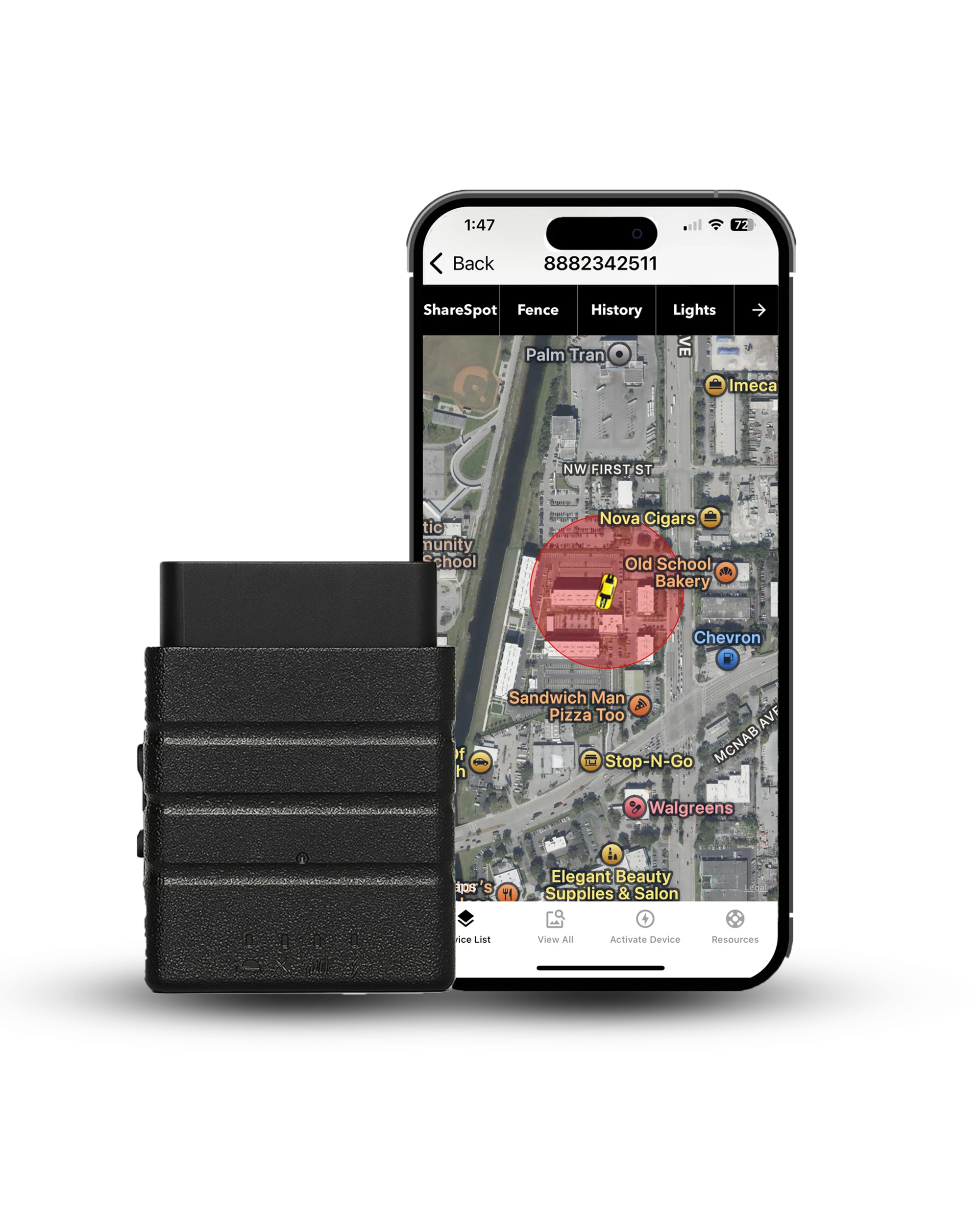
What makes Konnect special and why it earns the #1 spot is balance. You get fast updates, accurate tracking, simple pricing, and reliable support, without jumping into enterprise fleet software or flimsy budget hardware.
- Real-time location updates every 3 seconds, which is noticeably faster than most GPS trackers for vehicles I've tested over the years.
- Plug-and-play OBD2 installation, so you're tracking in under a minute without tools, wiring, or installers.
- Consistent tracking accuracy within a few feet, even in mixed city and highway driving.
- Speed alerts, geofencing, and instant notifications that fire when something actually happens, not minutes later.
- Unlimited location history for up to one year, useful for disputes, route reviews, or driver behavior checks.
- Global SIM card with coverage in 150+ countries, which matters more than people think once vehicles cross borders.
- $8.95/month flat subscription, without any contracts, or any tier confusion, or surprise add-ons.
- Lifetime warranty and U.S. based human support, not outsourced scripts or AI chat loops.
- ✅ Makes it very easy to know the exact location of a vehicle at any moment, without refreshing or guessing.
- ✅ Removes friction completely with easy installation, especially when you're deploying multiple trackers.
- ✅ Helps catch unsafe driving early with fast speed alerts and driver behavior visibility.
- ✅ Keeps operational costs predictable thanks to one simple subscription plan.
- ✅ Works equally well for families, small businesses, and growing fleets.
- ✅ Feels dependable day after day, which is something a lot of cheaper GPS devices fail at.
- ❌ Not designed to be a hidden GPS tracker, since OBD placement is visible.
- ❌ Subscription is required, even though the monthly cost is low.
I’ve installed this tracker on personal vehicles and work trucks over the years, and what impressed me most was how little I had to think about it once it was plugged in. Setup took under a minute. I scanned the QR code, plugged it into the OBDII port, and within seconds I was watching the vehicle’s location update in real time without delays. No “last updated 5 minutes ago” nonsense.
During testing, the 3-second refresh rate made a real difference. When a driver took a wrong turn or made an unscheduled stop, I saw it almost instantly. Speed alerts also were another amazing thing.
One thing I didn’t expect was how useful the historical playback became. When questions came up about idle time, routes, or after-hours use, the location data told the story clearly. Konnect felt more focused compared to other options like Bouncie GPS or Vyncs. Fewer distractions. Faster updates, less fiddling with settings. And compared to heavy fleet systems like Geotab, it avoided the learning curve that overwhelms smaller operations.
Pick the Konnect OBD2 GPS Tracker if you want a fast, accurate, and easy-to-use vehicle tracker that works the same way every day without contracts, setup headaches, or bloated software.
 |
|
||||||||
- True portable, compact, magnetic GPS tracker with IP67 waterproof housing, designed to stay hidden inside or underneath a vehicle.
- Flexible power options, using a rechargeable battery or an optional hardwired kit for continuous power.
- Real-time GPS tracking with global coverage in 150+ countries, supported by an included SIM card.
- Strong location accuracy within a few feet, even when mounted externally.
- Speed alerts, geofencing, and instant notifications, useful for theft recovery and unauthorized use.
- Lifetime warranty and free technical support, which adds long-term peace of mind.
- ✅ Makes theft recovery far more realistic by staying completely hidden, so the tracker keeps working without alerting drivers or thieves.
- ✅ Works across vehicles, trailers, and equipment because the portable magnetic design isn't limited by OBDII ports.
- ✅ Gives you confidence when tracking assets without onboard power, where plug-in GPS trackers simply can't be used.
- ✅ Lets you choose between battery-powered or hardwired tracking, depending on whether you need flexibility or long-term set-and-forget use.
- ✅ Holds up in real-world conditions, thanks to waterproof, rugged construction that survives weather, dirt, and daily abuse.
- ❌ Battery-powered mode requires occasional charging, which adds light maintenance if you're using it long term.
- ❌ Requires a subscription for real-time tracking, even though the plans are straightforward.
What sets SpaceHawk apart and why it is 2nd on this list, is its focus on discretion and flexibility. This isn’t a general-purpose car GPS. SpaceHawk is a tracker you use when you don’t want anyone to know it’s there.
I tested SpaceHawk in both battery-powered and hardwired setups, and what impressed immediately was how easy it was to hide properly. The magnetic mount held firm, even under rough driving and weather exposure. In battery mode, it worked well for temporary tracking and theft scenarios, though I found myself checking charge levels regularly.
Once I switched to the hardwired kit, that concern disappeared. The tracker stayed powered continuously, and location updates remained consistent without maintenance.
What amazed me most was how undetectable it felt compared to consumer trackers. Totally hidden and no alerts to drivers and without visible hardware. Just clean location data when I need it. Compared to OBD trackers like Konnect or Bouncie, SpaceHawk trades visibility and driver insights for stealth and versatility, which is exactly the point.
Choose the SpaceHawk Hidden GPS Tracker if you need covert, flexible tracking for vehicles, trailers, or assets where visibility could defeat the purpose.
 |
|
||||||||
And that context is more important. Most Geotab deployments involve reseller-based, contract-style plans, not simple month-to-month subscriptions. The analytics, dashboards, and cost structure only make sense when you’re managing several vehicles and care about patterns, compliance, and efficiency over time. That’s pushed to Geotab at ranks #3 on this list.
- Enterprise-grade fleet tracking engine that captures vehicle location, trips, idle time, and driver behavior across dozens or thousands of fleet vehicles.
- OBD-based installation with adapter support, making it deployable across cars, vans, trucks, and mixed commercial fleets.
- Near real-time GPS tracking paired with deep telematics data, focused more on operational insight than ultra-fast refresh rates.
- Vehicle health and diagnostics reporting, pulling engine fault codes and performance data to reduce downtime.
- MyGeotab software platform, designed for reporting, alerts, integrations, and long-term fleet analysis.
- ✅ Helps fleet managers see exactly how vehicles are being used, not just where they are.
- ✅ Improves driver safety through clear behavior data and coaching insights.
- ✅ Reduces wasted fuel and labor by exposing idle time, inefficient routes, and misuse.
- ✅ Scales cleanly as fleets grow, without needing to migrate platforms later.
- ✅ Works across diverse vehicle types, including light-duty and commercial applications.
- ❌ Built for fleet-scale operations, not casual tracking, so individual car owners or families will find the platform far more complex than necessary.
- ❌ Operational costs are higher than consumer GPS trackers, because pricing and reporting are structured for long-term commercial use.
- ❌ Requires time and setup to unlock full value, especially when configuring reports, alerts, and driver behavior analytics.
I’ve used Geotab in multi-vehicle environments where consistency was needed more than convenience. Once installed, the GO9 delivered steady location data alongside driver behavior metrics that actually changed how managers coached drivers.
What worked well was how quickly patterns became obvious. Unsafe driving, excessive idle time, and inefficient routes weren’t guesses anymore, all they showed up clearly in the data. That kind of visibility simply isn’t possible with lighter consumer trackers. Geotab was heavier compared to options like Konnect or Bouncie, but intentionally so. G09 is designed to answer operational questions at scale.
Go with the Geotab GO9 if you manage a large or growing fleet and need real operational insight, not just vehicle location.
 |
|
||||||||
Vyncss built for cost-conscious car owners, families, and small fleets who care about trip history, driving alerts, and maintenance insights more than ultra-fast refresh rates. This leads to Vyncs sits at #4 on this list. Vyncs GPS tracker doesn’t try to outpace premium trackers on speed. Instead, it delivers solid tracking and extra data at a lower entry cost, which is exactly what some buyers want.
Features Of Vyncs GPS Vehicle Tracking Device
- OBD2 plug-in GPS tracker with included SIM and first year of service, which lowers upfront commitment compared to monthly-first plans.
- Standard 3-minute location updates, with optional paid upgrades to 60, 30, or 15-second intervals for users who want faster tracking.
- Driving alerts for speeding, harsh braking, and rapid acceleration, powered by an onboard accelerometer.
- Vehicle diagnostics and maintenance insights, including fault codes, recall notices, and service reminders.
- Global coverage across the U.S., Canada, Mexico, and 200+ countries, which is useful for cross-border driving.
- ✅ Keeps initial costs low by bundling hardware, SIM card, and a year of service into one purchase.
- ✅ Works well for basic vehicle tracking and trip history, especially when live second-by-second updates aren't critical.
- ✅ Adds diagnostic value beyond location data, which many low-cost trackers simply don't offer.
- ✅ Supports international use, making it practical for drivers who cross borders regularly.
- ✅ Fits personal vehicles and light fleet use without pushing users into enterprise platforms.
- ❌ Default update frequency is slower than true real-time trackers, which can work for theft recovery or live monitoring.
- ❌ Faster updates require paid upgrades, so long-term costs can rise depending on how you use it.
- ❌ Interface and alerts feel more utilitarian than polished, especially compared to newer consumer-focused apps.
I tested Vyncs on a daily-driven vehicle where live second-by-second tracking wasn’t the priority. Setup was straightforward, and once plugged into the OBDII port, it started logging trips and locations reliably. The three-minute updates felt fine for reviewing routes, checking where a vehicle had been, and monitoring general driving habits.
Where I noticed the limitation was during real-time checks. If you expect instant movement alerts, you’ll want one of the faster update plans.
What I liked most was the diagnostics layer. Fault codes and maintenance reminders added value I don’t usually see in lower-cost GPS trackers. Vyncs felt slower than Konnect but compared to basic magnetic trackers, it felt more informative.
Choose the Vyncs GPS OBD Tracker if you want affordable vehicle tracking with added diagnostics, and you’re comfortable trading speed for lower upfront cost.
I compared Vyncs and Konnect side by side, check the full Vyncs vs Konnect real-time tracking comparison to see which one actually updates faster.
 |
|
||||||||
Bouncie earns a spot on this list but at the #5 because Bouncie doesn’t try to compete with ultra-fast trackers or fleet platforms. Instead, it focuses on keeping loved ones safer on the road with minimal setup and a friendly app.
Key features Bouncie vehicle GPS Tracker
- OBD2 plug-in GPS tracker with real-time location and detailed route history, designed for everyday driving visibility.
- Strong driver behavior monitoring, including speed alerts, hard braking, rapid acceleration, and idle time tracking.
- Accident detection with instant notifications, which adds a real safety layer for families.
- Vehicle health and diagnostics monitoring, alerting you to engine issues before they become expensive problems.
- Geo-fencing with instant alerts, useful for curfews, school zones, or restricted areas.
- Clean, easy-to-use mobile app, available on both iOS and Android with strong user ratings.
- ✅ Makes it easier to monitor teen driving habits without hovering, thanks to clear alerts and trip summaries.
- ✅ Improves peace of mind with accident notifications and real-time location tracking.
- ✅ Helps reduce maintenance surprises by flagging vehicle health issues early.
- ✅ Easy to install and remove, making it practical for shared family vehicles.
- ❌ Tracking update speed is solid but not the fastest, especially compared to premium real-time trackers.
- ❌ OBD-based design means it's visible, so it's not suited for covert tracking.
- ❌ North America only coverage, limiting usefulness for international travel.

I tested Bouncie on a teen-driven vehicle where safety feedback needed more than instant tracking speed. Installation took seconds, and the app immediately started logging trips and behavior. Clear driving habits showed up early and that was something I liked most in Bouncie. Hard braking, speeding, and idle time were easy to spot without digging through menus.
Accident alerts were reassuring, and thankfully never triggered during testing but knowing they were there was important. But Bouncie was slower compared to Konnect and compared to Vyncs, it felt more polished and easier to interpret.For families, I can confidently say that this strikes the right balance between insight, simplicity, and peace of mind.
Go with the Bouncie GPS Tracker if your main goal is driver safety, family peace of mind, and simple vehicle monitoring.
Still deciding? See our full Bouncie vs Konnect OBD2 GPS Tracker comparison for real test results.
 |
|
||||||||
 |
|
||||||||
LAS 54doesn’t try to replace plug-in OBD trackers or fleet systems. Instead, it shines in situations where portability, global coverage, and discreet tracking matter most. One important thing to understand up front, while entry-level plans exist, faster real-time updates come at higher subscription tiers, so the cost depends heavily on how often you want location updates.
Key features Of LandAirSea 54 Vehicle GPS Tracker
- Portable, battery-powered GPS tracker with a strong built-in magnet, allowing quick placement on vehicles, trailers, equipment, or personal assets without installation.
- Fast location updates available down to every 3 seconds, depending on the subscription plan and tracking interval selected.
- Global tracking coverage in 150+ countries, using 4G LTE and satellite connectivity for reliable location data while traveling.
- Compact, low-profile design with IP67 waterproof and dustproof protection, built to survive real-world outdoor conditions.
- Advanced alert options, including geofencing, InstaFence, speed alerts, tamper alerts, and low-battery notifications.
- SilverCloud mobile app and web dashboard, providing real-time tracking, historical playback up to one year, and secure access.
- ✅ Gives you true flexibility to track vehicles, trailers, equipment, or personal assets without relying on OBDII ports or wiring.
- ✅ Performs well for international tracking, where many portable GPS trackers struggle.
- ✅ Strong magnet and waterproof design make it reliable for temporary or covert placement.
- ✅ Historical playback helps answer questions without guesswork or constant live monitoring.
- ❌ Subscription costs increase quickly if you want very fast update intervals.
- ❌ Battery management becomes part of ownership, especially with frequent tracking.
- ❌ Not designed for advanced fleet analytics or continuous driver behavior coaching.
I tested the LandAirSea 54 on a mix of vehicles and equipment, and the thing that kept our eyes on it immediately was how easy it was to move and redeploy. The built-in magnet held firmly, even under rough driving and weather exposure. Tracking accuracy stayed consistent, and the SilverCloud app made it easy to review routes and past movement without digging through menus.
Battery life varied based on update frequency, but once I adjusted the interval, it became manageable and predictable. Compared to OBD trackers like Konnect or Bouncie, the LandAirSea 54 felt less “set-and-forget.” Compared to cheaper magnetic trackers, it felt far more reliable and polished. And the trade-off was exactly what defines it.
Choose the LandAirSea 54 GPS Tracker if you want a portable, magnetic GPS tracker with global coverage that can move easily between vehicles and assets.
 |
|
||||||||
BrickHouse Spark Nano 7 is a tool you deploy when the situation calls for it. Nano 7 doesn’t compete with fast OBD trackers or fleet platforms. But fills a specific gap like a backup visibility when nothing else makes sense.
Key features Spark Nano 7 Vehicle GPS Tracker
- Portable, battery-powered GPS tracker with a waterproof magnetic case, designed for quick attachment under vehicles or on metal assets.
- Real-time GPS tracking with configurable update intervals, typically set around one-minute updates but adjustable after purchase.
- Magnetic, low-profile design, making it suitable for hidden placement when OBD-based trackers aren't an option.
- Speed alerts, geofencing, and location history, covering the essentials without overloading the interface.
- Web and mobile app access, allowing location checks from a phone or desktop.
- ✅ Works reliably as a backup GPS tracker, especially when you don't want to depend on a vehicle's OBDII port or permanent installation.
- ✅ Moves easily between vehicles, trailers, or equipment, making it practical for temporary or situational tracking.
- ✅ The magnetic waterproof case stays firmly in place, even during rough driving or bad weather.
- ✅ Well-suited for short-term tracking and theft recovery, where quick deployment matters more than long-term analytics.
- ✅ Offers flexible service plans without long-term contracts, which fits occasional or on-demand use.
- ❌ Battery life limits long-term, unattended tracking, particularly if you use frequent update intervals.
- ❌ Ongoing subscription costs can add up when compared to OBD-powered trackers used continuously.
- ❌ Not built for advanced driver behavior analysis or fleet-scale reporting, so it's better as a support tool than a primary system.
- ❌ Requires manual charging and occasional repositioning, which makes it less ideal for users who want truly hands-off, long-term tracking.
I used the Spark Nano 7 as a secondary tracker alongside an OBD-based unit. Deployment was quick just attach, activate, and check location. The magnet held firmly, even on rough roads. Tracking accuracy was solid for spot checks and recovery scenarios, but battery management became part of the routine.
When I extended update intervals, battery life improved noticeably, which is how I’d recommend using it. Spark Nano felt more like a short-term solution compared to SpaceHawk. But compared to cheap magnetic trackers, it was noticeably more reliable. That middle-ground role is exactly where it belongs.
Choose the BrickHouse Spark Nano 7 if you want a backup or secondary GPS tracker for theft recovery, temporary monitoring, or assets without onboard power.
Buying Guide: How to Choose the Best GPS Tracking Devices for Vehicles
The best GPS tracker for vehicles is the one that actually fits how you plan to use it or what problem you’re actually trying to solve. Theft recovery, teen driver monitoring, fleet tracking, or simple peace of mind all require different features.

Once you understand these basics, the right choice usually becomes obvious. Here are the core things you should think through, in the same order I do when someone asks me for advice:
- How you actually plan to use the tracker
- What type of hardware makes sense for your vehicle
- How fast you really need tracking updates
- How much the battery life you need
- What the tracker will cost you upfront and over time
- Who’s there to help when something goes wrong
I’ve seen folks overspend on fleet systems they don’t need for one truck, and others buy cheap trackers for theft recovery and regret it later. So instead of selling you features, I’ll walk you through how I personally choose a GPS tracker, and what I’d tell you to look for before spending a dollar.
1. Uses of the Vehicle
Before you compare brands, prices, or tracking speed, stop here for a second. Be clear how the vehicle is used because it determines what kind of GPS tracker will actually work for you.

This is the step most people skip and they end up disappointed. A tracker that’s perfect for a fleet vehicle can be completely wrong for a teen driver. If you don’t match the tracker to the use case, the specs won’t save you.
Here are the most common real-world scenarios, and what they usually need from a vehicle GPS tracker:
- Fleet or business vehicles, where you care about vehicle location, idle time, routes, and driver behavior because it directly affects fuel costs, safety, and accountability.
- Teen drivers, where speed alerts, real-time updates, and driving habit monitoring is more important than stealth or advanced analytics.
- Elderly drivers or family members, where simple live location, easy apps, and peace of mind take priority over complex reporting.
- Personal or daily-use vehicles, where you want quick setup, reliable tracking, and low ongoing effort without overpaying for fleet features.
- Theft recovery or high-risk vehicles, where hidden placement, fast alerts, and consistent tracking matter more than dashboards or trip history.
Each of these scenarios points you toward a different type of tracker, different hardware, and even different subscription plans. Once you’re clear on how the vehicle is actually being used, choosing the right GPS tracker gets a lot easier, and you avoid paying for things you’ll never use.
2. Types of Vehicle Tracker: OBD vs Portable vs Hardwired GPS Trackers
Vehicle GPS trackers generally fall into three buckets OBD, portable (magnetic), and hardwired and each one solves a different problem. Pick the wrong type here, and even the best tracker will feel like a bad decision.

This is usually the first question I ask, and it clears up confusion fast. What exactly are you tracking, and how permanent do you want the tracker to be?
- OBD GPS trackers: Plug it in and forget about it. An OBD GPS tracker plugs directly into your vehicle’s OBDII port and pulls power from the car itself.
- Portable (magnetic) GPS trackers: Flexibility and discretion, portable GPS trackers run on rechargeable batteries and attach magnetically to vehicles or assets.
- Hardwired GPS trackers: Permanent and hands-off and hardwired GPS trackers connect directly to a vehicle’s electrical system and stay powered 24/7.
If you drive the vehicle every day and want simplicity, OBD trackers make the most sense. And if you need flexibility or stealth, portable trackers win. But if you want true set-it-and-forget-it, tracking with zero maintenance, hardwired trackers are worth considering.
To prevent OBD trackers from being unplugged by drivers, an OBD2 port security lock physically restricts access to the port without any wiring required.
 |
|
||||||||
3. Real-Time Tracking Speed
Real-time tracking speed is how often the tracker updates your vehicle’s location. At this point a lot of GPS trackers get misleading, because some trackers refresh every few seconds and some every few minutes but both still get labeled “real-time”.
And those gaps are important. Faster updates with 3-5 seconds let you see movement as it happens, which is crucial for theft recovery, teen drivers, or instant alerts when something feels off. Slower updates with 30-60 seconds work fine if you’re just checking trip history, confirming routes, or keeping a general eye on a vehicle without urgency.

I always look at how fast the updates are by default and what it costs to make them faster. True live tracking usually means updates every 3-10 seconds. Slower intervals are cheaper and easier on batteries, but some trackers quietly charge extra each month if you want faster refresh rates.
4. Coverage Area
Coverage area refers to where the GPS tracker can reliably send location data using cellular networks. If the tracker can’t connect where your vehicle goes, nothing else about it works.
This becomes important because some GPS trackers only work in North America, while others offer global coverage. I’ve seen people assume “worldwide” means everywhere, only to lose tracking once they leave major cities or cross a border. If the tracker can’t hold a signal where you drive, you’re flying blind.
What to look for before buying:
- Confirm the exact countries and regions supported, not just marketing terms like “global” or “worldwide”
- Make sure coverage holds outside major metro areas, especially if you travel, work remotely, or cross borders regularly
This is one of those details that’s easy to overlook but it’s also one of the fastest ways to end up disappointed.
5. Subscription costs
A GPS subscription is the data plan that allows the tracker to send location updates, alerts, and history to your phone. Without it, a GPS tracker can’t deliver real-time tracking. So yes, a data plan is required for vehicle tracking and nearly every vehicle tracker requires a monthly plan.

Where people get burned is assuming all plans work the same. Some trackers are cheap upfront, then get expensive in the long term once you want faster updates, while others keep things simple with one flat monthly fee. But some brands provide a valued no-monthly-fee GPS tracker for a time of period. Always look for a clear and flexible pricing over time.
What you should look for before buying:
- Whether the tracker truly offers a no-monthly-fee option, and what features you lose if you choose it.
- If the GPS data plan is month-to-month or contract-based, so you’re not stuck paying for something you don’t need.
- How easy it is to cancel or adjust the plan, in case your needs change later.
- Whether faster tracking intervals quietly increase the bill, which can change long-term value.
If the data plan feels confusing upfront, it usually gets worse later, so clarity here saves money and frustration.
6. Tracking Dashboard & App Usability
The tracking dashboard is where you see your vehicle’s location, alerts, trip history, and settings usually through a mobile app or web portal. If the dashboard is confusing or cluttered, the tracker won’t help you when you need answers fast.

I’ve seen solid GPS hardware fail in the real world simply because the app was hard to read or slow to respond. In an emergency or theft situation, you shouldn’t be hunting through menus.
What you should always look for before buying:
- A clean, easy-to-read app that shows vehicle location immediately without digging.
- Simple alert settings so you can adjust speed or geofence alerts in seconds.
- Quick access to history and live tracking, not buried behind extra screens.
If the dashboard feels confusing during a demo or trial, it won’t get better later, so usability should be a deciding factor.
7. Alerts & notifications
Alerts and notifications are what turn a GPS tracker from a passive map into an active warning system. They notify you the moment something changes like speeding, movement, boundary crossings, so you can react instead of checking the app after the fact.
You should always look for before buying:
- Customizable speed, movement, and geofence alerts that notify you immediately when something important happens.
- Control over alert frequency and sensitivity, so you stay informed without getting overwhelmed by notifications.

The quick alerts are important because location alone doesn’t tell the full story. Good alerts protect vehicles, improve driver safety, and catch problems early, while poorly tuned alerts just create noise you end up ignoring.
Well-chosen alerts put you in control. Too many alerts or the wrong alerts create fatigue and make you miss the ones that actually can help.
 |
|
||||||||
8. Battery Life & Power
Battery life decides whether a GPS tracker quietly does its job or becomes something you have to manage. OBD trackers and Hardwired stay powered by the vehicle, so once they’re installed in, you don’t think about them again.
But portable GPS trackers run on batteries, which means they need charging and sometimes more often than people expect if update speeds are high.
What I always tell people, choose based on how much attention you want to give the tracker. If charging sounds annoying, look for OBD or hardwired options. But if you’re hiding the tracker, choose a tracker with long battery life and adjustable update intervals. Because a tracker can’t help you if it’s dead.
9. Build Quality, Warranty & Customer Support
GPS trackers live in the real world and deal with heat, cold, rain, vibration, and long hours on the road day after day. When the hardware is cheaply built, it usually doesn’t fail slowly or give you a warning. A bad unit quits at the exact moment you’re relying on it for answers, which is why build quality matters more than most people expect.

Customer support service is also important just as much. When a tracker stops reporting or alerts don’t fire, you don’t want to dig through forums or argue with chatbots. You want real answers from real humans, fast.
What I trust most are rugged, waterproof devices, long or lifetime warranties that show confidence in the hardware, and real customer support that actually picks up when you need help. When those three line up, problems get solved quickly and that’s what keeps a GPS tracker useful over time.
If you think through these points the way I just laid them out, choosing the right vehicle GPS tracker stops being confusing and starts feeling obvious. And I think now you know exactly why I ranked the products above the way I did.
Final Thoughts: Which Vehicle GPS tracker should you choose?
Whew, that was a lot of GPS talk. Let’s bring it home with a clear takeaway, the best vehicle GPS tracker is the one that fits how you actually use your vehicle, not the one with the longest feature list.
I’ve tested trackers that looked incredible on paper and fell apart in real life. The reason I made this guide and ranked these trackers based on real-world use. Whether you’re protecting a fleet, keeping an eye on a teen driver, tracking a trailer, or just want peace of mind, the right choice comes down to matching use case, hardware type, tracking speed, and long-term cost. Do that, and you avoid frustration later.
If you want the best vehicle GPS tracker overall, Konnect OBD2 GPS Tracker is the easy recommendation. Konnect is a true real-time tracker, installs in seconds, doesn’t rely on batteries, and keeps costs predictable. For parents, small businesses, and everyday drivers who want answers now, Konnect simply does the job better than most.
But if your need is something fleet-focused with serious reporting, Geotab GO9 is built for multi-vehicle operations where analytics, compliance, and long-term insights.
And if you are looking for discreet theft recovery or flexible, global portable tracking tracking, SpaceHawk and LandAirSea 54 or BrickHouse Spark Nano 7 are excellent hidden, portable options. For families and everyday drivers, Bouncie keeps things simple with helpful driving insights and an easy app. And if you want portable, global tracking, LandAirSea 54 gives you flexibility without locking you into complex systems.
Buy the tracker that matches how you’ll actually use it. Do that, and GPS tracking actually works the way you expect it to.
Ready to protect your vehicle with confidence? Start with the Konnect OBD2 GPS Tracker for fast, reliable, no-hassle tracking that works the same way every day.
 |
|
||||||||
About the Author