
Winter Car Theft Protection With a Smart OBD GPS Tracker
-
01
Idling vehicles are easy targets and theft can happen within seconds
-
02
Snow and winter weather do not block GPS signal or tracking
-
03
Unplugging the tracker fires a tamper alert and a short backup window follows
-
04
Hiding the tracker improves security against tampering or removal
-
05
Combining locks with GPS adds stronger protection against theft
As an Amazon Associate, Konnect GPS earns from qualifying purchases.
Winter Car Theft Protection: How OBD GPS Trackers Keep Vehicles Safe
Winter changes how people behave around their vehicles, and that shift opens the door for real trouble. Winter car theft protection has become a bigger priority every year because cold mornings lead to longer idling, darker streets, and distracted drivers.
Thieves know those patterns better than most people, and they strike fast, especially when a running engine is left alone for “just a minute.”
An OBD GPS tracker helps close that gap by giving you live movement alerts, precise location data, and a clear record of what your vehicle is doing when visibility drops.
In this guide, you'll learn:
- How winter raises theft riskThe specific behaviors cold weather creates, and why thieves watch for them.
- What an OBD tracker does in the coldHow the hardware and the signal actually behave below freezing.
- Where it plays outFleets, rentals, and everyday drivers, with the scenarios that repeat every year.
- Which features matterThe handful worth paying for when temperatures drop.
Everything here comes from real winter testing, so it reflects what works in actual U.S. conditions. Start with the simple question: why does winter push car theft higher?
Why Winter Increases Car Theft Across the U.S.
Most people picture thieves hiding in the shadows on warm summer nights. In reality, winter gives them conditions that are just as good. The pattern shows up again and again in conversations with customers and with officers.
Cold mornings change everyone's routine, and thieves pay attention to those tiny shifts. Drivers are in a hurry, engines idle longer, and streets stay quiet, which is exactly the combination they look for. Add darkness, frost, and rushed mornings on top, and the risk climbs more than most of us like to admit.
This is not just an impression. The National Insurance Crime Bureau tracks thefts made possible by keys left in the vehicle, and reports that this category rises in the winter and summer months, with more than 100,000 such thefts in 2021 alone.
Worth knowing: the NICB also notes that in some states and municipalities, leaving a vehicle running unattended is illegal, and insurance may not cover the loss when the owner left it running.
National Insurance Crime Bureau, Vehicle Thefts Facilitated by a Key report and consumer guidanceWinter makes you more distracted, and that makes thieves bolder.
1. Morning Warm-Ups and Idling Theft
If you've ever started your car to warm it up and thought “I'll run back inside for just a second,” you're not alone. Most of us have. One minute you're grabbing gloves or coffee, and the next your engine is running with nobody around. That is a perfect setup for idling theft.
Puffing: the industry term for leaving a vehicle running unattended while it warms up. The name comes from the visible puffs of exhaust steam in cold air, which is exactly what makes the car easy for a thief to spot from down the street.

Winter idling theft happens fast because thieves don't need tools. They walk up, climb in, and drive away as though the car was waiting for them. When people describe going through this, the reaction is always the same: shock and frustration, because they only stepped away for a moment.
2. Low Visibility, Snow, and Quiet Streets
Winter brings longer nights, earlier sunsets, and mornings where your windshield grows its own layer of armor. Thieves gain more cover than usual. Parking lots feel emptier, residential streets go silent, and visibility drops on all sides.
Walk through a parking lot during a storm and you can barely see the next row. That environment gives thieves room to operate, especially in spots where foot traffic disappears after dark.
3. Why Fleets and Rentals See Higher Winter Theft
Rental operators and fleet teams say the same thing every winter: cold weather throws off routines, and thieves take full advantage. Early routes start in the dark, vehicles sit unattended longer, and lots stay quieter once temperatures drop.

You see it most where engines run to stay warm or drivers leave vans outside while loading. Patterns become predictable, and predictable routines give thieves room to act. A few winter behaviors raise the risk quickly:
-
Engines left idling
Morning prep with the keys in the ignition and nobody in the cab.
-
Vans in dim loading areas
Low light, low foot traffic, and a vehicle that stays put for a while.
-
Rentals sitting overnight
Frozen windshields signal a car nobody has touched since yesterday.
-
Pre-dawn departures
Empty streets and no witnesses at the hours fleet routes start.
4. Common Mistakes That Increase Winter Theft Risk
A striking number of winter theft cases start with the same sentence: “I only stepped away for a second.” Cold weather rushes everyone, and that is when the small habits creep in, the kind you never think twice about until the vehicle is gone.
You've probably caught yourself doing at least one of these. Most of us have, so no judgment here:
- Leaving the car running at a gas stationKeys in the ignition, driver inside paying.
- Warming up a vehicle in the drivewayThe classic puffing scenario, and the one insurers push back on.
- Parking far from lightingDistance from a lit entrance is distance from a witness.
- Leaving a spare key insideCold weather makes the glovebox spare feel convenient.
- Assuming winter is the quiet seasonOverall theft has fallen nationally, but key-facilitated theft still climbs in the cold months.

These mistakes grow more common in winter because everyone is trying to stay warm and keep moving. Real-time tracking adds a safety net exactly when human behavior becomes predictable.
How OBD GPS Trackers Protect Vehicles During Winter Months
An OBD GPS tracker is one of the simplest upgrades you can add to a winter security setup. Plug it into the OBD port under the dashboard and it starts sending location updates, movement alerts, and engine details straight to your phone.
Even on freezing mornings, the technology holds up. These trackers use cold-resistant hardware and 4G LTE networks, so plunging temperatures, snow, sleet, and icy wind rarely interrupt the signal. Once the device boots up, it becomes the extra set of eyes you wish you had during winter.
1. How GPS Signals Work in Snow, Ice, and Harsh Weather
This question comes up constantly in winter: does snow mess with GPS tracking? The short answer is no.

Snow makes life harder for people, but GPS signals handle bad weather far better than most drivers expect. A few winter conditions can influence refresh speed, but the core signal stays steady.
-
Snow and satellite signals
GPS satellites sit well above cloud layers, so snowfall doesn't block communication. Even in a heavy storm you still get accurate location updates.
-
Cellular bands in storms
Ice on towers, thick tree lines, or remote routes can slow cell data slightly. Multi-band 4G LTE stays stable where older networks would drop out.
-
Cold impact on hardware
Quality OBD2 trackers use cold-resistant components and keep reporting when the dashboard feels like a freezer door.
If your winters run long or harsh, choosing a cold-rated model gives you steadier performance once temperatures dip below freezing.
2. Real-Time Alerts That Matter in Winter
With winter car theft protection, location is only half the story. The real advantage comes from knowing the moment something starts. A few seconds regularly makes the difference between a quick recovery and a long, stressful search, and winter doesn't help: cold nights, empty streets, and slower reaction times create the perfect storm.
For those conditions you need instant alerts. A solid tracker sends them right when you need them, not ten minutes later. The ones you'll use most:
- Movement after darkWhen the car should be parked and isn't.
- Engine activity you didn't approveA start at a time that doesn't match your routine.
- Unplug attemptsSomeone reaching under the dashboard for the OBD port.
- Location changes off your patternRoutes that don't match where the vehicle normally goes.
Those alerts hit your phone instantly, giving you a head start before snow, traffic, or freezing weather slows anything down. In winter, that head start is worth more than most drivers realize.
3. Location Tracking in Snow and Low-Visibility Conditions

Snowstorms make it hard for anyone to see what's happening around a vehicle, and thieves count on that. Cars disappear behind snowbanks or slip into dim side streets where you'd never spot them from the road. When visibility drops, you're relying on guesswork unless you have real-time data.
In those moments GPS tracking keeps you in control. Even if you can't see more than a few feet ahead, the tracker still shows the exact location on your phone. The map on your screen becomes far more useful than whatever you can make out through a frosted windshield.
4. What Happens If Thieves Unplug the OBD Device
Some thieves go straight for the OBD port, assuming that unplugging the tracker shuts everything down. That rarely works the way they expect.

The moment that connection drops, the tracker reacts before they get far. Here's what usually happens next:
- A tamper alert firesThe disconnect itself is the signal, and it reaches your phone immediately.
- A short backup window opensKonnect carries a small internal battery good for roughly 15 minutes, so you keep reporting for a few critical minutes after the plug comes out.
- The last known position is heldOnce the backup runs down you still have the exact spot the vehicle reached, not just where it was parked.
- Intent becomes obviousAn unplug alert tells you something deliberate is happening, not just movement.
Be realistic about that backup window. Fifteen minutes is not all-day tracking, and any claim that a plug-in tracker keeps running indefinitely after being unplugged is worth questioning. What those minutes buy you is the head start: a tamper alert, a live position while the vehicle is still moving, and enough time to call it in.
Owners tend to respond faster to an unplug alert than a movement alert, precisely because it signals intent. The thief thinks the system is off. You already know something is wrong and can act before the situation escalates.
In winter I care less about theft than about knowing my family got there. When the roads are bad and a phone goes unanswered, pulling up the car on a map and seeing exactly where it is takes about three seconds, and that is the whole reason to have a tracker.
Key Winter Theft Scenarios OBD Trackers Help Prevent
Winter creates theft situations you only notice once you've lived through one or helped enough people who have. These patterns repeat across states, and they always hit harder when temperatures drop.
1. Stolen Vehicle Recovery During Snowstorms
When roads turn icy, even police admit recovery gets tougher. Visibility can be bad enough that you cannot see tail lights 50 feet ahead. A tracker takes weather out of the equation by giving officers exact coordinates rather than guesses. On nights like that, real-time data is the whole game.

2. Preventing Idling Theft During Morning Warm-Ups
We've all had the “just two minutes” moment on a freezing morning. You start the engine, run inside for gloves, and winter does what winter does best. Idling theft happens quickly, sometimes faster than you can zip your coat. A solid GPS tracker helps you stay ahead by sending a movement alert the second the car rolls an inch, and by flagging engine activity at a time that doesn't match your routine.
3. Protecting Fleet Vehicles on Early-Morning Routes
Fleet and delivery teams feel winter pressure more than anyone. Most routes start before sunrise, when everything is quiet and visibility is low. Vans drift off course because of weather or because someone is taking advantage of the early hour. A tracker gives you a clear view of each vehicle, so you know instantly when something doesn't match the route plan. Route monitoring is the reassurance road conditions aren't offering.
4. Catalytic Converter Theft During Cold Months

Cold weather doesn't slow converter thieves, it just changes the timing. Exhaust systems cool faster in winter, which means thieves don't have to wait long before crawling under a vehicle.
Be clear-eyed about what a plug-in tracker can and cannot do here. An OBD device reports location, movement and power state. It is not going to detect someone sawing under a parked car that never moves. What protects a converter is a vibration-sensing or motion-alert device, a dash cam with parking mode, a shield or etching, and parking choice. Where the tracker earns its place is afterwards, if the vehicle itself is taken, and in telling you the car was somewhere it shouldn't have been.
Essential Features to Look For in a Winter-Ready OBD GPS Tracker
Choosing the right tracker gets much easier once you know which features actually help in cold weather. These are the ones that separate a nice-to-have from something that genuinely saves you when the snow hits.
-
Fast refresh rates
Slow pings don't help in winter, because thieves don't wait around and icy roads slow everything else down. Fast updates also give you a clearer picture of what is happening instead of guessing whether the car turned or slid.
-
4G LTE connectivity
Winter stresses older networks more than people realize. Multi-band LTE holds a stronger signal in low visibility and keeps updates stable through a storm, even when towers take on ice.
-
Anti-tamper alerts and backup power
Thieves reach under the dash first. A solid tracker tells you the instant someone tugs the plug, and a small internal battery keeps it reporting for a few minutes afterwards. Konnect runs about 15 minutes on backup.
-
Cold-resistant hardware
Cheap units freeze, lag, or stop reporting the moment temperatures drop. Cold-rated components keep sending location updates when your dashboard has turned into a block of ice.
-
OBD splitter options
A splitter creates a second port so a mechanic can run diagnostics without touching the tracker, and lets you relocate the device deeper into the dash where hands can't easily reach.

Why Konnect Is a Smart Winter Upgrade for Any Driver
Winter changes how all of us use our vehicles: longer warm-ups, darker commutes, and more time spent in places where thieves don't need much of an opening. A reliable OBD tracker becomes more valuable in winter than in any other season.
Konnect handles those winter problems with 3-second real-time updates, cold-resistant hardware, and U.S.-based support whenever you need help. Worth being precise about the alert set: Konnect covers movement, geofence exits, and tamper or unplug detection. It does not include idling-specific detection, which some other trackers offer.

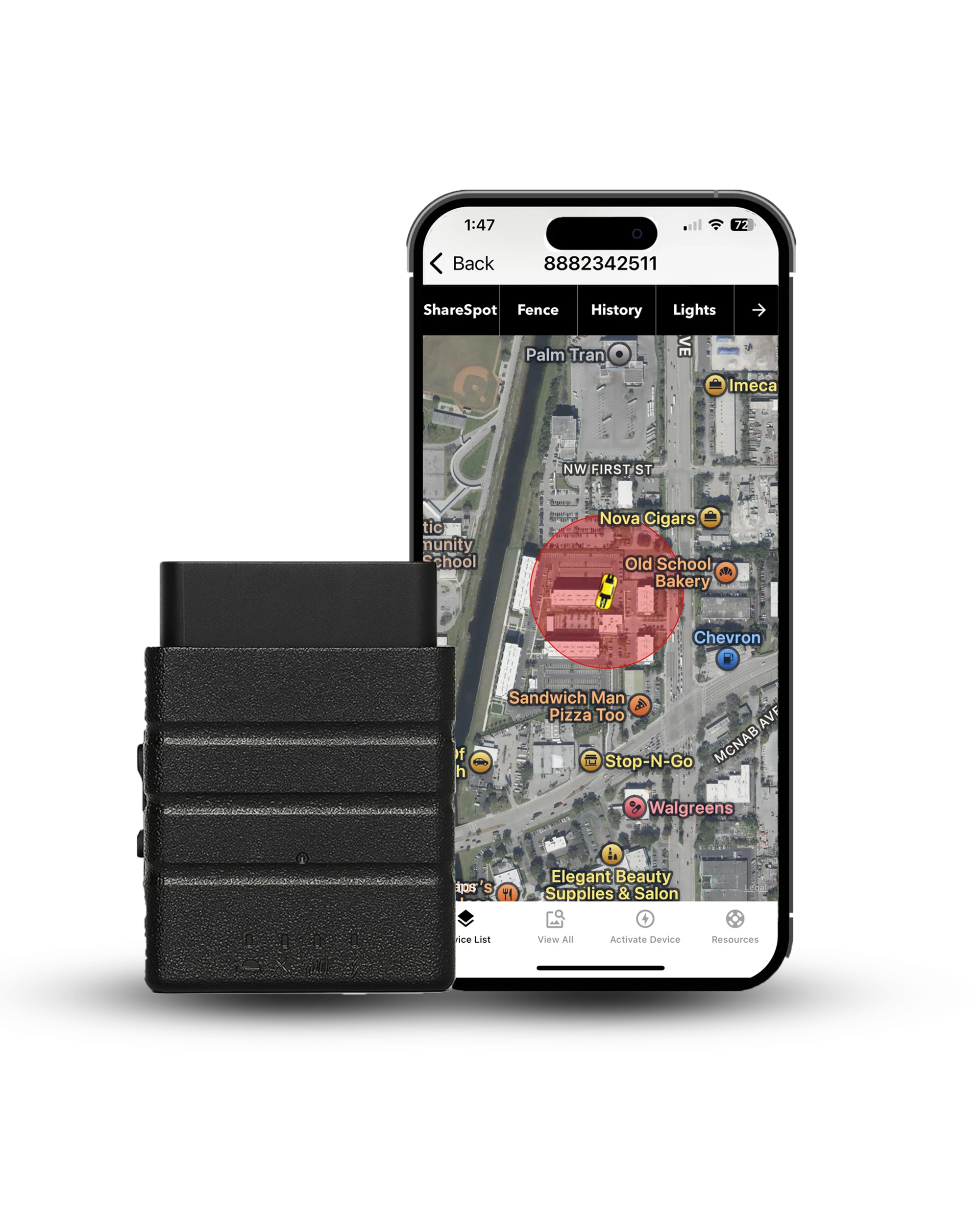
Konnect OBD2 GPS Tracker
Plug it into the OBD2 port, activate it in seconds, and you have live visibility all winter. $39.95 for the device, $8.95 a month flat, no contract.
- 3-second live updates
- Geofence and after-hours alerts
- Tamper and unplug alerts
- 15-minute backup battery
- 1 year trip history
- Cold-resistant hardware
- 150+ countries
- Lifetime warranty
- U.S.-based support


Whether you're keeping an eye on a family car, a few work vehicles, or a full fleet, winter becomes far easier to manage when you can see everything in real time.
Extra Winter Car Security Devices to Pair With GPS Tracking
A GPS tracker does the heavy lifting, but pairing it with a few simple add-ons gives you stronger protection during winter. These small upgrades make a real difference when you're dealing with long warm-ups, dark parking lots, or overnight parking.
-
Steering wheel locks
A visible barrier makes thieves move on fast. When someone sees a locked wheel, the job just got harder than it's worth.
-
Dash cams with motion alerts
Good for nights when the car sits outside. If something gets too close, you get a heads-up before it becomes a problem.
-
Alarms and immobilizers
Useful during idling or quick stops. If someone tries to drive off, an immobilizer means they don't get far.

Winter Car Theft Prevention Checklist
Use this as your quick winter routine. Small habits make a large difference when cold weather hands thieves more opportunities than usual.
- Keep your keys with you while the engine warms upA quick run inside is enough time for someone to take the car.
- Park near lighting or entrancesProximity to people shrinks the chance of someone approaching unnoticed.
- Watch real-time tracking on snowy nightsSo you catch movement when visibility drops.
- Set geofences around home, work and regular routesUnexpected activity flags itself instead of waiting for you to check.
- Test your tracker before heavy stormsConfirm alerts and refresh rates hold up before you need them.
- Check trip history weekly through winterOdd routes and after-hours activity show up early.
Final Thought: Strengthen Winter Car Theft Protection With Real-Time Tracking
Winter brings more than wind, frost, and early sunsets. It changes how we behave around our vehicles: longer warm-ups, quiet streets, and a lot of moments where nobody is paying close attention. Thieves recognize those patterns and use them well.
The people who stay ahead are the ones who can see what's happening in real time. A dependable vehicle GPS tracker gives you that visibility, removing the guesswork when snow blocks your view, when engines idle alone, when routes shift, or when a vehicle slips into the blind spots winter creates.
At the end of the day, winter protection comes down to a handful of truths:
- Visibility drops, but risk risesYou need a tool that doesn't rely on eyesight.
- Real-time tracking cuts through the conditionsSnow, darkness and quiet streets stop mattering when you have live location.
- Good habits help, live data protectsRoutines slip in the cold, and that is when the tracker earns its keep.
- The right device makes winter manageableA vulnerability turns into something you can watch and control.
Take Control of Your Vehicle This Winter
Winter gives thieves better opportunities, not better skills. Konnect gives you the advantage they can't work around: real-time accuracy, instant alerts, and visibility every three seconds, on hardware that keeps working when temperatures drop. Plug in, activate, and stay ahead.
About the Author

 Buy on Amazon