
OBD GPS Mileage Tracker | Plug In & Log Miles Automatically
-
01
Missing business miles means lost tax deductions at 76 cents each
-
02
Automatic trip detection records every drive without manual input
-
03
Trip logs give your accountant timestamped records instead of estimates
-
04
Tamper alerts flag the moment a tracker gets unplugged mid-route
-
05
OBD2 tracking delivers mileage accuracy close to the vehicle odometer
As an Amazon Associate, Konnect GPS earns from qualifying purchases.
How to Track Business Mileage with an OBD GPS Tracker
Keeping mileage logs used to be a nightmare. Drivers jot miles on gas receipts, snap photos of odometers, or trust their memory after a long shift. A month later the math never matches, and the IRS does not care about rough estimates.
I'm Ryan Horban, and I've spent the last 15 years working with GPS vehicle trackers, fleet tracking devices, and commercial GPS tracking systems across real-world fleets.
Here's the good news: an OBD GPS mileage tracker turns that entire mess into an automatic process. You plug it in, drive like usual, and every trip gets recorded with distance, route and timestamps.
In this guide you'll see how it works, why fleets rely on it, and where the Konnect OBD2 GPS Tracker fits, whether you're tracking for business, tax, or accountability.

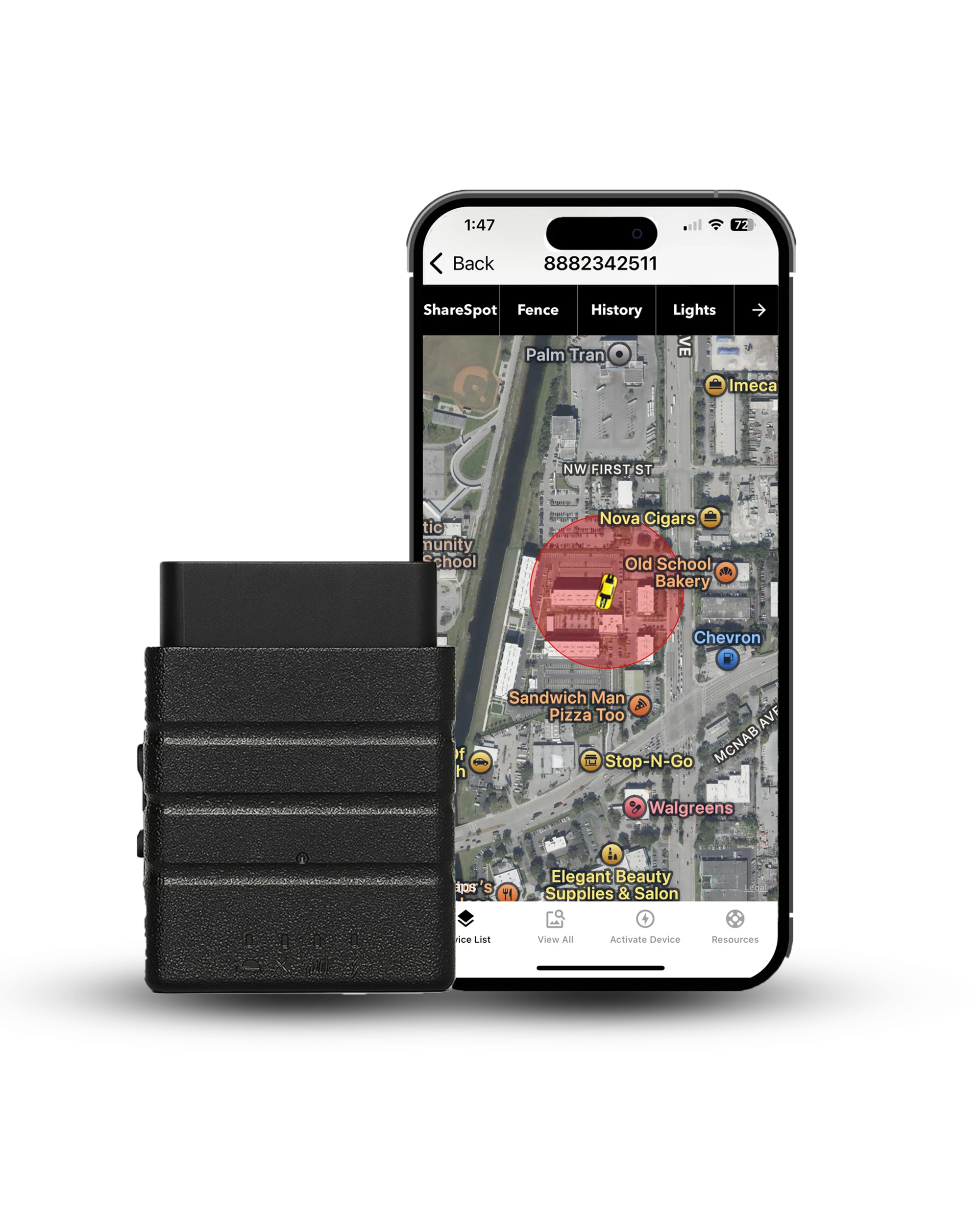
Konnect OBD2 GPS Tracker
A pure real-time GPS tracker. Plug it into the OBD2 port and every trip is logged automatically with distance, route and timestamps, held for a full year. $39 on sale, $8.95 a month, no contract.
- 3-second live updates
- Plug-and-go in seconds
- 1 year trip history
- Geofencing
- Speed alerts
- Tamper and unplug alerts
- Lifetime warranty
- USA-based support
What Exactly Is an OBD GPS Mileage Tracker?

An OBD GPS mileage tracker plugs into your car's On-Board Diagnostics port, the same connector mechanics use to read engine codes. Once connected, the device reads live vehicle data and pairs it with GPS positioning, so every trip gets logged without a button press or an app to remember.
Whether you're running deliveries, driving rideshare, or managing a small fleet, the tracker quietly records every mile. And those miles are worth real money.
The IRS standard mileage rate for business use is 76 cents per mile as of July 1, 2026. The year opened at 72.5 cents, and the IRS made a rare mid-year increase, which means 2026 logs have to be split: trips through June 30 at the old rate, trips from July 1 at the new one.
Miss just 100 business miles a month and you leave roughly $912 a year on the table. A mid-year rate change also makes timestamped records far more valuable than a monthly total, because the date on each trip now changes what it is worth.
IRS standard mileage ratesOne clarification before we go further. The OBD2 port exposes a lot of engine data, and different trackers surface different pieces of it. Konnect is built around location, speed, trip mileage and tamper alerts. It does not report idle time or driver-behavior scores, and that is deliberate: continuously polling a vehicle's engine computer all day, across a whole fleet, is what opens the door to electrical issues. Konnect stays light on the vehicle and fast on position instead. If idle analytics are a must-have, confirm that feature directly with whichever tracker you evaluate.
How Mileage Tracking Works Step by Step

Here's what actually happens once the device is plugged in.
- Plug in and power upThe tracker draws power straight from the diagnostic port and comes alive when you turn the key. No wiring, no charging cable, nothing to switch on.
- Lock onto satellitesWithin moments the device is streaming live coordinates, updating fast enough to catch a detour, a stop, or a coffee run in real time.
- Sync with vehicle dataPosition data gets combined with what the vehicle itself reports, which is what makes the distance figure match your dashboard rather than approximating it from GPS points alone.
- Upload to the cloudTrip data goes out over LTE to your dashboard, timestamped as it happens, viewable from a phone or a desktop.
- Review your trip logAt the end of the week or the month, the dashboard has every trip already organized. You drive, it does the math.
What gets captured on each trip:
- Distance drivenThe figure that becomes your deduction, per trip rather than per guess.
- Start and stop timesTimestamps are what turn a log into evidence during an audit.
- Route summaryWhere the vehicle actually went, which settles most disputes before they start.
- Trip history for a full yearTwelve months of records sitting there whether or not you remembered to look.

Why Accurate Mileage Tracking Matters
Mileage tracking goes beyond maps and numbers. It's about money, compliance, and knowing the records are handled. When every mile is recorded automatically, you're protecting your bottom line rather than reconstructing it.

-
For businesses
Nobody enjoys filling out mileage spreadsheets, but the IRS still expects timely, accurate records for reimbursements and deductions. Every trip logged and timestamped removes the guesswork, and the unclaimed miles that quietly add up over a year.
-
For fleets
Seeing exactly how and where vehicles move makes patterns obvious fast. Route inefficiency, unnecessary mileage and trips nobody logged all surface in the data instead of staying invisible.
-
For solo drivers
If you drive rideshare, delivery, or run a business on wheels, the log is your proof at tax time. Miss the miles and you miss the money. There's no reconstructing six months of trips from memory in April.
Worth remembering: if an auditor asks for six months of trip logs, the difference between a clean export and a shoebox of receipts is the difference between an afternoon and a week.
Key Features to Look For in a Mileage-Focused Tracker
Not every GPS tracker earns a seat in your vehicle. If mileage accuracy actually matters to you, these are the features that make the difference.

-
Plug-and-play setup
Straight into the diagnostic port, powered in seconds. No wires, no waiting, no installation fee.
-
Automatic trip detection
A good tracker doesn't wait for you to tap start. Trips begin when the wheels roll and end when you park, so there are no half logs and no forgotten drives.
-
Business and personal separation
Being able to distinguish work trips from personal ones is what turns a raw log into a deduction. Check how a given dashboard handles this before you buy.
-
Exportable records
Your accountant wants a file, not a screenshot. Ask what formats a platform exports and whether it does it in one click.
-
Speed and trip analytics
Real-time speed, geofence alerts, and trip summaries comparing drive time, stops and distance over the period.
-
Tamper alerts
Drivers unplug trackers, sometimes by accident. Either way the system should flag the vehicle, record the time, and notify you before the shift ends.
Real Benefits and ROI
Accurate mileage tracking saves time and produces measurable return, whether you run one vehicle or twenty.
- Time savedManual logs eat hours you never get back. Automated trips record themselves, which means more time driving and less time on paperwork.
- Fuel visibilitySeeing route and speed patterns makes inefficient routes obvious, and inefficient routes are where fuel money quietly goes.
- Tax accuracyAutomatic records mean accurate deductions, with no miles left on the table and nothing to reconstruct at filing time.
- Dispute protectionA timestamped route record settles a customer or driver disagreement in about thirty seconds.

A mileage log is only worth what an auditor believes. Timestamps and routes are believable. A number you wrote on a receipt in April for a trip you took in January is not.
Best Practices and Common Mistakes

Best Practices
- Check compatibility firstYour vehicle needs an OBD2 port, standard on 1996 and newer U.S. models.
- Keep it plugged inA continuous connection is what makes every trip get recorded. Gaps in the log are gaps in the deduction.
- Download records monthlyClean records now mean fewer headaches at tax time, and 2026 in particular needs the June 30 split handled.
- Separate business and personal earlyMark trips while you still remember them rather than nine months later.
Common Mistakes to Avoid
- Swapping vehicles without updating profilesMileage lands against the wrong vehicle and the reporting stops adding up.
- Ignoring tamper or GPS alertsThose warnings are protecting the completeness of your log.
- Unplugging the tracker oftenEven short gaps create missing trips, and a missing trip is a missing deduction.
OBD GPS Tracker vs the Alternatives
Not every tracker fits every job. Here's how the three types compare for mileage tracking specifically.

| Parameter | OBD2 Tracker | Portable Tracker | Hardwired Tracker |
|---|---|---|---|
| Installation | Plug and play | Magnet mount or pouch | Professional wiring, needs a technician |
| Power source | Vehicle OBD2 port, continuous | Rechargeable battery, 1 to 4 weeks | Vehicle 12V, constant |
| Mileage accuracy | Closest to the odometer, since it reads vehicle data | Varies with GPS signal quality | Very stable, wired to the vehicle |
| Data retention | Cloud history, one year on Konnect | Limited by plan and battery | Long-term storage, fleet integration |
| Best use case | Fleets and business mileage tracking | Personal, discreet, or short-term tracking | Heavy equipment, trailers, long-term installs |
| Tamper detection | Yes, unplug alerts | Limited | Yes, wired tamper log |
For the best mix of accuracy and convenience, the OBD2 tracker is the sweet spot. No messy install, no dead batteries, no gaps in the data. Portable trackers win for quick swaps between vehicles and short-term jobs; hardwired units win for concealed or heavy-duty installs. For most business drivers and fleet owners, OBD2 lands in the middle: simple, reliable, and powered by the vehicle.
Final Thoughts
The best tracking tech is the kind that just works and fades into your day. You plug it in once and drive, and the log builds itself while you get on with the job.
- For business ownersAccurate deductions and real visibility into how vehicles get used.
- For fleet managersRoute visibility, accountability, and a record when something is disputed.
- For solo driversConfidence that every mile is captured before tax season arrives.
Mileage tracking comes down to trust and control. Trust that the data is right, and control over where the money goes. With a 2026 rate change splitting the year in two, having every trip already dated is worth more than it was twelve months ago.
Stop Guessing Your Miles
Konnect plugs into the OBD2 port in seconds and records every trip with distance, route and timestamps for a full year. $39 on sale, $8.95 a month, lifetime warranty and USA-based support.
About the Author

 Buy on Amazon