
GPS Tracker For Hiking
-
01
Battery life determines whether a tracker lasts through multi-day hikes
-
02
SOS and messaging are essential for safety in remote areas
-
03
Multi-satellite support improves accuracy in difficult terrain
-
04
Cloud cover does not affect GPS signal performance
-
05
Car GPS devices lack features needed for hiking navigation
As an Amazon Associate, Konnect GPS earns from qualifying purchases.
Best Hiking GPS Trackers For Adventurers In 2026
Losing the trail is easy when you are off the well-marked path. A GPS device with a digital compass keeps you oriented, especially paired with a good map and basic navigation skills. With so many options on the market, though, picking the right hiking GPS tracker can feel overwhelming.
That is where Konnect GPS comes in. Below, we walk through the key features worth prioritizing and share a few tips for your next outdoor trip. We do not sell any of the handhelds on this list, so the picks come down to what each one actually does on the trail.
| Product | Best For | Screen | Buy |
|---|---|---|---|
 Garmin GPSMAP 78sc Garmin GPSMAP 78sc
|
Paddling and water-based routes | 2.6 in | Check Price |
 Garmin Rino 755t Garmin Rino 755t
|
Group hikes that need two-way radio | 3 in | Check Price |
 Garmin eTrex 30x Garmin eTrex 30x
|
Lightweight all-round hiking | 2.2 in | Check Price |
 Garmin Oregon 600 Garmin Oregon 600
|
Hikers who want a touchscreen | 3 in | Check Price |
 DeLorme inReach Explorer DeLorme inReach Explorer
|
Satellite messaging and SOS | 1.8 in | Check Price |
 Garmin GPSMAP 66i Garmin GPSMAP 66i
|
Navigation with built-in SOS | 3 in | Check Price |
 Garmin Montana 700 Garmin Montana 700
|
Rugged backcountry and vehicle use | 5 in | Check Price |
 Garmin GPSMAP 64St Garmin GPSMAP 64St
|
Day hikes on AA batteries | 2.6 in | Check Price |
 Garmin Montana 680t Garmin Montana 680t
|
Geocaching and photo logging | 4 in | Check Price |
 Garmin Foretrex 401 Garmin Foretrex 401
|
Budget wrist-mounted navigation | 1.4 in | Check Price |
What Are GPS Trackers For Hiking?
GPS trackers for hiking are small devices that use satellite signals to keep track of where you are. These gadgets do more than pinpoint your location. They can help plan a route, mark important spots along the way, and track your progress in real time. Whether you are exploring solo or with a group, GPS tracking can be incredibly useful, and these devices are also popular for camping and hunting.
Battery life is one of the biggest factors to weigh. A quick few-hour hike does not demand much battery, but a multi-day backpacking trip calls for a tracker built to last. How remote your hikes are matters too: trackers with SOS features earn their keep once you head into the backcountry, where the ability to call for help can be a lifesaver.
GNSS: the umbrella term for satellite positioning networks. GPS is the American one, GLONASS is Russian, and Galileo is European. A handheld that reads more than one of them locks on faster and holds position better under tree cover or in a canyon.
Given that range of needs, here is a look at some of the best GPS trackers for hiking so you can make an informed choice.
Top 10 GPS Trackers for Hiking
Garmin GPSMAP 78sc

- Stay Oriented: Built-in compass and altimeter help you keep track of direction and altitude.
- Share & Explore: Wirelessly share waypoints, tracks, routes, and geocaches with other compatible devices.
- Bright & Clear: 2.6-inch color display is easy to read, even in sunlight.
Editor rating: 4.5/5 | Amazon: 4.3 Stars | 544 Ratings
Check Price on AmazonThis is our favorite waterproof GPS model, with the added benefit of floating, so if you drop it in the water, it won't be lost or damaged. Additional features include an electronic compass and barometric altimeter, wireless route sharing, and a 2.6-inch color TFT display.
Key Features
- High-sensitivity, WAAS-enabled receiver with HotFix for improved tracking in heavy cover and deep canyons
- 3-axis electronic compass and barometric altimeter for accurate navigation
- Waterproof to IPX7 and floats, so a drop in the water does not end the trip
- microSD card slot sits inside the waterproof battery compartment for adding maps
- Worldwide shaded relief basemap plus preloaded BlueChart g2 coastal charts
- Up to 20 hours of battery life on 2 AA batteries
- Display2.6-inch color TFT, 160 x 240
- Waterproof ratingIPX7, floats
- Preloaded chartsU.S. and Bahamas BlueChart g2
- Compass3-axis tilt-compensated
- Battery lifeUp to 20 hours on 2 AA
Pros & Cons
Pros
- High-sensitivity GPS holds a lock under tree cover and in canyons.
- 2.6-inch color display keeps maps readable in direct sun.
- IPX7 waterproof rating covers rain and brief submersion.
- Floats in water, which cuts the risk of losing it on a paddle.
- Beams waypoints and routes straight to other compatible Garmin units.
Cons
- Preloaded charts cover the U.S. and Bahamas only, so global hikers need extra maps.
- 2.6-inch screen feels small next to newer 3-inch and 5-inch handhelds.
- Worldwide map coverage is a separate purchase on top of the unit.
- Twenty hours means carrying spare AA batteries on anything past a weekend.
- No Wi-Fi or Bluetooth; transfers run unit to unit or over USB.
Had not bought any extra maps yet, but was already enjoying the trip computer.
Reported position drift from day one, even with the unit sitting still indoors, plus a loss of map detail when zoomed in past 8 nautical miles, and was unhappy with Garmin's support response.
Garmin Rino 755t

- Navigate & Communicate: Combines GPS navigation with a 5W GMRS two-way radio for staying connected in remote areas.
- Track & Share: Track your location and share it with others using position reporting, ideal for group adventures.
- See Clearly: Preloaded TOPO maps and an 8MP camera let you capture the details of your journey.
Editor rating: 5/5 | Amazon: 5.0 Stars | 6 Ratings
Check Price on AmazonOne of the most reliable GPS models, the 5-watt FRS/GMRS 2-way radio is a nice touch, as is the 8-megapixel autofocus camera, electronic compass, accelerometer, and barometric altimeter.
Key Features
- Dual-band FRS/GMRS radio with a range of up to 14 miles in ideal conditions
- 5 W GMRS and 1 W FRS transmit power
- High-sensitivity GPS and GLONASS receiver with preloaded TOPO maps
- 3-inch sunlight-readable color display with dual-orientation capability
- Wireless connectivity for sharing locations, waypoints, and tracks with other Rino users
- 8MP autofocus camera with flash and geotagging
- Barometric altimeter and 3-axis electronic compass for accurate navigation
- RadioDual-band FRS/GMRS
- Stated rangeUp to 14 miles
- Radio power5 W GMRS, 1 W FRS
- Display3-inch sunlight-readable, dual-orientation
- MapsPreloaded TOPO
- Extras8MP camera, barometric altimeter, 3-axis compass
Pros & Cons
Pros
- Pairs full GPS navigation with a 5W GMRS two-way radio.
- Position reporting shows where everyone in the group is.
- Sunlight-readable 3-inch color display.
- 8MP camera geotags photos as you shoot them.
- Connects wirelessly with other Rino units.
Cons
- Camera quality falls short of a current smartphone.
- Two systems to power, so battery planning gets more complicated.
- The 14-mile radio figure assumes clear line of sight, not real terrain.
- Costs more than a navigation-only handheld.
- Bulkier than lightweight hikers will want to carry.
Bought it for a husband's hunting camp after the group standardized on the same radio. Liked that waypoints transferred over from an older Garmin unit, and that everyone could see each other's position during drives.
Tried to use it to locate survey corner pins and got no closer than about 42 feet, then was charged a $120 restocking fee on the return.
Garmin eTrex 30x

- Clear View: Super-sharp 2.2-inch color display for easy map reading, even in sunlight.
- Map Mania: Load countless maps with 3.7GB memory and expandable microSD slot.
- Global Guide: Preloaded worldwide basemap with shaded relief for basic navigation.
Editor rating: 4.5/5 | Amazon: 4.3 Stars | 1,239 Ratings
Check Price on AmazonThe increased internal memory is great for holding more maps, and the barometric altimeter helps for tracking elevation gain and descent. The 2.2-inch display has great resolution, and the shaded relief is a nice touch on the base map screen. (The eTrex 20x is also a worthwhile option, but we're just a little partial to the 30x.)
Key Features
- High-sensitivity, WAAS-enabled GPS receiver with HotFix and GLONASS support
- 2.2-inch color display with a durable, sunlight-readable design
- Expandable memory with a microSD card slot for loading additional maps
- Wireless connectivity for sharing waypoints, tracks, and routes with other compatible devices
- Preloaded worldwide basemap with shaded relief, with room to add TOPO and BirdsEye satellite imagery
- Barometric altimeter and 3-axis compass, waterproof to IPX7
- Display2.2-inch 65K color, sunlight readable
- Resolution240 x 320 pixels
- Memory3.7 GB plus microSD slot
- Dimensions2.1 x 4.0 x 1.3 inches
- Waterproof ratingIPX7
Pros & Cons
Pros
- 2.2-inch sunlight-readable display with high resolution.
- 3.7 GB of memory plus a microSD slot for maps.
- Ships with a worldwide basemap with shaded relief.
- Built-in compass and barometric altimeter improve accuracy.
- Shares waypoints and tracks wirelessly with compatible devices.
Cons
- Smaller screen makes detailed topo maps harder to read.
- Preloaded basemap is basic; TOPO and BirdsEye layers cost extra.
- Button-only control, with no touchscreen shortcuts.
- Runs on 2 AA batteries, so spares matter on longer trips.
- No two-way messaging or SOS, so pair it with a satellite communicator in the backcountry.
Credits the unit with getting them out of remote New Zealand bush repeatedly. Main gripe was mapping: a full country map is an expensive add-on, and the free topo sheets have to be loaded one at a time because of a file limit.
Garmin Oregon 600

- Crystal Clear: 3-inch sunlight-readable touchscreen with multi-touch for easy control.
- Go Anywhere: Dual-band GPS/GLONASS ensures accurate tracking even in tough conditions.
- Stay Aware: Built-in compass, altimeter, and accelerometer for complete situational awareness.
Editor rating: 4/5 | Amazon: 3.9 Stars | 399 Ratings
Check Price on AmazonThis might be our favorite touchscreen display, and the dual power system, where either a NiMH battery pack or 2 AA batteries will run it, is a nice touch too.
Key Features
- 3-inch sunlight-readable, dual-orientation color touchscreen display
- Wireless connectivity for sharing waypoints, tracks, and routes with other compatible devices
- Preloaded worldwide basemap, with room to add TOPO and BirdsEye satellite imagery
- Rugged, waterproof design rated IPX7
- Expandable memory with a microSD card slot for loading additional maps
- Customizable interface with the ability to add and arrange data fields
- Dual power system: 2 AA batteries or an optional rechargeable NiMH pack
- Display3-inch, sunlight-readable touchscreen
- SatellitesGPS and GLONASS
- ConnectivityANT+, Bluetooth
- OrientationAuto landscape or portrait
- Power2 AA or optional NiMH pack
- Waterproof ratingIPX7
Pros & Cons
Pros
- 3-inch touchscreen stays readable in sunlight.
- GPS and GLONASS together improve positioning.
- Compass, accelerometer, and barometric altimeter all built in.
- Shares routes and waypoints wirelessly over ANT+ and Bluetooth.
- Display flips between landscape and portrait automatically.
Cons
- Touchscreen is harder to work with thick gloves on.
- Rechargeable pack is a separate purchase on the base 600.
- No built-in camera on this model; that is the Oregon 650.
- Touchscreen and backlight drain batteries faster than button-only units.
- 3-inch screen still limits how much map you can take in at once.
Replaced a Garmin unit that had failed, and the new one arrived a week ahead of the promised date and was working the same night.
Bought it for an elk hunting trip. It ran for one day, then the screen went dead with fully charged batteries, and the return window had closed by the time they got home.
DeLorme inReach Explorer

- Plan & Track: Create routes, drop waypoints, see tracks, and navigate with maps.
- Stay Aware: Digital compass, barometer, and accelerometer for enhanced navigation.
- Share & Connect: Plan routes online, share with friends, and track progress remotely.
Editor rating: 4.5/5 | Amazon: 4.2 Stars | 733 Ratings
Check Price on AmazonWith 100 hours of battery life, the inReach Explorer is best for big adventures, and the satellite messaging and SOS tracking matter the moment you need search and rescue. Used as a GPS tracker, reports run anywhere from every 10 minutes to every 4 hours. The screen is small at 1.8 inches, but this is still one of the best big-adventure units you could consider.
Key Features
- 2-way satellite communication for messaging, tracking, and SOS
- Global coverage through the Iridium satellite network
- Built-in GPS and navigation with preloaded DeLorme topographic maps
- Waterproof and impact-resistant build
- Up to 100 hours in tracking mode and up to 30 days in power-saving mode
- Customizable message templates, with messages going to any cell number or email address
- Built-in compass, barometer, and accelerometer
- Online trip-planning and management tools
- Optional weather forecast service
- SOSInteractive, with 24/7 monitoring
- Messaging160 characters, with GPS coordinates
- Tracking intervals10 minutes to 4 hours
- Satellite networkIridium
- Battery lifeUp to 100 hours tracking
Pros & Cons
Pros
- Creates and displays routes and waypoints on the device itself.
- Digital compass, barometric altimeter, and accelerometer included.
- SOS reaches a 24/7 search and rescue coordination center.
- Routes can be planned online ahead of the trip and shared.
- Sends and receives texts with GPS coordinates anywhere with sky view.
Cons
- Messages cap at 160 characters, so conversations get clipped.
- Every satellite feature needs an active subscription.
- The 1.8-inch screen is cramped for reading maps.
- Discontinued, so support, accessories and stock are thinning out.
- Heavier and pricier than a messaging-only unit.
Took some setup, then worked as needed on a bear hunt in Idaho with no cell service for miles, and messages went out faster than expected.
Received a reconditioned unit still locked to its previous owner, with no replacement offered.
The three specs that decide a hiking GPS are battery life, whether it can message for help without cell service, and a screen you can actually read in direct sun. Everything past that is a bonus.
Garmin GPSMAP 66i

- Big & Bright: 3-inch sunlight-readable display for easy navigation, even outdoors.
- Global SOS: Trigger emergency alerts and get help from rescue centers via satellite (subscription needed).
- Detailed Maps: Preloaded TOPO maps with downloadable satellite imagery, no annual subscription required.
Editor rating: 4.5/5 | Amazon: 4.6 Stars | 1,125 Ratings
Check Price on AmazonOne of the most rugged devices out there, the GPSMAP 66i performs well even in bright sun, which can make many screens hard to read, and works well with Custom Maps, an app that lets you turn paper maps into downloadable ones.
Key Features
- 3-inch sunlight-readable color display
- Interactive SOS and two-way messaging over the global Iridium satellite network, with an active subscription
- Preloaded Garmin TOPO mapping plus direct-to-device BirdsEye Satellite Imagery downloads, no annual imagery fee
- Multiple satellite systems supported, with a 3-axis compass and barometric altimeter
- microSD slot alongside internal memory for extra maps
- Internal rechargeable lithium battery, up to 35 hours in 10-minute tracking mode and 200 hours in Expedition mode
- Cellular connectivity for Active Weather forecasts and Geocaching Live
- Display3-inch sunlight-readable
- Battery lifeUp to 35 hours tracking, 200 hours expedition
- Satellite networkIridium, subscription required
- MapsPreloaded Garmin TOPO plus BirdsEye downloads
- Extras3-axis compass, barometric altimeter
Pros & Cons
Pros
- Large 3-inch display, easy to read in sunlight.
- Digital compass and barometric altimeter built in.
- Preloaded Garmin TOPO maps with no annual imagery subscription.
- Works with Garmin Explore for trip management.
- Up to 35 hours of battery life in tracking mode.
Cons
- A satellite subscription is required for two-way messaging and SOS.
- Cellular features depend on having coverage.
- Some jurisdictions regulate or restrict satellite communicators.
- Battery life swings widely with tracking settings.
- Sealed internal battery, so you cannot swap in spare AAs mid-trip.
Used it hunting in thick woods and it got them back to the car. Easy to set up, though satellite lock takes a little while.
After the first hunting trip, a track stayed stuck on screen permanently. Support suggested deleting old tracks, which the reviewer did not consider a real fix.
Garmin Montana 700

- Built Tough: Survives extreme temperatures, shocks, water, and vibrations (MIL-STD 810).
- Big & Bright: Easy-to-use 5-inch glove-friendly touchscreen (50% larger than previous model).
- Go Anywhere: Tracks with GPS, GLONASS, Galileo, and preloaded TopoActive maps.
Editor rating: 4.5/5 | Amazon: 4.5 Stars | 83 Ratings
Check Price on AmazonOne of our favorite backcountry GPS trackers, the Garmin Montana 700 skips the satellite messaging of the inReach Explorer, but in exchange you get a far bigger screen and a military-grade build.
Key Features
- 5-inch glove-friendly color touchscreen, 50% larger than earlier Montana models
- Multi-GNSS support across GPS, GLONASS and Galileo, with a 3-axis compass and barometric altimeter
- Preloaded TopoActive mapping with routable on-road and off-road navigation
- Built to MIL-STD-810 for thermal, shock, water and vibration, and rated IPX7
- microSD slot on top of generous internal memory
- Rechargeable lithium pack, with AA batteries as a field backup
- Up to 18 hours in GPS mode and up to 330 hours in Expedition mode
- ConstructionMIL-STD-810, IPX7
- Display5-inch glove-friendly touchscreen
- SatellitesGPS, GLONASS, Galileo
- PowerRechargeable lithium pack or 2 AA
- Battery lifeUp to 18 hours GPS, 330 hours Expedition
- ConnectivityANT+, Wi-Fi, Bluetooth
Pros & Cons
Pros
- MIL-STD 810 rated for temperature swings, shock, water and vibration.
- 5-inch glove-friendly touchscreen is the largest screen on this list.
- Multi-GNSS support keeps positioning tight under cover.
- Preloaded TopoActive maps route on trails and roads.
- ANT+, Wi-Fi and Bluetooth all included.
Cons
- Large and close to a pound in hand, so not one for gram counters.
- No built-in satellite messaging on the base 700; that is the 700i.
- BirdsEye imagery and additional maps add cost.
- Big touchscreen pulls more power than button-driven handhelds.
- Depth of features can overwhelm a casual user.
Upgraded from an Oregon 300 and called the Montana 700 fast and accurate, with more features than they expect to learn.
Found the interface cumbersome and the graphics poor, had trouble loading maps from a laptop, and would rather use a phone app.
Garmin GPSMAP 64St

- Bright & Clear: Sunlight-readable 2.6-inch color display for easy viewing, even outdoors.
- Go Long: Get up to 16 hours of battery life on AA batteries or a rechargeable pack.
- Stay Smart: Receive notifications and connect with sensors like heart rate monitors or action cameras.
Editor rating: 4.5/5 | Amazon: 4.5 Stars | 1,219 Ratings
Check Price on AmazonPerhaps the only drawback is the 16-hour battery life, and even that is plenty long enough for most one-day adventures. With dual power options, either rechargeable NiMH packs or 2 AA batteries, 8 GB of expandable internal memory, and a sharp 2.6-inch display, this one is hard to fault.
Key Features
- 2.6-inch sunlight-readable color display with dual-orientation capability
- Preloaded worldwide basemap, with room to add TOPO and BirdsEye satellite imagery
- Rugged build rated IPX7 for rain and brief submersion
- 8 GB of internal memory expandable through a microSD card slot
- Customizable interface with the ability to add and arrange data fields
- Up to 16 hours of battery life in GPS mode
- Wireless connectivity for software updates, geocaching GPX files, and other compatible devices
- Display2.6 inches, 160 x 240 pixels
- Battery lifeUp to 16 hours
- SatellitesGPS and GLONASS
- Waterproof ratingIPX7
- Weight8.1 oz (230 g) with batteries
Pros & Cons
Pros
- Sunlight-readable 2.6-inch color display.
- 8 GB of internal memory before you add a card.
- Runs on AA batteries or a rechargeable NiMH pack.
- Shows smart notifications and pairs with ANT+ sensors.
- Uploads data wirelessly to Garmin Connect.
Cons
- Sixteen hours is short for multi-day trips without spare batteries.
- Display resolution is low at 160 x 240 pixels.
- Full functionality needs optional accessories and map purchases.
- IPX7 covers rain and a brief dunk, not extended submersion.
- At 8.1 oz with batteries it is heavier than a wrist-mounted unit.
Bought it for elk and mule deer hunting in Arizona as a first GPS. Rated the lit screen fine, warned that cold weather and screen time eat AA batteries, and noted that a microSD card for hunting maps is a separate cost.
Had the data port fail within a year on light use, received a refurbished replacement under warranty, then had a battery terminal break on that unit too.
Garmin Montana 680t

- Plan & Navigate: Easily manage waypoints, routes, and tracks on-device.
- Capture Memories: High-resolution 8MP camera with automatic geotagging.
- Go Anywhere: Precise GPS & GLONASS track you even in tough conditions.
Editor rating: 4.5/5 | Amazon: 4.2 Stars | 669 Ratings
Check Price on AmazonThe Montana 680t offers nearly as many great features alongside an 8-megapixel camera, 250,000 pre-loaded geocaches, and Track Manager to help keep your waypoints organized. That makes this the best option here for geocaching, and possibly for orienteering or navigation competitions as well.
Key Features
- 4-inch dual-orientation, sunlight-readable color touchscreen display
- Preloaded worldwide basemap, with room to add TOPO and BirdsEye satellite imagery
- Rugged, waterproof build rated IPX7
- Expandable memory with a microSD card slot for loading additional maps
- Built-in 8-megapixel autofocus camera with geotagging
- Customizable interface with the ability to add and arrange data fields
- Dual power system: 2 AA batteries or an optional rechargeable pack
- Wireless connectivity for software updates, geocaching GPX files, and compatible devices
- Imagery1-year BirdsEye subscription included
- SatellitesWAAS-enabled, HotFix, GLONASS
- Camera8 megapixels with automatic geotagging
- Display4-inch touchscreen
- Waterproof ratingIPX7
Pros & Cons
Pros
- Ships with a 1-year BirdsEye Satellite Imagery subscription.
- High-sensitivity GPS with WAAS and GLONASS support.
- Track Manager keeps waypoints and routes organized.
- 8MP camera geotags photos automatically.
- Holds a position lock in heavy cover and deep canyons.
Cons
- Camera quality lags behind a current smartphone.
- BirdsEye imagery needs renewing after the first year.
- The 4-inch body is one of the heavier units on this list.
- Superseded by the Montana 700 series, so new stock is thinning.
- Touchscreen and camera together drain batteries faster.
Moved up from an Oregon 450t for the bigger screen and aging eyes, and was still adjusting to interface differences but happy with the swap.
Argues there is a long-running power design flaw across Montana units when using Garmin's recommended lithium-ion rechargeable batteries, with support offering troubleshooting rather than a cause.
Garmin Foretrex 401

- Go Anywhere: Powerful GPS finds signal even in tough conditions.
- Track & Explore: Save routes, tracks, and waypoints (even heart rate with an add-on).
- Retrace Steps: Get back to camp easily with the TracBack feature.
Editor rating: 4.5/5 | Amazon: 4.6 Stars | 1,975 Ratings
Check Price on AmazonWhile admittedly not as feature-laden as some of the other Garmin devices on this list, the Foretrex 401 still offers plenty of bang, and at a lower price than most other comparable units, this is probably the best budget GPS device here.
Key Features
- High-sensitivity GPS receiver with HotFix for faster satellite lock
- Wrist-mounted design that keeps both hands free
- 1.4-inch monochrome LCD at 100 x 64 pixels
- Rugged build, waterproof to IPX7
- Up to 17 hours of battery life on 2 AAA batteries
- Built-in electronic compass and barometric altimeter
- TracBack retraces your route back to the start
- Trip computer with distance, time, sunrise and sunset, and hunting and fishing tables
- Pairs with an optional heart rate monitor or cadence sensor
- Display1.42 x 0.91 inches, monochrome
- Resolution100 x 64 pixels
- Battery lifeUp to 17 hours
- Power2 AAA batteries
- Waterproof ratingIPX7
- Track log10,000 points
Pros & Cons
Pros
- High-sensitivity receiver holds a lock in dense cover.
- Tracks routes, waypoints and heart rate with an optional monitor.
- TracBack retraces your path on the LCD display.
- Dual position readout shows coordinates in multiple formats.
- Trip computer, sunrise and sunset times, and hunting and fishing tables included.
Cons
- Monochrome 100 x 64 display shows a breadcrumb trail, not maps.
- No microSD slot, so topo maps are off the table.
- Heart rate monitor and cadence sensor are separate purchases.
- Seventeen hours means packing spare AAA batteries.
- Compass accuracy depends on holding the unit level.
Garmin dominates this category, and that shows in the list above. SPOT is the main alternative still building handheld satellite units. DeLorme was absorbed into Garmin in 2016, and Magellan's eXplorist handheld line has been discontinued, so older recommendations pointing at either brand are out of date.
5 Key Features When Buying Hiking GPS Trackers
-
1. Battery Life That Lasts
Long-lasting battery life is crucial, especially if you are heading off-grid or on a multi-day trek. Look for GPS units with an Expedition Mode to extend battery life or dual battery systems for extra flexibility. The last thing you want is a tracker dying deep in the backcountry.
-
2. Satellite Messaging and SOS Capabilities
Safety comes first. If you hike in remote areas, a GPS with two-way messaging and SOS is invaluable. Units like the Garmin inReach Mini 2 let you communicate even beyond cell range, so you can check in with family or call for help if things go sideways.
-
3. Reliable Global Navigation Systems
A GPS tracker that supports multiple satellite systems such as GPS, GLONASS, and Galileo delivers more accurate positioning, even in challenging terrain. Devices like the Garmin GPSMAP 66i lean on these systems to keep you connected wherever you go.
-
4. Detailed Mapping and Compass Features
For serious navigation, a GPS device with topo maps and a built-in compass helps you read the terrain and stay oriented. Tools like the Garmin Explore app let you preload maps, mark waypoints, and plan your route ahead of time.
-
5. Compact and Durable Design
Weight and durability matter when you are packing for a hike. Portable units like the Garmin eTrex 22x are rugged, lightweight, and easy to stash in a pocket or clip to your gear, making them a solid fit for outdoor use in all kinds of conditions.
Cover the drive as well as the hike
A handheld keeps you found on the trail. Konnect keeps track of the vehicle waiting for you at the end of it, for $39.95 with unlimited tracking at $8.95 a month.
Get the Konnect OBD2 Tracker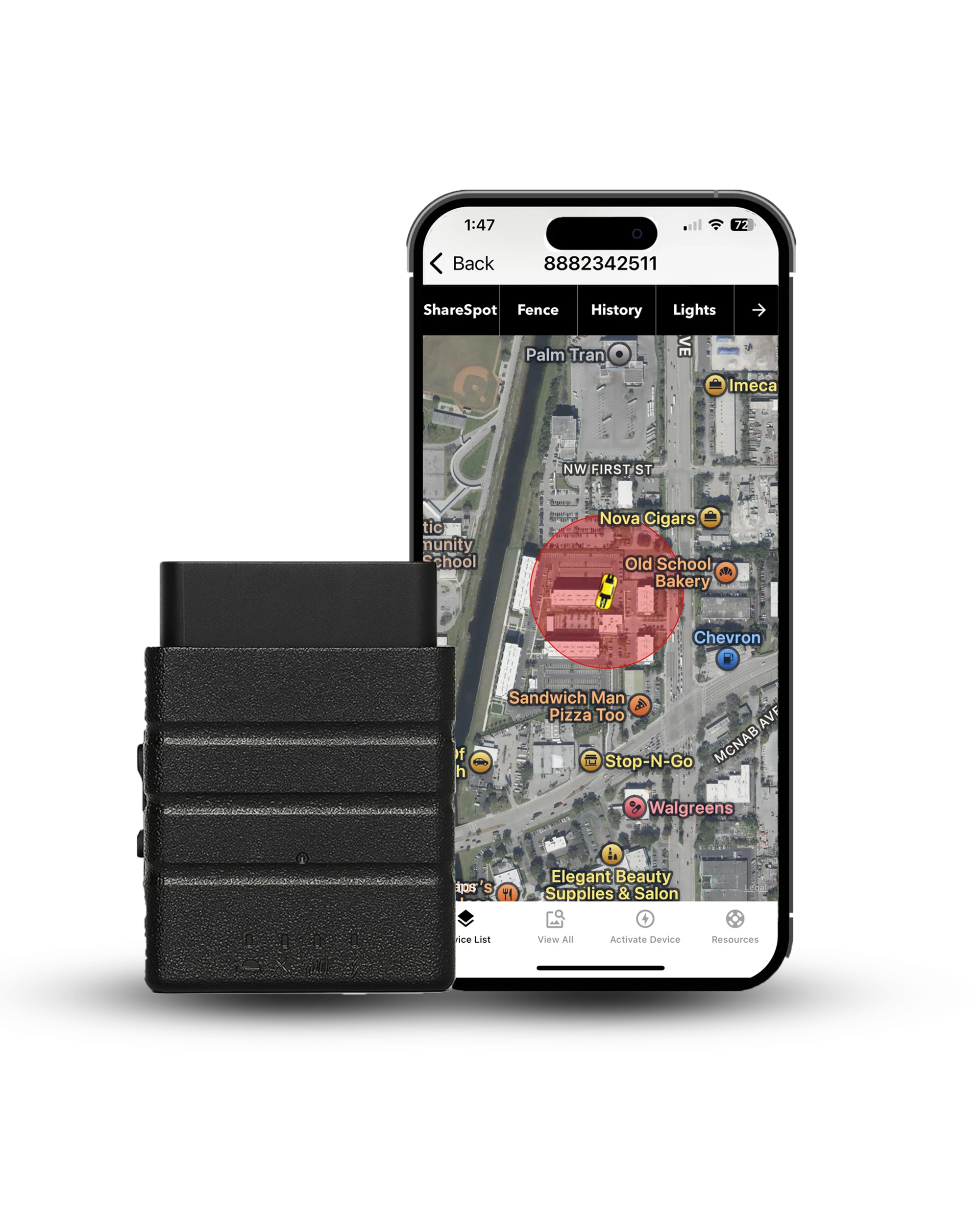
 Buy on Amazon