
Does an OBD GPS Tracker Void Your Car Warranty?
-
01
Federal law puts the burden on the manufacturer. They must prove the device caused the failure
-
02
No major US car brand publishes a warranty term banning plug-in OBD trackers
-
03
Teslas and many EVs do not expose a standard OBD2 port, so check before you buy
-
04
Unplug the tracker before a dealer service visit. Not required, just simpler
-
05
Third-party extended warranties carry the real risk. Get coverage confirmed in writing
As an Amazon Associate, Konnect GPS earns from qualifying purchases.
Installing an OBD GPS tracker does not void your car warranty in the US. The exception is a device that causes damage.
I'm Ryan Horban. For the last 15 years I've worked with GPS vehicle trackers, fleet tracking devices, and commercial GPS tracking systems. This question comes up constantly. Usually from someone in a dealership parking lot, wondering whether plugging one in will backfire later.
The confusion is real, and dealers do not help. Some warn you off. Others do not care. Here is what affects your warranty and what does not. Plus how to use a tracker without risking a claim.
The law that protects youMagnuson-Moss, and what it actually requires of a dealer.
Plug-in against hardwiredThe distinction that carries almost all of the risk.
What the brands sayGM, Ford, Toyota, BMW and Mercedes, in practice.
Teslas and EVsWhere the standard port assumption breaks down.
New, used, leased, extendedHow your coverage type changes the answer.
A checklist before you plug inFive minutes that removes the argument entirely.

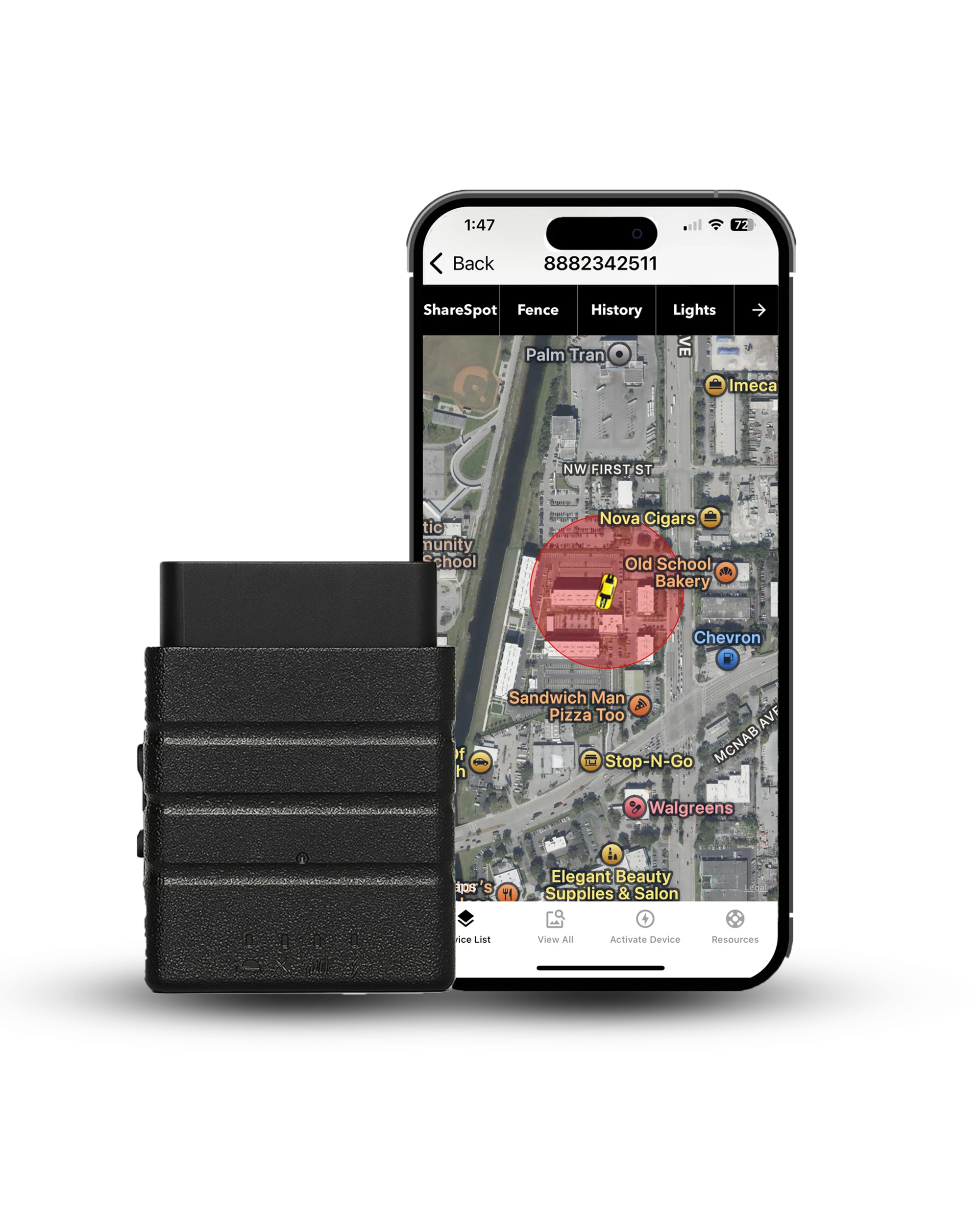
Konnect OBD2 GPS Tracker
Plugs into the port under your dash and comes out in about five seconds. No wiring touched, nothing spliced, nothing reprogrammed.
- Plug and play, no tools
- 3-second updates
- Geofence and speed alerts
- 1 year of trip history
- Lifetime warranty
- USA-based support
The Short Answer
A dealer cannot void your warranty simply because something is plugged into the OBD2 port. Under the Magnuson-Moss Warranty Act, the burden sits with the manufacturer. They must prove the device caused that specific failure.
If they can prove it, they can refuse that one repair. They still cannot cancel the rest of your coverage. The practical risk lives in cheap hardware and hardwired installs, not in the port itself.
The Law That Protects You

The Magnuson-Moss Warranty Act has been federal law since 1975 and is enforced by the FTC. Two parts of it matter here.
Two consequences follow, and both work in your favor. A dealer cannot reject a claim just because something sits in your OBD2 port. And where a device genuinely does cause a fault, only that repair can be refused.
| Scenario | Warranty outcome |
|---|---|
| Tracker plugged in, unrelated part fails | Covered. Coverage stays valid |
| Tracker proven to have caused the failure | That one repair may be denied |
| Dealer voids the whole warranty with no proof | Not permitted under Magnuson-Moss |
Know your rights. The FTC enforces Magnuson-Moss. If a dealer wrongfully voids your warranty, you can file a complaint at ftc.gov.
Plug-In Against Hardwired, The Distinction That Matters
A plug-in OBD tracker connects through the diagnostic port in seconds. A hardwired tracker connects into the vehicle's electrical system. That single difference carries most of the warranty risk in this whole topic.
| Feature | Plug-in OBD tracker | Hardwired tracker |
|---|---|---|
| Installation | Seconds, no tools | Wiring into the fuse box or ignition |
| Power source | The port. No wiring touched | Direct into the electrical system |
| Removability | Unplug before service | Stays hidden, harder to reverse |
| Warranty risk | Very low | Low to moderate |
| Best for | Personal cars and leased vehicles | Fleets and theft-recovery setups |
The reasoning is simple enough. A plug-in device uses a connector that technicians plug into every day, and leaves no trace when removed. A hardwired unit means somebody cut into a loom. A bad fuse tap is a genuine electrical fault waiting to happen.
For the full comparison, see our guide to portable, OBD and wired GPS trackers.
What Is An OBD2 Port And How Does A Tracker Use It

An OBD2 port is the standard diagnostic connector fitted to every US car from 1996 onward. A tracker uses it for two things at once.
- Power, drawn from the vehicle, so there is no battery to charge
- Data, such as speed and ignition status, read from the diagnostic bus
The key word is read. A tracker requests data the same way a mechanic's scan tool does. Nothing is written back and no vehicle settings change. That is the technical reason the warranty argument is so weak against a plug-in device.
Not sure where yours is? Our photo guide to finding the OBD2 port covers the common locations.
What Car Manufacturers Actually Say

No major manufacturer says that plugging into the OBD2 port voids your warranty. All of them reserve the right to deny a claim where an aftermarket device caused the problem. The question is never the port. It is always causation.
Diagnostic access is routine
GM's own technicians use the same connector on every service visit. Where GM draws a line is electrical damage traced to aftermarket hardware, or battery drain from a third-party device.
Allowed, but not covered if it causes harm
Same position. Trouble arrives when a device interferes with vehicle communication systems or pulls power over long idle periods.
Non-genuine parts do not void coverage
Their warranty language is clear that aftermarket parts are permitted unless they cause the failure. Low-quality trackers are still the thing that triggers error codes or drains a battery on a car left standing.
Stricter about electronics
Technicians on these platforms tend to ask about connected devices before running diagnostics, and signal interference gets noticed faster. The underlying rule does not change.
Teslas And Electric Vehicles

Here the warranty question is the second question. The first is whether the tracker physically works, and often it does not.
Many electric vehicles do not expose a standard OBD2 connector the way a gas car does. Tesla's Model 3 and Model Y have no standard OBD2 socket at all. Reaching the diagnostic bus requires an adapter. A plug-and-play tracker will simply have nothing to plug into.
Warranty-wise, EV makers follow the same causation rule. What differs is scrutiny. These platforms log software and electrical events closely, so an unsupported connection gets noticed sooner.
Check compatibility before you buy, not after
Konnect is built for standard OBD2 vehicles. Driving a Tesla or another EV? Confirm your car exposes a compatible port before ordering any plug-in tracker.
New, Used, Leased And Extended Coverage

Your coverage type does not change the causation rule, but it does change who is interpreting it.
| Coverage type | Risk level | What to do |
|---|---|---|
New car: manufacturer warranty |
Very low | Unplug before a dealer visit |
| Certified pre-owned | Very low | Manufacturer-backed, so the same rules apply |
| Dealer extended warranty | Low | Read the accessory clauses in your document |
| Third-party extended warranty | Moderate | Call the provider first and get it in writing |
The third row is where the actual exposure is. Magnuson-Moss governs warranties, and a third-party vehicle service contract is a contract rather than a manufacturer warranty. Private providers write their own exclusions, and some name aftermarket electronic devices directly. Read yours before plugging anything in.
Leased vehicles

A plug-in tracker is fine in a leased car. Most lease agreements say nothing about removable accessories, because they are written around vehicle condition at return.
Three things do cause problems. Leaving it plugged in at return. Damaging the port with a cheap connector. Hardwiring instead of plugging in. Treat the tracker as a removable accessory and none of those apply.
Insurance Dongles Use The Same Port

This is the argument that usually ends the conversation. Progressive Snapshot and State Farm Drive Safe and Save are OBD2 dongles. Insurers have distributed millions of them.
Those dongles sit in the same port, draw power the same way, and read the same diagnostic data. If an insurer-issued dongle does not void a warranty, no mechanism exists by which a well-built aftermarket tracker would.
Which points at the thing that genuinely matters. Not who made the device, but how well it is made.
Same port, better build. Konnect is a read-only plug-in device with a lifetime warranty and USA-based support. If anything is ever queried, there is a company to call.
Shop KonnectNobody has ever lost a warranty claim because of the OBD2 port. They lose them because of cheap hardware and hardwired installs. Buy a device from a company you can phone.
Ryan Horban, GPS Tracking Expert
What Data An OBD Tracker Collects
Trackers vary widely on this, and the category list is longer than what any single device does.
| Data type | What it means for the driver |
|---|---|
Live location |
Position on a map, refreshed every few seconds depending on the device |
Speed |
Current speed, and speed alerts when a threshold is crossed |
Ignition status |
Engine on and off events with timestamps, useful for trip logging |
Trip history |
Route logs with start and end times |
Driver behavior scoring |
Hard braking and acceleration events. Only on devices that poll the ECU continuously |
Fault codes |
Check engine codes, available on some models but not all |
What Konnect does and does not do
Konnect covers the first four rows. Konnect does not do driver behavior scoring, idle timers or fuel analytics, and that is deliberate. Those readings require a device polling the vehicle's computer continuously, all day. That is exactly the load that raises electrical concerns. Konnect stays light on the vehicle and fast on position instead.
Whatever the device collects, the data goes to your own tracking app. It is not shared with the manufacturer or the dealership. And because a tracker reads rather than writes, no vehicle setting is altered by its presence.
Should You Unplug Before A Dealer Visit

Yes, and not because it is risky. Because it avoids a conversation you gain nothing from.
-
1
Unplug before the appointment. It takes about five seconds and needs no tools.
-
2
Keep it with you. Glove box or pocket during the visit is fine.
-
3
Plug it back in afterward. Your trip history stays in the app either way.
Do not clear fault codes before a warranty visit
A dealer can argue that codes were cleared to hide a pre-existing problem. That argument is hard to answer. Leave them alone and let the technician read what is there.
A Checklist Before You Plug In

-
1
Check your owner's manual for accessory or diagnostic port language. Check your service contract too, if it is a third-party one.
-
2
Buy from a company you can contact. Cheap unbranded units cause most of the real-world problems in this category.
-
3
Confirm compatibility with your specific vehicle, which matters most on EVs and hybrids.
-
4
Watch the dash on first start. Give it a few minutes and check no warning lights appear.
-
5
Unplug before service visits and keep the device with you.
If a dealer threatens to void your warranty, ask for written proof that the device caused the failure. Federal law requires them to have it. They rarely do.
The Bottom Line

An OBD GPS tracker will not void your car warranty as long as it does not cause a problem. Federal law is explicit. Every major manufacturer follows the same causation rule, and insurers hand out identical hardware by the million.
Where people get into trouble is cheap hardware and bad installs, never the port itself. Use a reliable tracker, avoid anything that modifies wiring, and unplug before a dealer visit. Do that and you are well inside safe territory.
Some images in this article were generated using AI
A tracker that leaves no trace
Konnect is a plug-in OBD2 device. Nothing is spliced, nothing is reprogrammed, and it comes out in five seconds before a service visit. Three-second updates, geofence and speed alerts, a full year of trip history, a lifetime warranty and USA-based support.
Get the Konnect OBD2 TrackerAbout the Author

 Buy on Amazon