
Does an OBD GPS Tracker Drain Your Car Battery?
- 01Sleep mode drops a quality tracker to a very low draw once the engine is off
- 02Cheap devices without sleep mode can drain a battery overnight
- 03Old batteries and long parking periods carry the highest drain risk
- 04Konnect includes sleep mode and sends low battery voltage alerts
- 05A 48 hour unplug test confirms whether the tracker is the cause
Does an OBD GPS Tracker Drain Your Car Battery? Here Is the Real Answer

An OBD GPS tracker draws power from your car, but it will not drain your battery if it has a proper sleep mode. Most quality devices drop to very low power use when the engine is off, which keeps the battery safe under normal conditions.
The real issue comes down to three things: how much power the tracker uses, how it behaves when the car is parked, and whether your vehicle setup increases the risk.
I'm Ryan Horban. I've spent the last 15 years working hands-on with GPS tracking systems across personal cars, fleet vehicles, and rental operations. Battery drain comes up all the time, especially after someone installs a new tracker and starts second-guessing it a few days later.
In most cases the concern is not wrong, just incomplete. Some devices are built properly and barely touch the battery. Others keep pulling power long after the car is off.
In this guide, you'll see exactly how much power an OBD tracker uses, what sleep mode actually changes in real-world use, how CAN bus behavior affects your battery, and which situations increase the chances of a drain issue.
Milliamp (mA) is one thousandth of an amp and measures how much current a device is pulling. Amp-hour (Ah) measures how much charge a battery holds, so a 50 Ah battery can in theory supply 50 amps for one hour, or 50 mA for around 1,000 hours.

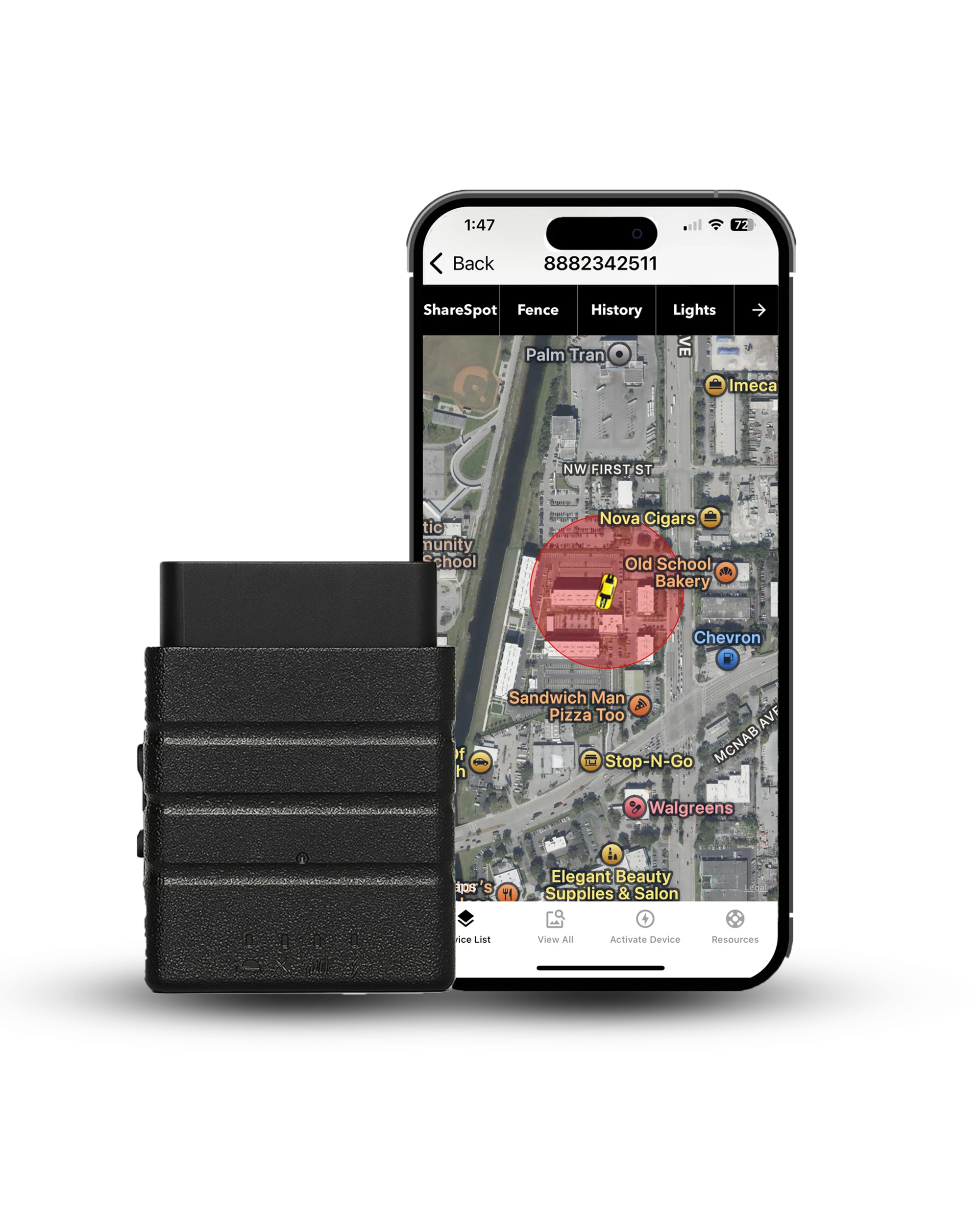
Position every 3 seconds while you drive, 20x the once-a-minute industry norm, with a sleep mode that steps the draw down when you park.
- 3 second updates
- Sleep mode when parked
- Geofence and speed alerts
- Tamper alerts
- Lifetime warranty
- USA based support
- Reports position every 3 seconds while driving
- Steps down to a low-power state once the ignition is off
- Geofence, speed and tamper alerts in real time
- Full year of trip history, lifetime warranty, USA based support
- No idle alerts
- No harsh braking or driver behavior scoring
- No fuel level analytics
- Needs a working OBD-II port, so no port means no install
Those four omissions are the reason this article can be short about power. Pulling idle time, braking events and fuel level means polling the engine control unit continuously on every vehicle, all day. Konnect leaves that out so the device can stay quiet when the car is quiet.
How Much Power Does an OBD GPS Tracker Actually Use?

An OBD GPS tracker uses around 150 to 300 mA while the car is running and drops to about 5 to 30 mA when the car is off with sleep mode enabled.
Most people don't look at actual numbers. They just assume a tracker is either safe or risky for the battery. The difference comes from how the device behaves when the car is running versus when it's parked.
While driving, the tracker stays fully active. The GPS connects to satellites, the cellular module sends data, and location updates run continuously. A device set to update every 3 seconds pulls more power than one set to update every 60 seconds. More frequent updates increase power usage.
Even at full activity, the load stays relatively small. A standard car headlight pulls around 3,000 to 5,000 mA, which is far higher than what a tracker uses during operation. The alternator is also running at that point, so the battery is being charged rather than emptied.
The bigger concern shows up after the car is turned off.
A properly designed OBD tracker shifts into sleep mode once the ignition is off. Power draw drops to around 5 to 30 mA, and some devices go below 5 mA. This sits within the normal background load of most vehicles.
To understand this better, compare it with other systems that stay active while the car is parked:
| Device or System | Power Draw When Parked | Battery Risk |
|---|---|---|
| Quality OBD GPS tracker with sleep mode | 5 to 30 mA | None under normal conditions |
| Car alarm system | 5 to 15 mA | None |
| Clock and radio memory | 1 to 5 mA | None |
| Cheap OBD device with no sleep mode | 150 to 300 mA | Real risk within 1 to 2 weeks |
| Cheap OBD device with CAN bus stuck awake | 400 to 600 mA | Battery dead overnight is possible |
| Interior dome light left on | 800 to 1,200 mA | Battery dead within a few hours |
The GPS device itself is not the problem. What counts is whether it goes to sleep when your car does, and whether it communicates with the vehicle correctly. Understanding these usage patterns upfront avoids unnecessary concern.
What Is Parasitic Battery Drain and When Does It Become a Problem?

Parasitic battery drain is the power your car uses when the engine is off.
Every vehicle has it. The clock keeps running, the alarm stays active, and the control modules hold memory. These systems draw a small, constant amount of power, and that's completely normal.
In most cars, total parasitic draw stays between 25 and 50 mA. A healthy battery can handle that level without issues during regular use. Once the draw goes higher and stays there, the battery starts losing charge faster than it should, especially if the car sits for days.
A typical car battery holds around 45 to 60 amp-hours. At 50 mA, it can last several weeks before draining completely. In real conditions, that window shrinks. Cold weather reduces capacity. Older batteries don't hold a full charge. If the battery is already weak, even a couple of weeks of sitting can lead to a no-start.
A properly designed OBD GPS tracker with sleep mode stays within that safe range. Problems start when a device keeps pulling higher current or prevents the vehicle systems from shutting down fully.
What Does Sleep Mode Do, and Does the Konnect OBD Tracker Have It?

Sleep mode controls how much power the tracker uses after the engine turns off. Without it, battery drain becomes a real risk.
An OBD tracker pulls power directly from the car, unlike portable GPS units that run on their own battery. That's why power management matters here.
When the ignition turns off, a properly built tracker detects the change and shuts down high-power components like the GPS and cellular connection, shifting into a low-power state, usually under 5 mA, until the engine starts again. Once the car is back on, the tracker reconnects and resumes tracking within seconds.
Devices without sleep mode don't slow down. They keep sending updates, stay connected to the network, and continue pulling 150 to 300 mA even while the car is parked. Leave a car sitting like that for several days, and the battery starts to struggle.
The Konnect OBD GPS Tracker includes built-in sleep mode. When the car is off, power draw drops to under 5 mA automatically. No setup required, plug it in, and it manages power on its own every time the vehicle is parked.
| Feature | With Sleep Mode (Konnect) | Without Sleep Mode |
|---|---|---|
| Power draw when parked | Under 5 mA | 150 to 300 mA |
| Battery risk on healthy car parked 2 weeks | None | Moderate to high |
| Battery risk on older or weak battery | Low | High |
| Safe for extended parking over 2 weeks | Yes | No |
| Wake-up time when ignition starts | Under 10 seconds | Immediate, since it never slept |
Konnect OBD GPS Tracker includes sleep mode as standard, 3 second real-time updates while driving, and battery voltage alerts through the app.
Shop Konnect NowThe Hidden Risk: How Cheap OBD Devices Wake Up Your Car's Entire Computer System

Some OBD devices drain batteries not because of high power use, but because they stop the car from shutting down properly.
Nearly every vehicle on the road today runs on a network called the CAN bus, which connects the engine, transmission, airbags, dashboard, and other control modules. When you turn the ignition off, the system does not shut down instantly. A short cycle runs where everything saves data and powers down, and within 30 to 45 minutes the car settles into a low-power state.
The standard itself accounts for this. Since 2016, ISO 11898-2, the high-speed CAN physical layer standard, has included low-power and selective wake-up options, so a device that behaves correctly has a defined way to stand down with the rest of the network.
Problems start when an OBD device keeps talking to the car after it's supposed to be asleep.
Some low-quality trackers continue sending requests to the ECU every few seconds. The car reads that as activity, so it keeps multiple systems awake. Instead of dropping to normal parasitic levels, the entire electrical system stays active.
- Normal parked vehicle draw stays around 20 to 50 mA
- A misbehaving OBD device can push that to 400 to 600 mA
- Multiple control modules stay active instead of shutting down
- Battery drain continues even though the car appears off
- Stops requesting data once the ignition is off
- Allows the CAN bus to complete its shutdown cycle
- Shifts into low-power mode without interrupting the system
- Leaves the parked draw where the vehicle expects it to be
That level of draw can drain a battery overnight in some vehicles.
What makes this tricky is that nothing looks wrong from the outside. The car is off, lights are out, and there are no warnings, yet the battery keeps losing charge.
Konnect follows the second approach. Communication stops once the engine is off, the vehicle completes its normal shutdown, and the device then drops into sleep mode on its own.
The spec that decides whether a plug-in tracker is safe for your battery is not the update rate. What matters is how the device behaves in the first hour after you walk away from the car.
Which Cars and Situations Face the Highest Risk?

Even with a quality OBD tracker, certain vehicles and situations carry more risk. This applies whether you are using the device for fleet management, asset tracking, monitoring teen drivers, or personal vehicle security. Knowing where your car falls helps you make a smarter decision about installation and ongoing battery maintenance.
| Situation | Risk Level | Reason |
|---|---|---|
| Car parked 2 or more weeks without driving | Medium | All batteries lose charge over time. Even 5 mA adds up over weeks. |
| Battery age, 3 or more years old or already weak | Medium to high | Reduced capacity means less buffer against any draw |
| Cold climate below 32 degrees Fahrenheit | Medium | Cold reduces battery capacity by 20 to 30 percent and raises starting load |
| Multiple OBD devices plugged in at once, such as a tracker plus a dash cam | Medium to high | Combined draw from two or more devices adds up beyond what one unit causes |
| European vehicles such as Audi, BMW, VW, Mercedes | Medium | More sensitive CAN bus systems that require longer shutdown times |
| Car driven daily with battery under 2 years old | Low | Regular driving recharges the battery. Healthy capacity absorbs minimal draw. |
| Single quality OBD tracker with sleep mode in moderate climate | Very low | Under 5 mA with proper CAN bus communication has no meaningful impact |
If your vehicle falls into one of the higher-risk categories, the right move is not to avoid an OBD tracker. The right move is to check your battery health before installing anything and confirm the car tracker you choose has sleep mode built in.
Signs Your OBD GPS Tracker May Be Draining Your Battery

Certain symptoms point toward the tracker rather than the battery or alternator. The timing is the biggest clue, since issues that start soon after installation usually aren't random.
-
Slow engine cranking after sitting overnight
The engine takes longer to turn over, or the starter sounds weaker than usual.
-
Battery warning light on the dashboard
Voltage drops below the normal range, triggering a warning while driving or starting.
-
Frequent jump-starts after short parking periods
A healthy battery should last weeks, not a couple of days. If the car struggles after 2 or 3 days, something is pulling extra power.
-
Electrical systems acting differently
Windows move slower, radio settings reset, or interior lights look dim. These changes usually show up before a full battery failure.
-
Battery failure shortly after installing the tracker
If the car worked fine before and problems started within days of installation, the tracker becomes the first thing to check.
One detail makes the difference here. These symptoms need to line up with when the device was installed. If the issues disappear after removing the tracker, the cause becomes clear. If they continue, the problem likely sits with the battery or charging system instead.
How to Test if Your OBD Tracker Is Causing Battery Drain

You don't have to overthink it. Leave the car for about 48 hours, and you'll know if the tracker is part of the problem.
1. Unplug Test (Quick Check)
Start with the easiest method:
- Remove the OBD tracker from the port
- Park the car under normal conditions, same place and same weather
- Leave it untouched for 48 hours
Now compare the result:
- Battery holds charge, which means the tracker is contributing to the drain
- Battery still dies, which means the issue likely comes from the battery or alternator
This test works because it isolates the tracker without changing anything else.
2. Multimeter Test (Accurate Reading)
For a more precise check, measure the actual current draw:
- Set a digital multimeter to DC amps
- Disconnect the negative battery cable
- Connect the meter in series between the cable and battery terminal
- Wait 30 to 45 minutes after turning the car off, since the systems need time to shut down
Then compare readings:
- Normal parasitic draw sits at 20 to 50 mA
- Above 100 mA with the tracker plugged in points to a possible issue
- A drop below 50 mA after removing the tracker confirms the cause
3. Voltage Monitoring (Early Warning)
You can also track battery health over time:
- Check voltage after the car sits overnight
- Readings below 12.4V point to a weakening charge
Konnect provides this through its app, showing battery voltage in real time so you can catch problems early without manual testing.
How to Prevent Battery Drain From an OBD GPS Tracker

Battery drain usually comes from how the tracker is used and how the car is maintained. A properly designed device on its own won't cause issues. Problems show up when the battery is already weak, the car sits too long, or multiple factors combine.
- Choose a tracker with sleep mode. Sleep mode controls how the device behaves after the engine turns off. A tracker with proper power management drops to very low draw automatically and stays within safe limits. Without it, the device keeps running in the background and continues pulling current.
- Check battery health before installation. Battery condition plays a major role. A weak battery struggles even under normal use, so adding any device makes it worse. Test the battery first. If it reads below 12.4V at rest or fails a load test, replace it before installing a tracker.
- Drive the car regularly. Cars that sit for long periods lose charge over time, even without a tracker. Driving every 7 to 10 days allows the alternator to recharge the battery and keep it stable.
- Avoid using multiple OBD devices. Using more than one device increases total power draw. Each unit may stay within limits on its own, but together they can push the system beyond what the battery can handle.
- Use a trickle charger for extended parking. If the car sits for more than two weeks, a battery maintainer helps keep it charged. This is especially useful for older batteries or in colder conditions.
- Monitor battery voltage. Checking voltage after the car sits overnight helps catch problems early. Readings below 12.4V show the battery is losing charge. Konnect provides this data in the app and sends alerts when levels drop.
The Bottom Line

A quality OBD GPS tracker will not drain your car battery when it's built and used properly.
Everything comes down to how the device handles power after the engine turns off. A tracker with sleep mode drops to very low draw, and proper CAN bus communication allows the car's systems to shut down without interruption. When both are in place, the tracker becomes just another small background load the battery can handle.
Problems show up with poorly designed devices. Some keep pulling power, others interfere with the vehicle's shutdown cycle. That's where battery drain starts, especially if the car sits for days.
Konnect handles both sides correctly. Power draw drops below 5 mA when parked, communication follows the proper protocols, and battery voltage is tracked through the app so you can spot issues early.
One pattern stays consistent across vehicles. A well-built OBD tracker with sleep mode doesn't cause battery problems on a healthy car. When issues happen, the cause usually traces back to device quality, battery condition, or how long the car sits without being driven.
If you are still choosing a device, this roundup covers the current options in more detail: Best OBD GPS Trackers in USA 2026.
Konnect reports position every 3 seconds while you drive, steps down to a low-power state when you park, and sends an alert the moment battery voltage drops too low.
Shop the Konnect OBD2 TrackerSome images in this article were generated using AI.
About the Author

 Buy on Amazon