
Can AirTag Be Used for Dementia Patients? Safety & Limits
-
01AirTag does not provide real-time tracking and depends on nearby Apple devices
-
02AirTag lacks geofencing alerts, SOS features, and caregiver notifications
-
03Most dementia patients wander and need real-time tracking, not delayed updates
-
04Dedicated GPS trackers offer continuous tracking, alerts, and emergency support
-
05Consent and privacy must be considered when tracking vulnerable individuals
- Loved one wanders or has memory loss? Jump to GPS trackers built for wandering.
- Parent is independent and just wants a check-in tool? Jump to AirTag for an elderly parent.
- Not sure AirTag alone is enough? Jump to the verdict.
Whichever one fits, the rest of this guide backs it up with real detail.
Can AirTag Be Used for Dementia Patients? Learn The Safety Facts
Yes, an Apple AirTag can be used in limited situations to help locate a person with dementia, but it is not designed to track people and should not be relied on as a primary safety tool. AirTags use Bluetooth instead of GPS, which creates gaps when someone wanders or leaves familiar areas.
If you're caring for a loved one with dementia, we at Konnect GPS understand the risk of wandering is often what keeps you awake at night. It rarely starts as an emergency. Someone steps outside, follows a familiar path, then makes one wrong turn. At that point, the question becomes whether the tracking tool you chose can actually help you locate them.
Many families ask the same question: Can Apple AirTag be used for dementia patients in a real safety situation?
By the end, you'll have a clearer picture of whether the AirTag could be a practical, affordable option for your family. Plus, we'll touch on where they help, where they fail for dementia care, ethical considerations, and when a dedicated GPS tracker is the best choice for your loved one's care.
Affiliate Disclosure: This article contains Amazon affiliate links, and we may earn a commission on qualifying purchases at no extra cost to you. The Konnect OBD2 GPS Tracker referenced in this article is our own product.
 |
|
||||||||
 Buy on Amazon
 What Apple AirTag Is, and What It Was Designed to Do

- Quick Connect: Instantly pair with iPhone/iPad in one tap
- Find with Sound: Play built-in speaker or ask Siri for help
- Super Close: Ultra Wideband guides you to a precise location (specific iPhone models)
Introduced by Apple, AirTag is a small, coin-sized Bluetooth tracking device priced at $29, or $99 for a 4-pack, designed to help locate everyday items like keys, wallets, or bags. AirTag works through Apple's Find My network by sending a Bluetooth signal that nearby iPhones and Apple Watches can detect and securely relay back to the owner.
The original purpose is worth clarifying. AirTag was built to track objects, not people.
There is no built-in monitoring system, no emergency alerts, and no caregiver-focused safety features. Apple also warns against using AirTags for unwanted tracking, which includes tracking people without clear consent.
Understanding this boundary is critical before considering AirTags in dementia care.
Apple released a second AirTag in January 2026. It has a stronger Ultra Wideband chip, so Precision Finding now reaches about 60 meters instead of the original's shorter range, and the built-in speaker is 50 percent louder. Those changes help once you're already close enough to search by sound. They don't touch the bigger issue: there's still no GPS chip inside, so the tracking gap for a wandering senior stays exactly the same.
How AirTag Tracking Actually Works in Real Life
AirTags do not use GPS. They rely on Bluetooth and Apple's Find My network, which updates location only when the AirTag comes within Bluetooth range of an iPhone or Apple Watch, roughly 30 meters, or about the length of a school bus.
I've seen families assume AirTags update continuously, but that isn't how they behave. Location updates depend on surroundings:
- Busy areas: More nearby Apple devices can lead to more frequent updates.
- Quiet or rural areas: Updates may slow down or stop altogether.
Another thing to know that AirTags don't track movement. You'll see a last seen location, which may already be outdated by the time you check it. If you're relying on quick answers during a wandering situation, that delay can be frustrating and sometimes risky.
How AirTag Can Help Seniors With Dementia

An AirTag can offer limited help by turning familiar personal items into traceable objects. Some families attach one to key rings, bags, or other belongings their loved one already carries.
Used carefully, this can support caregivers in a few specific ways:
- A basic point of reference: If a loved one with dementia leaves the house, an AirTag may show a recent location under the right conditions.
- Help during wandering incidents: The Alzheimer's Association reports that many people with dementia will wander at least once. An AirTag can sometimes assist in locating someone if Apple devices are nearby.
- Giving peace of mind: Having a last known location can feel better than having no information at all, especially in early stages.
- Easy to use: For caregivers already using an iPhone or Apple Watch, the interface is familiar and easy to manage.
It's important to keep expectations realistic. An AirTag doesn't provide continuous tracking, alerts, or emergency support. Tags can play a supporting role in limited situations, but it shouldn't be viewed as a full safety solution for dementia care.
 |
|
||||||||
Why Families Consider AirTags for Dementia Patients

Families consider AirTags because wandering is unpredictable, stressful, and difficult to manage once it starts. Many caregivers want a simple way to check where a loved one is without adding complex technology or ongoing costs.
I see the same concern come up again and again when families reach out: wandering doesn't announce itself. A loved one with dementia doesn't "run away." They step outside. Head to a familiar store they've visited for years. Then something small changes, and suddenly you're trying to figure out where they went.
That risk is real. According to the Alzheimer's Association, an estimated six in 10 people living with dementia will wander at least once, and many do so repeatedly, which can be dangerous and happen without warning.
Cost and convenience also factor in. In practice, families usually consider AirTags for a few practical reasons:
- Low upfront cost: AirTags are inexpensive compared to many GPS tracking devices, which lowers the barrier to trying something quickly.
- Ease of setup: Most people can set one up in minutes using an iPhone, without learning new software or dashboards.
- Familiar ecosystem: If you already use an iPhone or Apple Watch, AirTags feel less intimidating than specialized tracking systems.
- Discreet size: Their small design makes them easy to attach to keys, bags, or clothing without drawing attention.
- Urgency over perfection: When a loved one wanders, caregivers often look for something that works now, even if it isn't ideal.
For many families, the question isn't whether an AirTag is perfect. It's whether it helps at all when things go sideways — because when you're searching for someone you love, "good enough" can feel tempting.
Does an AirTag Work for an Elderly Parent Without Dementia?
Yes. For a parent who is still sharp and just wants an occasional check, an AirTag works better here than it does for dementia care. The lower stakes make its slow, Bluetooth-only updates far less risky.
Not every caregiver situation involves dementia. Plenty of adult kids just want a quiet way to check that Mom made it home from her weekly grocery run, or that Dad's car is still parked where he left it after his doctor visit.
I've talked to families who use an AirTag this way for years and never touch anything else. It works because nothing urgent depends on the update showing up fast.
This lighter setup fits when a few things are true:
- The parent lives independently and drives themselves most places
- There is no history of getting lost or confused about where they are
- The goal is reassurance, not emergency response
- They know about the tag and are fine with it being there
Expert Perspectives on Using Apple AirTags for Senior Care

Dr. Czaja noted a rising concern: seniors, particularly those with dementia, are at risk of wandering off and getting lost. She recognized the potential of Apple's tiny AirTag as a solution, noting that tracking elderly family members with the device could drastically reduce these instances and offer peace of mind to caregivers.
Lindeman shared his thoughts on the growing need for innovative tools in elderly care. He noted that Apple's AirTag, originally designed for locating lost items, is now being repurposed to tackle this challenge — and that by attaching AirTags to personal belongings, caregivers can quickly locate family members with dementia.
Pros and Cons of Using Apple AirTags to Track Seniors with Cognitive Issues
As you navigate the journey of caring for a family member with dementia, you may be considering Apple's tiny AirTag for tracking. A device designed to keep tabs on keys and wallets now offers a way to track people, potentially transforming the task of looking after your loved ones who have dementia.
- Cost-effective way to track elderly family members, less expensive than many GPS trackers
- Attaching AirTags to key rings or wallets can help locate family members if they wander off
- Seamless integration if you already use Apple devices like iPhone or Apple Watch
- Relies on Bluetooth, not GPS — potentially lacking precision in critical situations
- The person with dementia needs to carry the item with the attached AirTag, which they may forget
- Unwanted tracking can breach personal privacy — consent matters
While the benefits of using AirTags to track loved ones with Alzheimer's dementia are clear, the drawbacks are just as important to consider.
Where AirTags Fall Short for Dementia Safety

AirTags fall short in dementia-related situations because they were never built to respond when safety depends on speed, alerts, or consistency. I've seen caregivers assume an AirTag will behave like a GPS tracker, only to learn its limits when they need answers fast.
The limits show up most clearly in a few areas:
- No GPS tracking, so you don't get a consistent, real-time location
- No geofencing alerts if your loved one leaves a safe area
- No SOS or caregiver escalation, even in urgent situations
- No movement or behavior tracking to spot patterns over time
- Full dependence on nearby Apple devices, which means updates can stop without warning
In real emergencies, these gaps can create false confidence. You might expect to locate your loved one quickly, only to find the AirTag hasn't updated for hours. When someone's safety is involved, that delay can change how a situation unfolds.
I know after seeing these limits, a reasonable question follows: should an AirTag be relied on for dementia safety? The next section answers that directly.
Should You Rely on an AirTag Alone for Dementia Safety?

No. An AirTag should not be the only tracking method used for someone with dementia.
I want to be clear about this because many families get misled. AirTags don't offer alerts, escalation, or consistent coverage, which means they don't respond as you saw earlier. I've seen caregivers assume they'll know the moment a loved one leaves the house, only to realize the device hasn't updated at all.
An AirTag may work as a backup in limited, familiar settings. If you rely on it alone and your loved one becomes disoriented or wanders farther than expected, your response time can shrink quickly — and that's not a risk worth taking.
AirTag vs GPS Trackers for Dementia Patients
AirTags and GPS trackers are often grouped together, but they're built for very different jobs. Once you understand how each one works, the difference becomes hard to ignore, especially when safety is the goal.
- Bluetooth-based, not GPS: Location depends on short-range signals, not satellites
- Update conditions apply: Locations refresh only when nearby Apple devices are present
- No safe-zone alerts: You won't get notified if someone leaves a familiar area
- No escalation tools: There's no SOS or caregiver alert system
- Object-focused design: Built to track items like keys or bags, not people
- Satellite + cellular signals: Location updates don't depend on nearby phones
- Real-time tracking: You can see movement as it happens
- Geofencing alerts: Notifications trigger when someone enters or leaves a set area
- Caregiver-ready features: Alerts and monitoring tools support quick response
- Purpose-built design: Made to track people, vehicles, or valuable assets

When I look at this from a dementia-care perspective, GPS trackers simply remove more uncertainty. If you're trying to locate a loved one quickly during a wandering situation, having real-time data and alerts gives you information you can act on, not just a last known location. For the full breakdown of device versus app versus Bluetooth tag, our GPS tracker vs phone tracking app comparison walks through the tradeoffs.
Better Alternatives to AirTags for Dementia Patients
Dedicated GPS tracking devices are a better fit for dementia care because they are built to monitor people. They focus on speed, consistency, and caregiver awareness.

The most important differences come down to a few core capabilities: real-time location, safe-zone alerts, caregiver visibility, battery awareness, and emergency support. Here's how each one actually helps in real life.
1. Real-Time GPS Location
Shows where your loved one is as they move, not just where they were last seen. With every minute counting during wandering, that difference is serious.
2. Safe-Zone Alerts (Geofencing)
Notifies you when someone leaves or enters a defined area like home, a familiar street, or a care facility - automatically, the moment it happens.
3. Caregiver Dashboards
One place to see location history, movement patterns, and alerts. Helps families move from reacting to planning, and supports shared care.
4. Battery Monitoring
Shows exactly how much power the device has left and alerts you before it runs out, so a dead battery never becomes a problem at the wrong moment.
5. Emergency / SOS Features
One-press alerts let your loved one or a caregiver signal for help instantly, a safety net when things don't go as planned.
6. Long-Term Care Fit
Continuous, reliable coverage that fits into ongoing senior care plans over months and years, not just one-off situations.

When you are managing dementia over months or years, these features quickly become more important than convenience or saving a few dollars upfront. ...Real life isn't always black and white, so it helps to look at where an AirTag might still make sense and where it doesn't. For a wider look at trackers built for people instead of vehicles, our roundup of the best personal GPS trackers covers a few more options worth comparing.
Side by side, the price gap and the feature gap both show up fast:
| Device | Price | Monthly Cost | Best For |
|---|---|---|---|
| Apple AirTag | $29 (or $99 for a 4-pack) | None | Backup checks on keys, a bag, or a car |
| AngelSense | Free with contract, or $229 outright | $44.99 to $64.99, depending on plan | Dementia and active wandering risk |
Prices change, so check each brand's site before you buy.
If you're looking for a dedicated GPS tracker that covers all five of these areas like real-time location, safe-zone alerts, caregiver visibility, battery monitoring, and emergency support, AngelSense is one of the most trusted options specifically designed for individuals with special needs and dementia. It's built around the exact scenarios this section describes. For a loved one who tends to remove or lose any tag they wear, a tamper-proof GPS bracelet solves that specific problem.
 |
|
||||||||
Real-World Use Cases: When an AirTag May Help and When It Won't

An AirTag can help in a narrow set of situations, but only when expectations stay realistic. I've seen it work as a supporting tool in controlled settings, and I've also seen families rely on it in situations where it simply wasn't built to perform.
- Dementia is in an early stage and independence is still part of daily life
- Movement stays close to home, such as familiar streets or routine walks
- Routines are short and predictable, not long or unpredictable trips
- It's used as a backup, alongside supervision or another safety plan
- A person travels longer distances or moves beyond familiar areas
- The environment has few Apple devices, which limits location updates
- Immediate alerts are needed, such as when someone leaves home unexpectedly
- Long-term care or continuous supervision becomes necessary
Understanding these boundaries helps you avoid leaning on the wrong tool. When safety depends on fast, reliable information, knowing what an AirTag can't do is just as important as knowing what it can.
Ethical and Privacy Considerations You Can't Ignore

Tracking a person with dementia raises real ethical questions, especially around consent.
In early stages, someone may understand what tracking means and agree to it. As dementia progresses, that clarity can fade, and caregivers are often left making decisions based on safety rather than explicit permission.
The decision isn't as simple as it first appears. Apple discourages unwanted tracking, and AirTags include anti-stalking alerts designed to notify the person being tracked. For someone with cognitive impairment, those alerts can be confusing or upsetting, even if the intent is protection rather than surveillance.
This issue goes beyond technology and comes down to responsibility. Any decision to use tracking whether it's an AirTag or a GPS device should be discussed with family members and, when possible, healthcare professionals involved in long-term care.
The goal is protection, handled with as much respect as the situation allows. Public health and ethical concerns come into play when tracking someone with Alzheimer's dementia, ensuring that this technological solution respects the rights, privacy, and dignity of our loved ones.
Learn more about consent and legality in our GPS Tracking Laws in the USA (2026) state-by-state guide.
One often-overlooked safety layer that works alongside any GPS tracker, or even when GPS fails, is a medical ID bracelet.
 |
|
||||||||
Where This Information Comes From
Every factual claim in this guide is either sourced below or checked against Apple's own documentation.
- Alzheimer's Association, wandering and caregiver safety guidance
- Apple Support, how AirTag and Find My track personal items
Checked September 2026. Apple's specs and safety features change over time, so worth a quick re-check before you buy.
Final Thoughts: What Caregivers Should Do Next
If you've made it this far, thank you for taking the time to think this through with me. Caring for someone with dementia isn't simple, and asking the right questions before choosing a tracking solution already puts you in a better position than most.
What comes next is being honest about the situation you're managing. Look at the stage of dementia, how often wandering happens, and how quickly you'd need to respond if your loved one left home unexpectedly.
- If safety depends on fast alerts and reliable location updates, a GPS-based tracker designed for senior care is the safer option.
- If you decide to use an AirTag, treat it as a limited backup, not a safety net you rely on when things go wrong.
Clear expectations and the right tools won't remove every worry, but they do reduce uncertainty. And in dementia care, reducing uncertainty goes a long way toward helping both you and your loved one navigate what comes next with a little more confidence.
Concerned about driving safety too? Read our guide on how to monitor elderly parents' driving.
One area that often runs alongside wandering concerns is driving safety. Many families managing early-stage dementia worry about their loved one getting behind the wheel, whether they're safe on familiar routes, whether they're speeding, or whether the car ends up somewhere unexpected. GPS vehicle tracking helps answer those questions before they become emergencies.
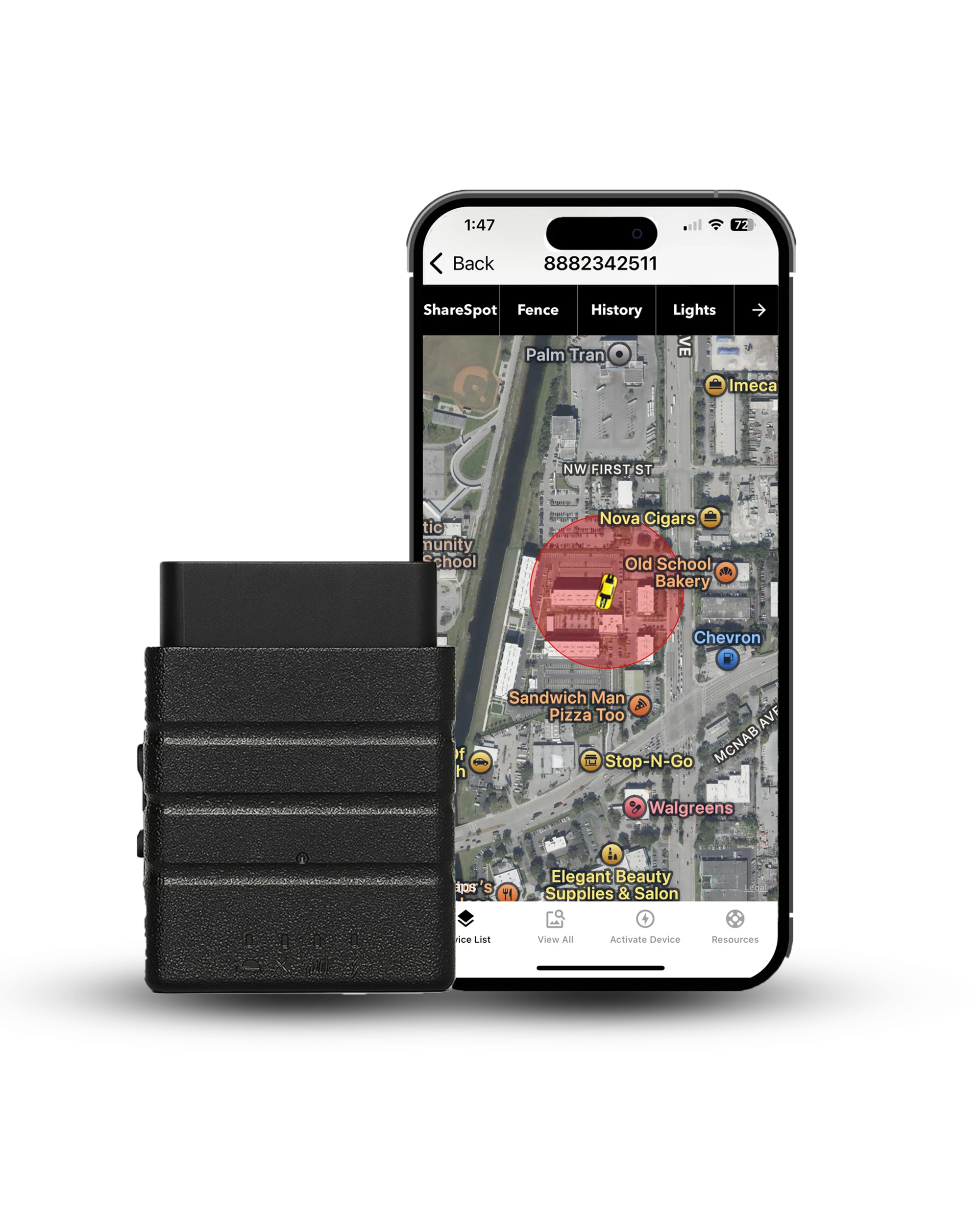
Looking for a Real GPS Solution for Elderly Drivers
Konnect GPS plugs into a vehicle's OBD2 port and sends real-time location up to 3-sec, speed alerts the moment limits are exceeded, and geofence notifications if the car goes somewhere unexpected. Designed for the situations AirTags can't handle.
Track Elderly Car NowAbout the Author
